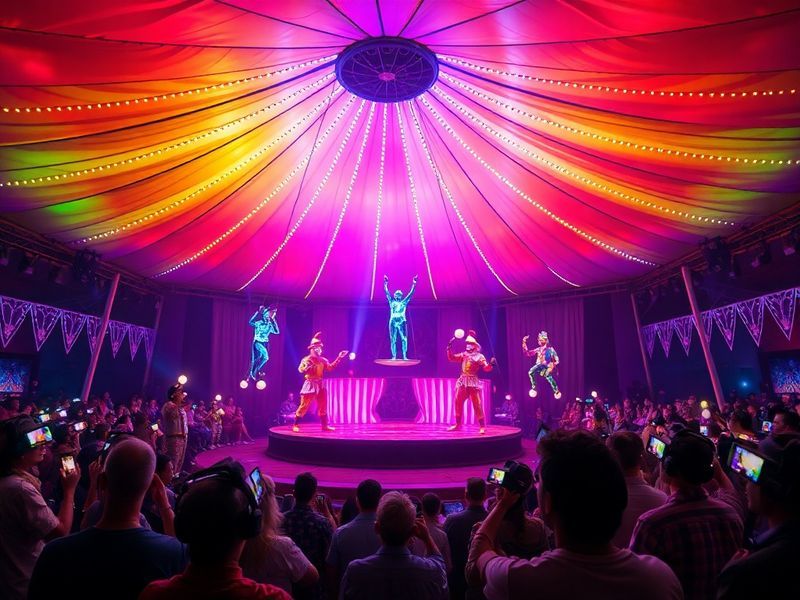
The Digital Circus movie, an ambitious animated feature blending cutting-edge CGI with a surreal narrative, has emerged as one of the most talked-about releases of the year. Directed by an ensemble of artists known for their work in experimental animation, the film pushes the boundaries of what animated storytelling can achieve. Its release on major streaming platforms has sparked discussions far beyond typical movie reviews, touching on themes of digital identity, isolation, and the blurred lines between reality and simulation.
What sets the Digital Circus apart is its visual style—a mix of hyper-realistic textures and dreamlike abstractions that challenge viewers to interpret the story on multiple levels. The film’s creators have cited influences ranging from classic anime to avant-garde digital art, resulting in a product that feels both nostalgic and futuristic. This duality has resonated with audiences, particularly younger viewers who have grown up in an era dominated by digital interaction.
The Story Behind the Digital Circus
The Digital Circus follows a group of characters who find themselves trapped in a mysterious, ever-shifting digital realm where time and space behave unpredictably. The narrative unfolds through a series of vignettes, each exploring different aspects of the characters’ psyche as they grapple with their digital existence. The film’s structure mirrors the fragmented nature of online experiences, where users often jump between identities, platforms, and even realities.
One of the film’s most striking elements is its lack of a traditional antagonist. Instead, the conflict arises from the characters’ internal struggles—fear of irrelevance, the pressure to curate a perfect online persona, and the erosion of genuine human connection. This approach aligns with contemporary anxieties about social media’s impact on mental health, making the film feel eerily relevant to today’s digital landscape.
Key Themes in the Digital Circus
- Digital Identity: The characters’ avatars in the Digital Circus serve as extensions of their real-world selves, raising questions about authenticity and self-expression online.
- Isolation in a Connected World: Despite being surrounded by other characters, the protagonists experience profound loneliness, highlighting the paradox of hyper-connectivity.
- The Illusion of Control: The ever-changing environment of the Digital Circus reflects how users often feel powerless in the face of algorithmic curation and digital surveillance.
- Memory and Nostalgia: The film plays with fragmented memories, suggesting that digital experiences may distort or erase our sense of history.
Visual Innovation and Technical Achievement
The Digital Circus isn’t just a story—it’s a visual experiment. The animation team employed a hybrid approach, combining motion capture with hand-drawn elements to create a style that feels both organic and artificial. The result is a film that looks unlike anything else currently in theaters or on streaming services. The use of lighting and color is particularly noteworthy, with scenes oscillating between warm, inviting hues and cold, sterile blues to evoke different emotional states.
Technically, the film required breakthroughs in rendering software to achieve its seamless transitions between dreamlike sequences and hyper-realistic environments. The team behind the Digital Circus spent years refining their pipeline, often collaborating with game developers to push the limits of what real-time animation could accomplish. This cross-disciplinary approach has set a new standard for animated films aiming to bridge the gap between cinema and interactive media.
Broader Implications and Cultural Impact
The Digital Circus arrives at a pivotal moment in the evolution of digital media. As virtual reality, augmented reality, and AI-generated content become more prevalent, the film serves as both a cautionary tale and a creative blueprint. It challenges audiences to consider how much of their lives are spent in curated digital spaces, where every interaction is tracked, analyzed, and monetized. In this way, the movie functions as a mirror to contemporary society, reflecting our collective unease with technology’s growing dominance.
Critics have drawn parallels between the Digital Circus and other recent works that explore digital themes, such as Cyberpunk 2077 and Black Mirror. However, the film distinguishes itself through its focus on emotional resonance rather than spectacle. While other media often depict digital worlds as dystopian or utopian extremes, the Digital Circus presents a more nuanced portrayal—one that acknowledges the beauty and terror of living in a world mediated by screens.
Why the Digital Circus Matters Now
The timing of the Digital Circus’s release is no accident. With debates raging about the ethics of social media algorithms, the mental health crisis among Gen Z, and the rise of deepfake technology, the film taps into a cultural moment where technology’s role in our lives is under intense scrutiny. It doesn’t offer easy answers but instead invites viewers to question their own relationship with the digital world.
For creators, the Digital Circus represents a new frontier in animation—a space where traditional storytelling meets experimental artistry. Its success could pave the way for more films that prioritize artistic vision over commercial appeal, encouraging a shift in how animated content is produced and consumed. Meanwhile, for audiences, it’s a reminder that the stories we tell about technology shape how we engage with it, for better or worse.
What’s Next for the Digital Circus
With the film’s initial release complete, discussions are already turning to its potential legacy. Rumors of a sequel have circulated, though the creators have remained tight-lipped about their plans. Speculation also points to potential collaborations with game developers, given the film’s interactive visual style. Fans are eager to see if the Digital Circus will inspire a wave of similar projects or remain a singular experiment in digital storytelling.
Regardless of what comes next, the Digital Circus has already cemented its place as a landmark in modern animation. It’s a film that refuses to be easily categorized, blending genres, styles, and themes into something entirely new. In an era where content is often disposable, the Digital Circus demands attention—not just for its technical prowess but for its willingness to grapple with the complexities of living in a digital age.
For those interested in exploring more about the intersection of technology and creativity, check out our Entertainment section for additional articles on innovative media projects. To dive deeper into the technical side of modern animation, visit our Technology category.
The Digital Circus may be over, but its themes—and its questions—are just beginning to resonate.