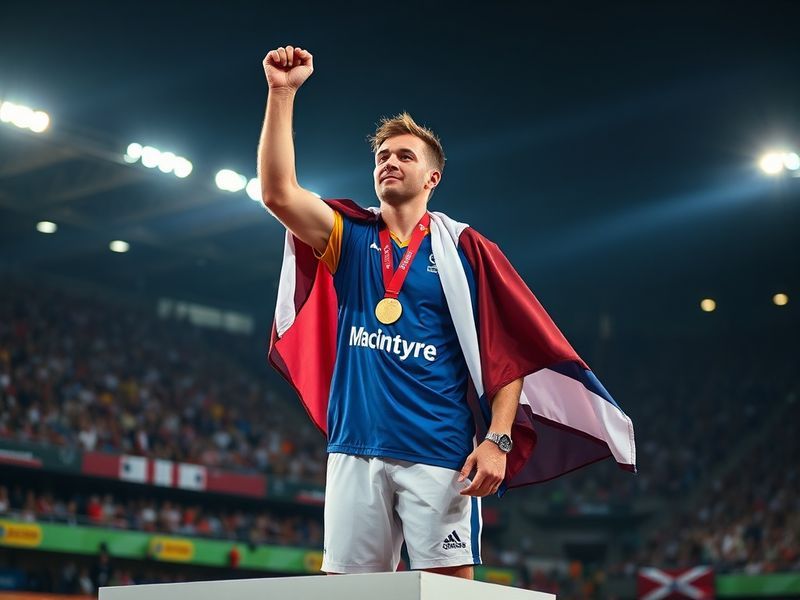
The MacIntyre Masters program has quietly redefined what it means to compete in adaptive sports. By focusing on athletes with learning disabilities and autism, the initiative has created a space where physical achievement intersects with personal growth. Unlike traditional adaptive sports programs that often prioritize physical accessibility alone, MacIntyre Masters emphasizes tailored training that accounts for cognitive and sensory differences.
Founded in 2016, the program operates under the umbrella of the MacIntyre charity, which has spent decades supporting individuals with learning disabilities. The Masters branch specifically targets adults aged 18 and older, offering structured pathways in cycling, swimming, and athletics. What sets this program apart is its blend of competitive rigor and holistic development. Athletes aren’t just trained to perform—they’re coached to thrive in environments that respect their unique needs.
The Philosophy Behind the Program
At its core, MacIntyre Masters challenges the assumption that competitive sports require a one-size-fits-all approach. The program’s methodology is rooted in three key principles: individualized training plans, sensory-aware coaching, and competitive integration. Each athlete undergoes a comprehensive assessment to identify strengths, challenges, and sensory preferences before a training plan is developed.
Coaches for the program receive specialized training in neurodiversity, ensuring they can adapt drills and communication styles. For example, athletes who are hypersensitive to noise might train in quieter facilities or use noise-canceling headphones during sessions. The goal isn’t just to compete but to create an environment where athletes feel safe, understood, and motivated.
This philosophy extends beyond the track or pool. MacIntyre Masters collaborates with sports psychologists to help athletes manage performance anxiety, which can manifest differently in neurodivergent individuals. The program also incorporates social integration exercises, preparing athletes for competitions where they might interact with peers from diverse backgrounds.
Competitive Milestones and Athlete Stories
Since its inception, MacIntyre Masters has produced measurable results. In 2022, the program’s cycling team competed in the British Cycling National Championships, with three athletes earning medals in their respective categories. One standout performer, Jamie Carter, won gold in the men’s 10km time trial, setting a new personal best despite initial doubts about his ability to handle race-day pressure.
Carter’s journey is emblematic of the program’s impact. Diagnosed with autism at age 12, he struggled with traditional team sports due to sensory overload and difficulty following complex instructions. His introduction to MacIntyre Masters came through a local workshop, where he tried handcycling—a sport that allowed him to control his environment more effectively than running or swimming. Within two years, he progressed from recreational riding to competitive racing, thanks to a training plan that emphasized gradual exposure to race conditions.
The program’s swimmers have also made waves. In 2023, Emma Whitmore became the first MacIntyre Masters athlete to qualify for the World Para Swimming Championships. Her story highlights the program’s ability to identify latent potential. Whitmore, who has Down syndrome, initially joined the program for social interaction but discovered a talent for freestyle sprints. Her coach worked with her to break down strokes into manageable segments, using visual aids and tactile cues to reinforce technique.
These stories underscore a critical point: MacIntyre Masters doesn’t just accommodate athletes with learning disabilities—it unlocks their potential by reimagining how success is defined.
Challenges and Future Directions
Despite its successes, the program faces hurdles. Funding remains a persistent challenge, as adaptive sports often compete for resources with other charitable initiatives. MacIntyre Masters relies heavily on grants and partnerships with local sports clubs, but scaling the program to reach more athletes requires sustained investment. In 2023, the charity launched a crowdfunding campaign to purchase specialized equipment, including sensory-friendly cycling frames and adaptive swimwear.
Another challenge is visibility. While adaptive sports have gained traction in mainstream media, niche programs like MacIntyre Masters often fly under the radar. This lack of awareness can make it difficult to attract sponsors or recruit athletes who might benefit from the program. To address this, MacIntyre has partnered with adaptive sports organizations to host joint events and workshops, amplifying its reach.
Looking ahead, the program has ambitious goals. By 2025, MacIntyre Masters aims to expand its offerings to include wheelchair basketball and triathlon. There are also plans to develop a mentorship initiative, pairing experienced athletes with newcomers to foster a sense of community. These expansions would require additional training for coaches, particularly in sports like triathlon, where transitions between disciplines can be cognitively demanding.
Long-term, the program hopes to influence broader adaptive sports policies. By documenting its methods and sharing data on athlete progress, MacIntyre Masters could serve as a model for other organizations seeking to create inclusive competitive environments.
Why This Program Matters Beyond the Track
MacIntyre Masters’ impact extends far beyond podium finishes or personal bests. For many athletes, the program is a gateway to independence. Competitive sports teach discipline, time management, and resilience—skills that translate to other areas of life. For example, athletes who travel to competitions often navigate public transport, manage budgets for meals, and advocate for their needs in unfamiliar settings. These experiences build confidence and self-reliance.
The program also challenges societal perceptions of disability and athleticism. By competing at high levels, athletes like Jamie Carter and Emma Whitmore demonstrate that physical achievement isn’t limited by cognitive differences. Their participation in mainstream competitions forces spectators to confront their own biases, fostering a more inclusive definition of success.
Moreover, MacIntyre Masters highlights the importance of community. Athletes often form tight-knit bonds, providing mutual support that extends beyond training. These relationships combat isolation, a common issue among adults with learning disabilities. The program’s social events, such as post-competition gatherings, reinforce this sense of belonging.
For families of participants, the program offers peace of mind. Knowing their loved ones are in an environment where their needs are understood reduces stress and empowers them to pursue their own goals. One parent, whose child competes in the swimming program, shared that the experience had given her son a newfound sense of purpose, reducing anxiety and improving his overall well-being.
A Call to Action for Inclusive Sports
MacIntyre Masters’ success raises an important question: Why aren’t more adaptive sports programs adopting similar models? The answer often lies in a lack of resources or awareness. However, the program proves that with creativity and commitment, barriers can be overcome. For communities looking to replicate this model, several steps can serve as a blueprint:
- Assess local needs: Identify the specific disabilities and ages of the target population. MacIntyre Masters’ focus on adults aged 18+ filled a gap left by youth-focused programs.
- Partner with experts: Collaborate with sports psychologists, occupational therapists, and disability advocates to design inclusive training programs.
- Leverage existing infrastructure: Work with local sports clubs to access facilities and equipment. Many clubs are eager to diversify their offerings but lack the expertise.
- Prioritize visibility: Share athlete stories through social media, local press, and partnerships with disability advocacy groups to attract participants and supporters.
The program also serves as a reminder that inclusivity in sports isn’t just about physical access—it’s about creating environments where everyone can thrive. For those interested in supporting MacIntyre Masters, opportunities range from volunteering as a coach or mentor to donating specialized equipment. More information can be found on the charity spotlight page on Dave’s Locker.
As MacIntyre Masters continues to grow, it challenges us to rethink what competitive sports can look like. By centering the needs of neurodivergent athletes, it doesn’t just change lives—it reshapes the landscape of adaptive sports for generations to come.