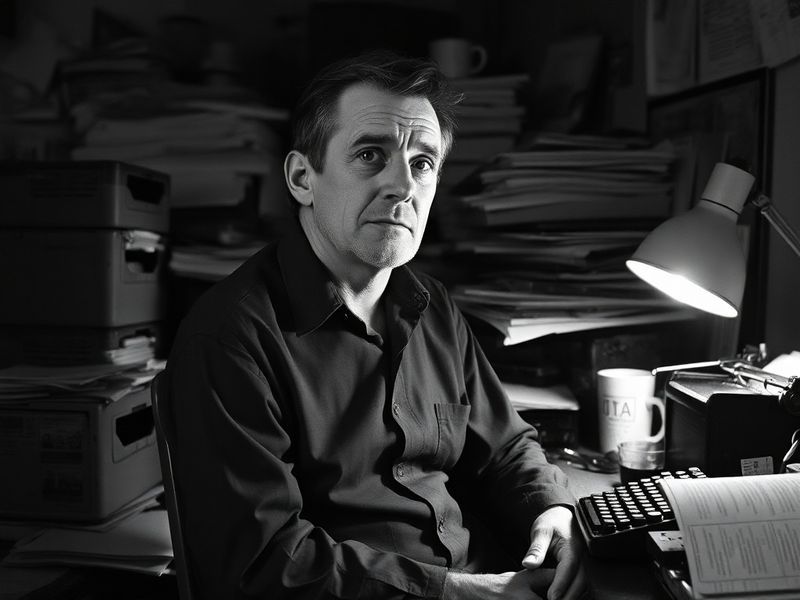
Tom Junod is one of the most influential journalists of the past half-century, a writer whose work has shaped the craft of narrative nonfiction. His reporting, often deeply personal and unflinchingly honest, has left an indelible mark on American journalism. From his legendary profiles in Esquire to his transformative role at GQ, Junod’s writing transcends conventional reporting, blending intimacy with urgency.
Born in 1958 in New York City, Junod’s career took flight in the 1980s when he became a staff writer at Philadelphia magazine. His early work demonstrated a rare ability to capture the human condition in vivid detail. By the 1990s, he had transitioned to Esquire, where he would pen some of the most talked-about essays of the decade. His writing is known for its emotional depth, sharp wit, and an uncanny knack for finding the extraordinary in the ordinary.
The Art of the Profile: Junod’s Signature Style
Junod’s approach to profiling is nothing short of revolutionary. Unlike traditional journalists who maintain a detached, objective stance, Junod immerses himself in his subjects’ lives, often becoming a part of their stories. This method is evident in his most famous work, The Falling Man, a harrowing account of a man photographed plunging from the World Trade Center on September 11, 2001. The essay, which first appeared in Esquire in 2003, is a masterclass in balancing empathy with journalistic rigor.
His profiles are not just about the subjects; they are about the act of storytelling itself. Junod’s ability to weave together personal anecdotes, historical context, and moral inquiry makes his work feel like a conversation rather than an interview. Consider his 1998 piece on the life and death of Fred Rogers, Can You Say… Hero? The essay redefined Rogers’ public image, portraying him not just as a children’s television icon but as a deeply principled man whose quiet strength shaped generations.
- Empathy as a Tool: Junod’s profiles thrive on his willingness to listen. He doesn’t just ask questions; he seeks to understand.
- Narrative Drive: His essays unfold like short stories, with clear arcs and climactic moments.
- Moral Complexity: Junod doesn’t shy away from uncomfortable truths, whether in his profiles of athletes, celebrities, or public figures.
One of Junod’s most underrated skills is his ability to find the universal in the specific. In Roger Ebert: The Essential Man, he doesn’t just write about the critic’s life; he explores what it means to face mortality with grace. The essay, published in GQ in 2013, is a testament to Junod’s ability to turn a personal story into a meditation on life’s fragility.
The Esquire Years: A Golden Age of Journalism
Junod’s tenure at Esquire from 1997 to 2007 is often regarded as a golden age for the magazine. During this period, he contributed some of the most iconic pieces in its history. His essays weren’t just read; they were dissected, discussed, and debated. The Falling Man, for instance, sparked national conversations about memory, trauma, and representation in the media.
Another standout from this era is The Kid Stays in the Picture, a profile of Robert Evans, the legendary Hollywood producer. The essay captures Evans’ rise and fall with cinematic flair, blending Junod’s sharp observations with Evans’ own unfiltered commentary. The piece is as much about Hollywood’s golden age as it is about the myth of the American dream.
Junod’s work during this time also extended beyond profiles. His 2001 essay My Father’s Son is a raw, unflinching account of his relationship with his father, a man whose life was marked by struggle and resilience. The essay is a powerful exploration of family, identity, and the legacies we inherit. It’s a reminder that Junod’s genius isn’t confined to his subjects; it’s also in his ability to turn the lens on himself.
Beyond the Page: Junod’s Impact on Journalism
Junod’s influence extends far beyond his bylines. He has mentored countless writers, many of whom cite him as a pivotal figure in their careers. His approach to storytelling—one that values truth over sensationalism, empathy over detachment—has become a benchmark for narrative nonfiction. In an era where journalism is often criticized for its lack of depth, Junod’s work stands as a counterpoint, proving that long-form writing can still captivate and challenge readers.
His transition to GQ in 2007 marked another evolution in his career. While Esquire allowed him to refine his craft, GQ gave him a platform to explore new themes, particularly around masculinity, identity, and aging. His 2013 profile of actor Philip Seymour Hoffman, The Last Days of Philip Seymour Hoffman, is a haunting exploration of addiction and genius. The essay is notable for its refusal to romanticize Hoffman’s struggles, instead presenting them with unflinching honesty.
Junod’s work has also intersected with sports journalism, a field where he has redefined how athletes are portrayed. His 2010 profile of baseball player Alex Rodriguez, The Machine, is less about Rodriguez’s talent on the field and more about the pressures of fame, the burden of expectation, and the cost of perfection. The essay is a masterclass in deconstructing a public persona to reveal the human beneath.
The Legacy of Tom Junod
Tom Junod’s career is a testament to the power of storytelling. His essays do more than inform; they transform. They challenge readers to see the world differently, to empathize with those they might otherwise overlook, and to confront uncomfortable truths. In an age where journalism is often reduced to clicks and shares, Junod’s work is a reminder of what the craft can—and should—be.
His influence can be seen in the work of contemporary writers like George Saunders, Ta-Nehisi Coates, and Ariel Levy, all of whom share Junod’s commitment to depth, nuance, and moral complexity. Junod’s essays are studied in journalism schools, dissected in writing workshops, and celebrated as models of the form. They are also, importantly, deeply human.
Junod’s most recent work includes his 2021 essay for The Atlantic, The Last Days of My Father, a follow-up to My Father’s Son. The piece is a meditation on aging, memory, and the passage of time. It’s a fitting capstone to a career defined by its exploration of life’s most profound questions.
For those interested in the evolution of narrative journalism, Junod’s body of work is essential reading. It’s a reminder that the best journalism isn’t just about reporting the news; it’s about capturing the human experience in all its complexity. And few have done it better.
To explore more about the craft of storytelling, visit our Analysis section. For a deeper dive into the world of narrative nonfiction, check out our Culture category.