The negotiations surrounding a potential peace deal for Ukraine have intensified over recent months, drawing attention from global capitals and local communities alike. As diplomatic efforts continue, the stakes remain high—not just for the parties directly involved, but for international stability and cultural narratives worldwide. The conflict, now in its third year, has reshaped geopolitical alliances and public discourse, making any resolution a matter of intense scrutiny.
The Diplomatic Chessboard: Who Holds the Leverage?
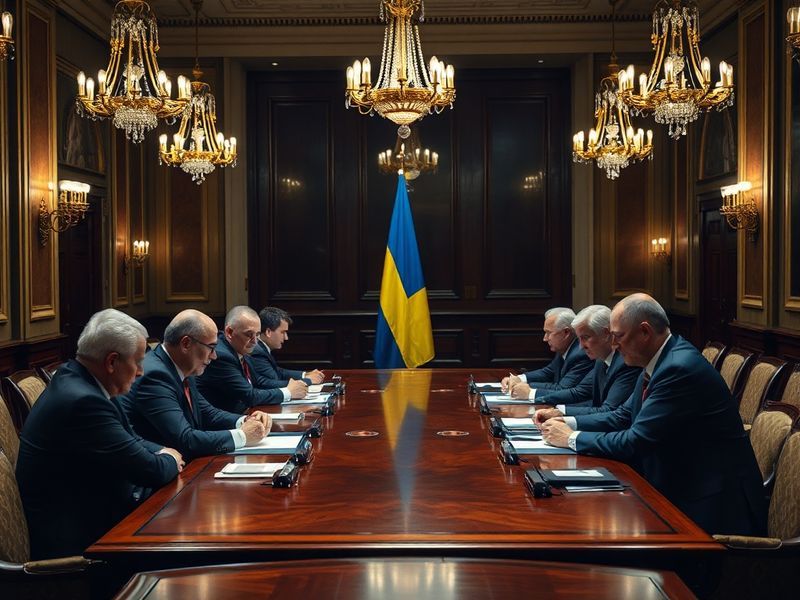
Peace talks have involved multiple stakeholders, each with distinct interests. The United States and European Union have emphasized sovereignty and territorial integrity, while Russia has framed the conflict as a defensive measure against NATO expansion. Meanwhile, neutral parties like Turkey and China have positioned themselves as potential mediators, though their influence varies widely. The shifting dynamics on this chessboard reflect deeper global tensions.
Key players have outlined their red lines in recent months. For Ukraine, the return of occupied territories—including Crimea—remains non-negotiable. Russia, however, has demanded guarantees against NATO membership and Ukrainian neutrality. These irreconcilable positions underscore the difficulty of brokering a deal that satisfies all sides.
Observers note that economic leverage also plays a critical role. Sanctions imposed by Western nations have crippled Russia’s financial infrastructure, while Ukraine relies heavily on international aid. The balance of power, therefore, extends beyond military strength to include economic resilience and diplomatic alliances.
Regional Alliances and Their Impact
Eastern Europe’s response to the conflict has been far from uniform. Poland and the Baltic states have been vocal advocates for Ukraine, providing both military and humanitarian support. Meanwhile, Hungary has adopted a more cautious stance, prioritizing domestic political considerations over alignment with EU consensus. This divergence highlights the complexity of European unity in the face of crisis.
In the Middle East, reactions have been equally varied. While some nations, like Saudi Arabia, have positioned themselves as potential mediators, others, such as Iran, have deepened ties with Russia, complicating diplomatic pathways. The global South, too, has become a battleground for narrative control, with countries like South Africa and India navigating their own strategic interests.
Cultural Reverberations: How the Conflict Shapes Global Narratives
The war in Ukraine has also left an indelible mark on global culture, influencing art, media, and public memory. Museums across Europe have curated exhibitions documenting the conflict, while Ukrainian artists have used platforms like social media to counter propaganda and share firsthand accounts. These cultural interventions serve as both documentation and resistance, preserving narratives that might otherwise be erased.
In the realm of music and film, the conflict has inspired works that blend urgency with reflection. Ukrainian musicians have released anthems that blend traditional folk elements with modern protest sounds, while international artists have staged benefit concerts to raise funds for relief efforts. These creative responses underscore the role of culture as a tool for solidarity and resistance.
The Role of Disinformation
Disinformation campaigns have further complicated the cultural landscape. Russian state media, for instance, has disseminated narratives aimed at undermining Ukrainian identity and justifying military action. In response, Ukrainian digital activists have launched counter-campaigns, using satire and fact-checking to debunk false claims. The battle for narrative control extends beyond the battlefield, shaping public perception worldwide.
Economic Aftershocks: A World Reconfigured
The ripple effects of the conflict are felt far beyond Ukraine’s borders. Global supply chains, already strained by the pandemic, have been further disrupted by the war, particularly in sectors reliant on Russian gas and Ukrainian grain. Food security has emerged as a critical concern, with nations in Africa and the Middle East facing shortages and price hikes.
Energy markets have also undergone seismic shifts. Europe’s rush to wean itself off Russian gas has accelerated investments in renewable energy, while countries like Germany have extended the operational lifespans of nuclear plants. These decisions reflect a broader reckoning with energy dependence and the urgent need for diversification.
Shifting Trade Routes
Trade routes have been rerouted in response to the conflict, with significant implications for global commerce. The Black Sea grain corridor, once a vital artery for food exports, has been repeatedly targeted, forcing nations to explore alternative supply chains. Meanwhile, Arctic shipping routes, made more accessible by climate change, have gained attention as potential alternatives for trade between Europe and Asia.
These economic adjustments are not merely logistical—they represent a reconfiguration of global power structures. Nations once considered peripheral are now courted as key players in new trade networks, while traditional hubs face unprecedented competition.
What Comes Next? The Path to Peace and Its Challenges
As peace talks resume, the path forward remains fraught with obstacles. Ceasefire agreements have been brokered before, only to collapse under renewed violence. The recent downing of a civilian airliner over conflict zones serves as a grim reminder of the fragility of any temporary truce. Yet, the alternative—a prolonged war—poses risks of its own, from escalating humanitarian crises to the potential for wider regional conflict.
For a lasting resolution, analysts argue that three key elements must be addressed: security guarantees for Ukraine, a framework for territorial disputes, and a pathway to post-war reconstruction. Each of these components carries its own complexities, from the legal status of annexed regions to the allocation of international aid.
The Human Cost of Delay
The human toll of the conflict cannot be overstated. Millions of Ukrainians remain displaced, their lives upended by destruction and displacement. The psychological scars of war will endure long after the guns fall silent, shaping generations to come. International organizations have warned of a looming mental health crisis, as trauma and grief permeate communities across the region.
Cultural heritage has also suffered irreparable damage. Historic sites, museums, and libraries have been deliberately targeted, erasing centuries of cultural memory. The restoration of these landmarks is not merely an architectural challenge—it is a moral imperative, a testament to the resilience of a people determined to preserve their identity.
Lessons for Future Conflicts
The Ukraine conflict offers critical lessons for conflict resolution and crisis management. It highlights the need for early intervention in disputes, robust mediation mechanisms, and a commitment to upholding international law. It also underscores the importance of addressing root causes—such as inequality, resource scarcity, and geopolitical rivalry—to prevent future escalations.
As the world watches, the stakes extend beyond the immediate region. The outcome of these negotiations will reverberate through global politics, economics, and culture, shaping the contours of the 21st century.
Conclusion: A Fragile Hope
The road to peace in Ukraine is long and uncertain, but not devoid of hope. Diplomatic efforts continue against a backdrop of cultural resistance, economic adaptation, and global solidarity. While the challenges are immense, the stakes could not be higher—for Ukraine, for its neighbors, and for the world at large.
As negotiations progress, the international community must remain vigilant, ensuring that any agreement prioritizes justice, sustainability, and the voices of those most affected. The path forward will require compromise, creativity, and courage. Yet, in the face of such adversity, the resilience of the Ukrainian people offers a powerful reminder of what is possible when determination meets opportunity.
For now, the world waits, watches, and hopes—for a deal that brings not just peace, but a foundation for lasting reconciliation.