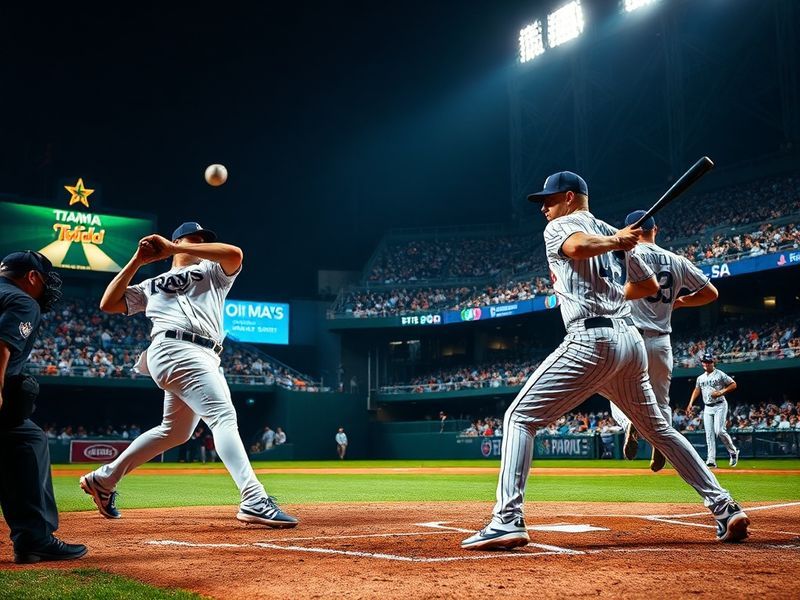
Few matchups in baseball carry the weight of tradition and unpredictability like the New York Yankees versus the Tampa Bay Rays. While the Yankees represent the glamour and history of Major League Baseball, the Rays embody the resilience of a franchise that defied expectations to become a consistent contender. This rivalry extends beyond the diamond, reflecting broader themes of ambition, innovation, and the evolving landscape of global sports.
The Yankees, with their 27 World Series titles, are a symbol of baseball’s past and present. Their brand transcends sports, influencing pop culture and global fandom. The Rays, on the other hand, have spent much of their existence in the shadow of their divisional rivals, yet they’ve carved out a distinct identity through smart management and on-field grit. This contrast makes their matchups compelling for fans and analysts alike.
The Historical Context: From David vs Goliath to a Balanced Rivalry
When the Rays joined the American League in 1998, they were an expansion team with little to show for their early seasons. The Yankees, already a powerhouse, dominated the division with ease. Early encounters between the two were lopsided, reinforcing the perception of an unbalanced rivalry. However, the Rays’ fortunes shifted dramatically in the late 2000s under manager Joe Maddon and a core group of homegrown talent like Evan Longoria and David Price.
By 2008, the Rays made a stunning run to the World Series, a feat that forced the baseball world to take notice. While they fell short in the Fall Classic, their success signaled a shift. The Rays began to challenge the Yankees more consistently, and the rivalry evolved from one-sided to competitive. In 2020, the Rays’ dominance in the pandemic-shortened season, including a sweep of the Yankees in the divisional round, underscored their growth.
This evolution mirrors broader trends in sports, where underdogs increasingly disrupt traditional hierarchies. The Rays’ rise reflects a global shift toward competitive balance in leagues, challenging the notion that only wealthy franchises can sustain success. It’s a narrative that resonates beyond baseball, from European football’s financial fair play rules to the rise of esports teams breaking into established markets.
Cultural and Global Perspectives: How the Rivalry Transcends the Field
The Yankees-Rays rivalry isn’t just a regional competition; it’s a microcosm of global sports dynamics. The Yankees, with their massive international fanbase, represent the globalized nature of baseball. Their games are broadcast in over 100 countries, and their players often become household names worldwide. The Rays, meanwhile, have cultivated a niche but dedicated following, appealing to fans who value innovation and authenticity over star power.
This contrast extends to how teams engage with their audiences. The Yankees leverage their brand through merchandise, media, and even Broadway-style promotions. The Rays, in contrast, have embraced analytics and community-driven initiatives, such as their emphasis on youth baseball in Tampa Bay. This approach aligns with global trends where fans increasingly value engagement and transparency over sheer spectacle.
Another cultural dimension is the international composition of both teams. The Yankees often feature players from Latin America, Japan, and the Dominican Republic, reflecting baseball’s global talent pipeline. The Rays, too, rely on international talent but have also prioritized player development through their farm system. This blend of imported and homegrown talent highlights the interconnectedness of modern baseball.
The rivalry also intersects with broader social themes. The Rays’ home stadium, Tropicana Field, is often criticized for its indoor design, but it symbolizes the team’s ability to thrive despite adversity. Similarly, the Yankees’ historic struggles in the postseason—despite their regular-season dominance—mirror the challenges faced by global brands that must constantly prove themselves in new markets.
Key Moments That Defined the Rivalry
The Yankees-Rays rivalry has produced unforgettable moments, from walk-off wins to playoff heartbreak. Here are a few that stand out:
- 2008 AL East Division Tiebreaker: The Rays defeated the Yankees in a one-game playoff to clinch the division title, a moment that announced their arrival as contenders.
- 2020 ALDS Sweep: The Rays eliminated the Yankees in the postseason for the first time, a statement that they were no longer the underdog.
- Evan Longoria’s Walk-Off: In 2011, Longoria hit a dramatic walk-off home run against the Yankees, a play that became iconic for Rays fans.
- Gerrit Cole’s Arrival: The Yankees’ signing of Cole in 2020 shifted the narrative, as his dominance in the division became a focal point of the rivalry.
These moments aren’t just highlights; they’re chapters in a larger story about perseverance and competition. For fans, they’re reminders of why rivalries matter—they provide drama, emotion, and a sense of belonging. For analysts, they offer insights into the strategies and personalities that define success in sports.
The Future of the Rivalry: What’s Next for Yankees and Rays?
As both teams look ahead, the rivalry is poised to enter a new phase. The Yankees, despite their aging core, remain a perennial contender, thanks to their deep pockets and ability to attract top talent. The Rays, meanwhile, continue to defy expectations with a farm system that consistently produces stars like Randy Arozarena and Wander Franco.
One key factor in the rivalry’s future is the Rays’ potential move to a new stadium. For years, the team has been tied to a proposed downtown Tampa location, but political and financial hurdles have delayed progress. A new stadium could elevate the rivalry, giving the Rays a modern home and the Yankees a fresh challenge in a new environment.
On the field, the rivalry will likely be shaped by the next generation of stars. Players like Aaron Judge for the Yankees and Shane McClanahan for the Rays represent the future of the division. Their performances will determine whether the Rays can sustain their recent success or if the Yankees will reclaim their dominance.
Beyond the games, the rivalry’s cultural impact will continue to grow. The Yankees’ global brand ensures their games remain a staple in international markets, while the Rays’ innovative approach appeals to fans who value substance over spectacle. As baseball navigates the challenges of a changing sports landscape, the Yankees-Rays rivalry offers a compelling narrative of competition, adaptation, and resilience.
The beauty of this rivalry lies in its unpredictability. Unlike traditional powerhouses that rely on star power alone, the Rays have thrived by blending analytics, development, and sheer grit. The Yankees, while steeped in history, must constantly reinvent themselves to stay relevant. Together, they create a dynamic that keeps fans engaged, whether they’re in New York, Tampa Bay, or halfway around the world.
For fans of sports and baseball in particular, the Yankees vs Rays is more than a game—it’s a story of ambition, innovation, and the ever-changing nature of competition. As both teams look to the future, one thing is certain: this rivalry will continue to captivate audiences, both on and off the field.
For deeper insights into baseball’s evolving landscape, explore our analysis section, where we break down the trends shaping the sport today.