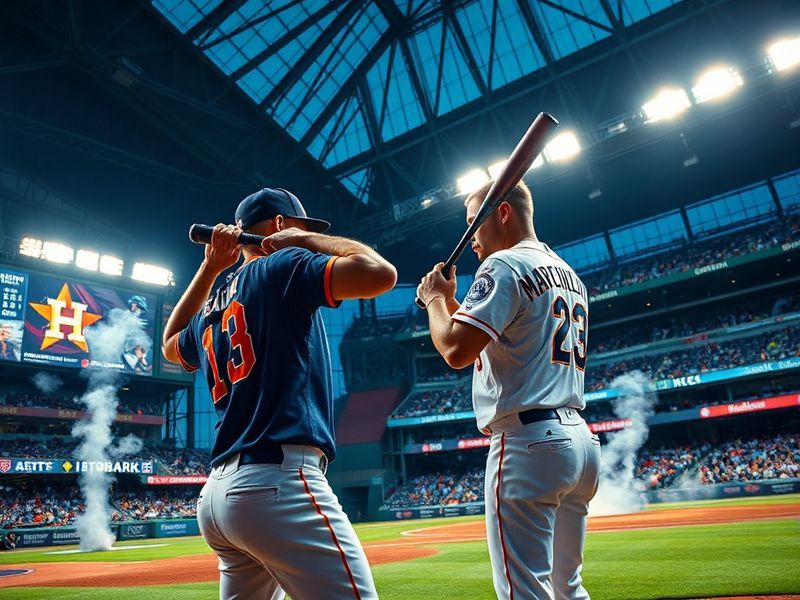
The Astros and Mariners have become one of Major League Baseball’s most intriguing matchups in recent years. While the Astros’ recent successes have drawn global attention, the Mariners have quietly built a reputation as baseball’s most forward-thinking franchise. This rivalry transcends wins and losses, reflecting broader shifts in sports culture, technology, and fan engagement worldwide.
The Astros, once a struggling expansion team, transformed into a powerhouse through a controversial sign-stealing scandal and a relentless analytics-driven rebuild. Meanwhile, the Mariners have become synonymous with innovation, embracing data science and international scouting to challenge traditional baseball hierarchies. Their clashes on the field mirror a larger debate: Can tradition and analytics coexist in modern sports?
The Astros: From Controversy to Championship Pedigree
The Houston Astros’ journey from baseball’s laughingstock to World Series contenders is one of the most scrutinized narratives in modern sports. Their 2017 championship, tainted by the sign-stealing scandal, forced baseball to confront its relationship with technology and ethics. While the fallout led to player suspensions and franchise distrust, the Astros emerged as a case study in organizational resilience.
Under manager Dusty Baker and later Dusty’s successor, the Astros refined their identity. Their reliance on analytics—from launch angles to defensive shifts—redefined how teams evaluate talent. Internationally, the Astros have cultivated a global fanbase, particularly in Latin America, where players like José Altuve and Yordan Alvarez are treated like cultural icons.
Yet, the Astros’ legacy remains polarizing. For some, they represent the future of baseball—efficient, data-driven, and ruthlessly competitive. For others, they embody the dangers of sacrificing integrity for victory. Their games against the Mariners often feel like a referendum on these opposing philosophies.
The Mariners: Baseball’s Quiet Revolutionaries
The Seattle Mariners operate in the shadow of the city’s tech giants, and their approach to baseball reflects that mindset. While the Astros chase championships through calculated precision, the Mariners have bet on potential, drafting Julio Rodríguez and Cal Raleigh as cornerstones of a new era. Their commitment to international scouting—particularly in the Dominican Republic and Venezuela—has redefined how MLB teams develop talent.
Seattle’s fanbase, though smaller than Houston’s, is among the most passionate in baseball. Safeco Field (now T-Mobile Park) became a fortress not just for its retractable roof, but for its embrace of analytics and fan experience. The Mariners’ 2022 playoff run, fueled by a wave of young talent, reignited hope in a city that had endured decades of near-misses.
Globally, the Mariners represent baseball’s underdog spirit. Their games are beamed to audiences in Japan, Korea, and Latin America, where their emphasis on player development resonates. In a league dominated by big-market teams, Seattle’s scrappy, tech-savvy model offers a blueprint for sustainable success.
A Rivalry Defined by Contrasts
The Astros vs. Mariners matchup is more than a series—it’s a collision of philosophies. The Astros play with the precision of a Silicon Valley startup, leveraging data to minimize risk. The Mariners, by contrast, operate like a startup themselves, taking calculated gambles on unproven talent.
This contrast extends beyond the field. The Astros’ fanbase is diverse, drawn to their high-tech approach and star players. The Mariners, meanwhile, cultivate a regional identity, with fans treating games like communal events. In cities like Tokyo and São Paulo, where baseball is growing, these contrasting styles offer different visions of the sport’s future.
On the diamond, the rivalry has produced unforgettable moments. From José Altuve’s walk-off homers to Julio Rodríguez’s jaw-dropping catches, these games blend old-school grit with modern flair. The Astros’ experience often prevails in the playoffs, but the Mariners’ fearlessness makes them dangerous.
Key Storylines in the Astros-Mariners Saga
- Analytics vs. Instinct: The Astros’ reliance on data contrasts with the Mariners’ emphasis on player development and scouting.
- Legacy vs. Potential: Houston’s championship pedigree clashes with Seattle’s youthful energy.
- Global Influence: Both teams are expanding baseball’s reach, but through different strategies—Astros via star power, Mariners via development.
- Fan Culture: The Astros’ high-tech stadium experience contrasts with the Mariners’ community-driven atmosphere.
Beyond Baseball: A Rivalry with Cultural Weight
The Astros and Mariners embody broader trends in global sports. The Astros’ rise reflects the increasing influence of technology and analytics in athletics, while the Mariners represent the enduring power of innovation and risk-taking. Their rivalry is a microcosm of baseball’s evolution—and its future.
In Japan, where baseball is deeply ingrained in culture, the Astros’ analytics-driven approach is studied closely. Similarly, in Latin America, the Mariners’ investment in international talent is seen as a model for sustainable success. These games are not just about wins and losses; they’re about how baseball adapts to a rapidly changing world.
For fans, the Astros vs. Mariners matchup offers something rare: a blend of tradition and progress. The Astros’ veteran core contrasts with the Mariners’ rising stars, creating a dynamic that feels both familiar and fresh. As baseball continues to expand globally, these teams will play a pivotal role in shaping its identity.
What’s Next for This Rivalry?
The Astros and Mariners are on divergent paths. Houston remains a perennial contender, while Seattle rebuilds with an eye toward sustained success. Yet, their rivalry is far from over. With young talents like Julio Rodríguez and Jeremy Peña, the Mariners have the pieces to challenge the Astros’ dominance. Meanwhile, Houston’s core—Altuve, Álvarez, and Framber Valdez—remains elite, ensuring that their matchups will stay competitive for years.
As baseball’s global footprint grows, the Astros and Mariners will be at the forefront of this evolution. Whether through analytics, international scouting, or fan engagement, their rivalry is a testament to the sport’s adaptability. For now, their clashes on the field offer a glimpse into baseball’s future—one where tradition and innovation must coexist.
One thing is certain: this rivalry is far from over. The next time these teams meet, the world will be watching—not just for the outcome, but for what it reveals about the sport itself.
For more sports coverage, visit our Sports section.