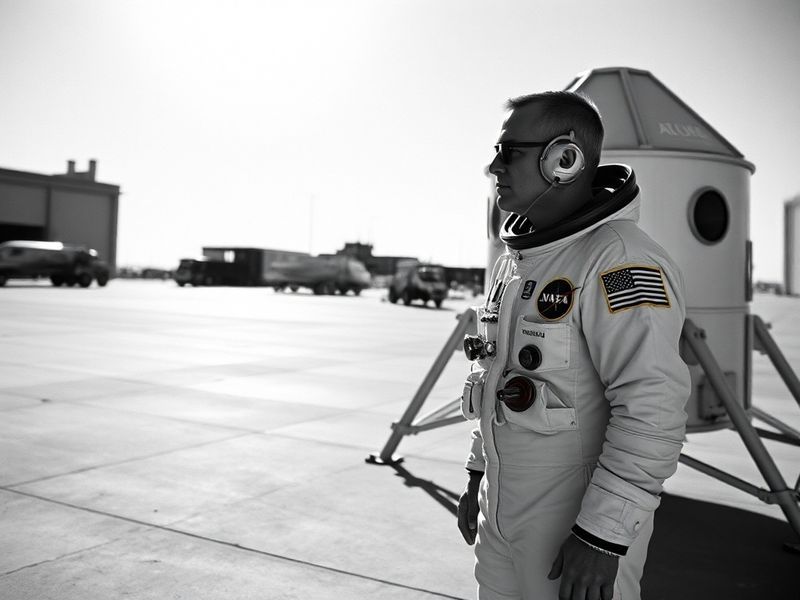
Charlie Duke wasn’t supposed to be an astronaut. In 1957, the West Point graduate was just another Air Force pilot logging flight hours when Sputnik streaked across the sky. Like thousands of others, he watched the Soviet satellite with fascination rather than fear. But within a decade, Duke would find himself standing on the lunar surface during Apollo 16, one of only twelve humans to achieve that distinction. His journey from fighter jockey to moon explorer involved more than just technical skill—it required the kind of adaptability and sheer luck that defined the entire Apollo era.
The son of a tobacco farmer from North Carolina, Duke grew up hunting and fishing before discovering a talent for aviation. His path to space began when he earned a spot in the Air Force’s experimental test pilot school at Edwards AFB. There, he caught the attention of NASA recruiters who were scouting for pilots with advanced degrees. Duke’s combination of combat experience (he flew 147 combat missions in Vietnam) and engineering credentials made him an ideal candidate for the astronaut corps.
The Near-Miss That Almost Ended His Career
Duke’s first brush with disaster came before he ever left Earth. In 1966, while training for the Gemini program, he was involved in a high-speed ejection from an F-104 Starfighter. The incident left him with a fractured vertebra and a medical disqualification that should have grounded him permanently. Against all odds, Duke convinced NASA doctors to let him fly again, proving his resilience during a grueling recovery period.
His perseverance paid off when he was assigned as backup lunar module pilot for Apollo 13. The near-fatal mission in April 1970 would have made Duke the third-youngest moonwalker in history if not for the explosion that aborted the landing. Instead, he became the lunar module pilot for Apollo 16, launching on April 16, 1972, with John Young and Ken Mattingly. The mission would become one of the most scientifically productive of the entire Apollo program.
A Different Kind of Moon Mission
While Apollo 11 and 14 focused on lunar geology near the equator, Apollo 16 targeted the Descartes Highlands, a region of older, more rugged terrain. Duke and Young spent over 20 hours outside the lunar module “Orion,” covering 16.6 miles in their rover and collecting 210 pounds of rock samples. The discoveries they made challenged existing theories about the moon’s volcanic history.
During their third and final moonwalk, Duke famously dropped a photo of his family on the surface, letting it become part of the lunar landscape. The gesture wasn’t just personal—it represented the human element that made Apollo more than just a technological achievement. In later interviews, Duke reflected on how the isolation of space made him appreciate Earth’s beauty in ways he never could have imagined.
Life After the Moon: From Astronaut to Businessman
Duke’s return to Earth marked the beginning of another challenging transition. Unlike many astronauts who stayed within the space community, he chose to leave NASA in 1975 to pursue business opportunities. His first venture was a failed attempt to establish a commercial airline, followed by a stint in real estate that left him nearly bankrupt.
The experience taught Duke valuable lessons about risk and failure. He eventually found success in the oil and gas industry, serving as president of a Texas-based energy company. His business career demonstrated the same adaptability that had defined his astronaut days, though with far less fanfare.
The Personal Cost of Exploration
While Duke’s public persona remained optimistic, his private life tells a different story. The Apollo missions exacted a toll on many astronauts’ marriages, and Duke’s was no exception. In his 1990 memoir Moonwalker, he revealed that his wife Dotty had considered leaving him during his astronaut years. The strain of training, the constant media attention, and the ever-present danger created tensions that nearly broke their 40-year marriage.
Yet Duke also credits Dotty with being his “anchor” during the most stressful periods. Their ability to navigate these challenges offers a counterpoint to the heroic narratives that often surround astronauts. It’s a reminder that behind every space explorer is a support system that makes their achievements possible.
Legacy: More Than Just a Footprint
Today, at 88 years old, Duke remains one of the most approachable figures from the Apollo era. He frequently speaks at schools and events, sharing stories that emphasize the human side of space exploration. His message to young people often centers on the importance of perseverance and preparation rather than dreams of glory.
Duke’s legacy extends beyond his lunar mission. He played a crucial role in developing the lunar rover that allowed astronauts to explore wider areas of the moon’s surface. His technical contributions to the Apollo program helped pave the way for future robotic explorers and even Mars rovers.
The Charlie Duke story offers important lessons about adaptability in the face of adversity. His journey from injured pilot to moonwalker to businessman demonstrates how skills developed in one field can translate to others. It’s a narrative that resonates particularly in today’s world of constant career changes and technological disruption.
For those interested in exploring more about the people who shaped space exploration, Dave’s Locker’s Space History section offers additional profiles and insights. Similarly, Astronaut Stories provides deeper dives into the personal journeys of those who ventured beyond Earth’s atmosphere.
Charlie Duke’s life reminds us that great achievements often come from unexpected places. His story isn’t just about walking on the moon—it’s about the resilience required to get there in the first place, and the determination to build a meaningful life after the spotlight fades.