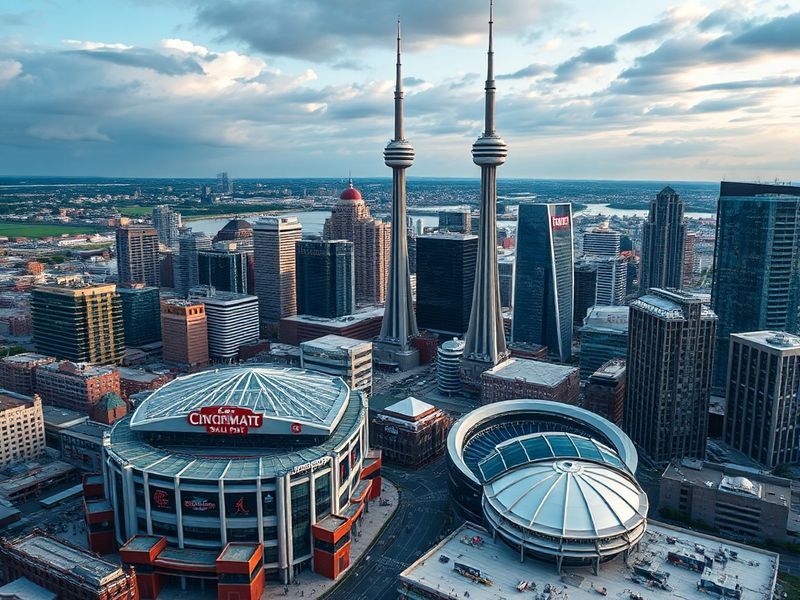
Cincinnati and Toronto stand as two of North America’s most underrated yet fascinating cities, each offering a distinct blend of history, culture, and urban energy. While Cincinnati nestles along the Ohio River with a blue-collar heart and midwestern charm, Toronto rises as Canada’s cosmopolitan beacon—a mosaic of global influences and economic ambition. The contrast between these cities reveals much about regional identity, urban development, and the evolving nature of North American life.
Beyond their skylines and sports rivalries, Cincinnati and Toronto share a quiet rivalry in arts, cuisine, and economic resilience. Both cities have transformed from industrial strongholds into hubs of innovation, though their paths diverge sharply in tone and trajectory. To understand their differences is to appreciate the diversity of the continent itself.
The Urban Fabric: Midwestern Modesty vs. Cosmopolitan Dynamism
Cincinnati’s urban identity is rooted in its industrial past. Founded in 1788, it grew around manufacturing, river trade, and German immigrant communities that shaped its brewing and culinary traditions. The city’s architecture reflects this legacy—red brick factories repurposed into lofts, historic Music Hall, and the iconic Roebling Bridge, a testament to its engineering roots. The skyline is intimate, with no towering giants, and the streets hum with a slower, neighborly rhythm.
Toronto, by contrast, is a city built by migration. Over half its residents were born outside Canada. The skyline is a forest of glass and steel—condos, corporate towers, and cultural institutions stacked against the lake. The streets pulse with a dozen languages, from Mandarin to Punjabi, and the city’s food scene reflects this diversity, from dim sum in Chinatown to jerk chicken in Little Jamaica. Toronto doesn’t just accommodate difference; it thrives on it.
Where Cincinnati feels like a city holding onto its history, Toronto is a city racing toward the future—often at the cost of its own identity. The former values preservation; the latter embraces reinvention. This fundamental difference shapes everything from public transit (Toronto’s subway is extensive; Cincinnati’s streetcar is a recent, modest experiment) to housing policy (Toronto struggles with skyrocketing rents; Cincinnati grapples with vacancy and revitalization).
The Cultural Divide: From Music and Art to Cuisine and Community
Cincinnati’s cultural scene is deeply local and proudly idiosyncratic. The city gave the world the Isley Brothers, The Devo frontman Mark Mothersbaugh, and the National Underground Railroad Freedom Center, which anchors its identity as a key stop on the Underground Railroad. The Cincinnati Zoo, home to Fiona the famous hippo, has become a global symbol of conservation. The city’s art scene thrives in pockets—the Over-the-Rhine district, once a German immigrant enclave, now hosts galleries, breweries, and the annual Bockfest, a celebration of sausage and beer culture.
Toronto’s cultural output, meanwhile, is a global export. It’s the birthplace of Drake, The Weeknd, and Rush; the host of TIFF, one of the world’s most prestigious film festivals; and home to the Royal Ontario Museum and the Art Gallery of Ontario. The city’s music festivals—like Caribana and Luminato—draw international crowds. Toronto doesn’t just produce culture; it curates it for the world.
Food offers another striking contrast. Cincinnati is famous for its chili—spiced ground beef served over spaghetti or hot dogs, a dish invented by Macedonian immigrants in the 1920s. Skyline Chili, Gold Star, and Dixie serve this quirky specialty in neon-lit diners. The city also boasts a strong beer culture, with breweries like Rhinegeist and MadTree leading a craft revival.
Toronto’s culinary landscape is a United Nations on a plate. You can eat Ethiopian injera in Little Ethiopia, Portuguese pasteis de nata in Little Portugal, or authentic Sichuan noodles in Chinatown. The city’s food markets—St. Lawrence, Kensington, and the expansive Toronto Food Terminal—are microcosms of global migration. Even the hot dog stands serve up variations like the “Toronto-style” bacon-loaded dog, a nod to the city’s multicultural identity.
Cultural Highlights Comparison
- Music: Cincinnati nurtures indie and blues scenes; Toronto produces global pop stars.
- Cuisine: Cincinnati champions comfort food and beer; Toronto celebrates global fusion.
- Festivals: Cincinnati celebrates heritage (Oktoberfest Zinzinnati); Toronto hosts international events (Caribana, TIFF).
- Arts: Cincinnati’s scene is grassroots and historic; Toronto’s is institutional and avant-garde.
Economy and Opportunity: Rust Belt Resilience vs. Financial Capital
Cincinnati’s economy has long relied on manufacturing, healthcare, and logistics. Procter & Gamble, Kroger, and Fifth Third Bank call the city home. After decades of decline, Cincinnati has seen a slow but steady revival, driven by healthcare innovation (Cincinnati Children’s Hospital is a national leader) and a growing startup scene, particularly in fintech and biotech. The city’s cost of living remains low, and its neighborhoods offer a rare balance of affordability and community.
Toronto, meanwhile, is Canada’s financial and economic engine. The Toronto Stock Exchange, major banks, and multinational corporations anchor its economy. The city’s tech sector has boomed, earning it the nickname “Silicon Valley North,” though skyrocketing housing costs and congestion threaten its long-term appeal. Toronto’s economic strength attracts global talent, but it also creates inequality—visible in the contrast between gleaming condo towers and tent encampments downtown.
While Cincinnati grapples with brain drain and urban sprawl, Toronto struggles with overdevelopment and affordability crises. Both cities highlight the challenges of 21st-century urban life: how to grow without losing soul, how to innovate without excluding, how to thrive economically while preserving livability.
Sports and Civic Identity: Loyalty as Lifeblood
Sports are where Cincinnati and Toronto’s civic identities shine brightest. In Cincinnati, loyalty is intimate and generational. Bengals fans endure decades of playoff heartbreak, while Reds fans celebrate a rare World Series win in 1990. The city’s minor league teams—the Cyclones (hockey) and the Dragons (baseball)—foster grassroots fandom. High school football Friday nights are sacred, and the annual Crosstown Shootout between the University of Cincinnati and Xavier is a citywide event.
Toronto’s sports scene is a spectacle of scale and spectacle. The Raptors brought NBA glory in 2019, the Blue Jays are perennial contenders, and the Maple Leafs remain one of hockey’s most storied franchises—despite their “longest Cup drought” narrative. Toronto FC dominates MLS attendance, and the city’s marathon and Pride events draw hundreds of thousands. The city’s sports culture is less about survival and more about spectacle, a reflection of its global ambitions.
Yet beneath the glamour, Toronto’s sports fandom can feel transactional. The Raptors’ 2019 title parade drew 2 million people, but the city’s rapid gentrification has displaced long-time fans from neighborhoods like Liberty Village. In Cincinnati, sports are woven into the fabric of everyday life. You’ll find Bengals flags in front yards and Reds memorabilia in local bars. The connection isn’t to a brand; it’s to a place.
Conclusion: Two Cities, One Continent’s Contrast
Cincinnati and Toronto are more than just cities—they are microcosms of broader North American trends. Cincinnati represents the quiet resilience of the Rust Belt, a city learning to reinvent itself without erasing its identity. Toronto embodies the hyper-global city, a place where the future is built daily, for better and worse.
One thrives on nostalgia and authenticity; the other on ambition and diversity. One offers affordability and community; the other, opportunity and cosmopolitan energy. Yet both face the same existential questions: How do you grow without losing what makes you unique? How do you balance progress with preservation?
Perhaps the real rivalry isn’t between these cities at all—it’s between two visions of what a modern city can be. And in that contest, both Cincinnati and Toronto have much to teach the world.
For those looking to explore these urban contrasts further, Dave’s Locker’s Sports section offers deeper analysis on how cities shape—and are shaped by—their teams and traditions. Meanwhile, our Culture archives delve into the arts, food, and identity that define places like these.