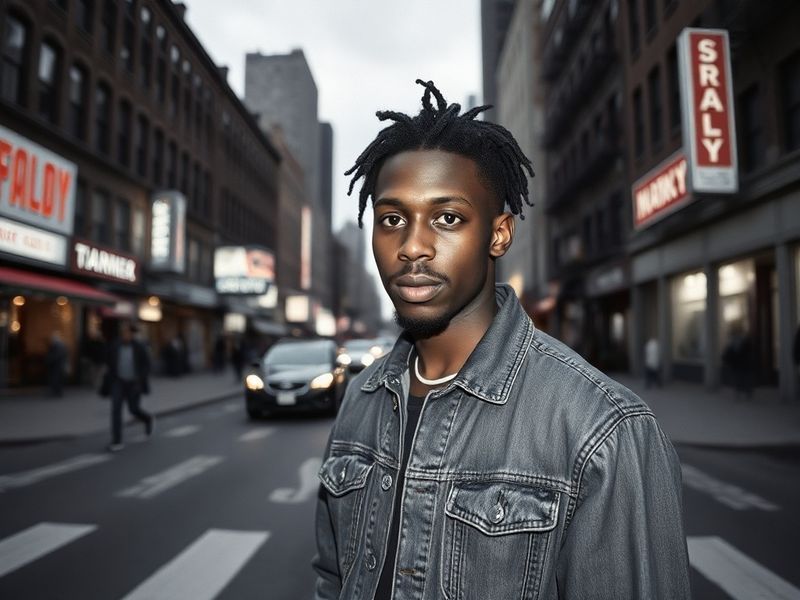
Daeqwon Plowden is carving a distinct path in the world of contemporary art, blending traditional techniques with modern urban influences. At just 24 years old, the Philadelphia-based artist has already made waves in galleries and street corners alike, challenging perceptions of what art can be. His work transcends simple categorization, merging graffiti aesthetics with fine art sensibilities to create something entirely new.
The son of a muralist, Plowden grew up surrounded by creativity but chose to forge his own identity. Early experiments with spray paint on concrete led to formal training at the Pennsylvania Academy of the Fine Arts, where he refined his technique while maintaining the raw energy of street art. This duality defines his practice—a tension between discipline and spontaneity that resonates with audiences tired of rigid artistic boundaries.
The Evolution of Plowden’s Artistic Voice
Plowden’s journey began in the neighborhoods of North Philadelphia, where public art was both a form of expression and resistance. His early pieces often featured bold typography and layered textures, reflecting the layered stories of his community. As his reputation grew, so did the scale of his work, from gallery exhibitions to large-scale murals in cities like New York and Los Angeles.
One of his most notable projects, Fragments of Home, transformed abandoned buildings into canvases that told the stories of displaced communities. The series caught the attention of critics for its unflinching honesty and technical precision. Plowden himself has described the process as “archaeology meets alchemy”—digging into the past to create something transformative for the future.
Key milestones in his career include:
- A solo exhibition at the Philadelphia Museum of Art’s contemporary annex (2022)
- A commission for the Philadelphia Mural Arts Program, creating a 200-foot mural on the side of a public housing complex
- Features in The New York Times and Juxtapoz highlighting his contributions to the “post-graffiti” movement
- Collaborations with fashion brands like Nike and Puma, bringing his aesthetic to apparel and accessories
The Cultural Significance of His Work
Plowden’s art arrives at a pivotal moment in urban culture, where the lines between street art, fine art, and digital media are increasingly blurred. His work speaks to a generation that values authenticity but also demands accessibility. Unlike the anonymous taggers of the 1980s, Plowden embraces his identity, using his platform to address social issues like gentrification and systemic inequality.
Critics have noted that his pieces often serve as visual archives, preserving the narratives of marginalized communities. In an era where digital art dominates conversations, Plowden’s commitment to physical media—paint, brushes, spray cans—feels almost rebellious. This return to tactile artistry is a quiet but powerful statement about the value of tangible human labor in an increasingly virtual world.
His influence extends beyond galleries. Plowden has partnered with local schools to develop art programs, proving that his impact is as much about community building as it is about aesthetics. This holistic approach aligns with broader trends in contemporary art, where artists are expected to be educators, activists, and innovators simultaneously.
What’s Next for Daeqwon Plowden?
The artist shows no signs of slowing down. In 2024, he’s set to unveil a new body of work exploring the intersection of Afrofuturism and urban decay, a theme that feels particularly urgent in today’s political climate. There are also rumors of a documentary project, which would offer unprecedented insight into his creative process and the cultural forces shaping his art.
Plowden’s rise also raises questions about the sustainability of street art in a commercialized world. As his work gains commercial value, will he resist the pressures of the art market, or will he become another example of the system co-opting rebellious energy? His response so far has been measured: he accepts commissions but maintains control over his message, ensuring his art remains a tool for dialogue rather than decoration.
For those watching the trajectory of contemporary art, Plowden represents more than just talent—he embodies the potential for art to bridge divides. His story is a reminder that the most compelling art isn’t just seen; it’s felt, questioned, and lived.
Where to Experience Plowden’s Work
For readers interested in exploring Plowden’s art firsthand, his pieces can be found in:
- The Philadelphia Museum of Art’s contemporary wing (permanent collection)
- Public murals across Philadelphia, including the Culture district and Kensington neighborhood
- Upcoming exhibitions at the Los Angeles County Museum of Art (LACMA) and the Studio Museum in Harlem
Plowden’s work is also available in limited-edition prints through his website, with proceeds supporting local arts initiatives. For a deeper dive into his process, his Instagram (@daeqwonplowden) offers a raw, behind-the-scenes look at his studio and public projects.
Why Daeqwon Plowden Matters in Today’s Art Scene
In an era where art is often reduced to viral moments or marketable trends, Plowden’s commitment to authenticity feels radical. He proves that art can be both commercially viable and socially conscious, challenging the notion that these two goals are mutually exclusive. His success suggests a hunger among audiences for work that doesn’t just decorate spaces but transforms them.
Moreover, Plowden’s story is a testament to the power of local roots. Unlike artists who relocate to global art hubs like New York or Berlin, he has remained tethered to Philadelphia, using his platform to uplift his community. This grounded approach offers a blueprint for other artists seeking to balance ambition with responsibility.
As galleries and collectors continue to chase the next big name, Plowden’s trajectory serves as a case study in staying true to one’s vision. His work reminds us that art isn’t just about creating objects—it’s about creating experiences, sparking conversations, and, ultimately, shaping culture.
“Art should be a conversation, not a monologue. My goal isn’t to be the loudest voice in the room—it’s to make sure the quietest voices get heard too.” — Daeqwon Plowden
For those looking to understand the pulse of contemporary urban art, Plowden’s career offers a compelling narrative. It’s a story of talent, resilience, and the unshakable belief that art can change the world—one wall, one brushstroke, at a time.