hormuz
“`html
Strait of Hormuz: The World’s Most Critical Maritime Chokepoint
The Strait of Hormuz is more than a narrow waterway between Iran and Oman—it is the circulatory system of global oil trade. Roughly 20% of the world’s petroleum passes through this 21-mile-wide passage daily. Ships moving in both directions carry millions of barrels of crude oil, making the strait indispensable to energy markets. Any disruption here sends shockwaves through economies, fueling volatility in gas prices and reshaping geopolitical alliances.
This choke point isn’t just a point on a map; it is a stage where geography, politics, and economics collide. The strait’s shallow waters and unpredictable currents demand expert navigation, while its strategic value has turned it into a flashpoint for international tensions. To understand modern energy security, you must first understand Hormuz—its history, its risks, and its enduring role in shaping global power.
The Historical Roots of a Global Lifeline
The Strait of Hormuz has been a vital trade route for over two millennia. Ancient Persian empires, Arab traders, and European colonial powers all relied on this passage to move goods between the Indian Ocean and the Mediterranean. By the 16th century, the Portuguese established a naval presence here, seizing control to dominate spice and silk trade routes. That dominance ended when Persian rulers, with British support, reclaimed the strait in the early 17th century.
In the 20th century, oil transformed Hormuz from a regional thoroughfare into a global artery. With the discovery of vast reserves in the Arabian Peninsula, the strait became the only practical route for tankers to export crude to Europe, Asia, and beyond. The 1973 oil crisis, triggered partly by a U.S. military alert in Hormuz, demonstrated how quickly energy flows could be weaponized. Today, Iran’s Revolutionary Guard maintains a strong naval presence near the strait, a reminder that control here is both a strategic prize and a source of constant tension.
Why Hormuz Matters More Than Ever
The strait’s importance has grown alongside Asia’s rising energy demand. China, India, and Japan now import over 70% of their oil via Hormuz. This shift has made Asian economies particularly vulnerable to supply disruptions. In 2019, attacks on tankers near Hormuz caused oil prices to spike by nearly 20% in a single day. Even minor incidents—like drone strikes or seizures of vessels—can trigger panic in futures markets.
Geopolitical rivalries add another layer of complexity. The United States, Saudi Arabia, and the United Arab Emirates view Iran’s influence in Hormuz as a direct threat. In response, they conduct joint naval exercises and maintain a continuous military presence. Meanwhile, Iran has repeatedly threatened to close the strait in retaliation for sanctions or perceived aggression. Such rhetoric is not idle—during the Iran-Iraq War in the 1980s, both sides targeted shipping in the strait, sinking dozens of vessels and disrupting nearly 2 million barrels of oil per day.
Environmental risks also loom large. The strait is surrounded by some of the world’s most fragile ecosystems. A major oil spill here could devastate marine life in the Gulf of Oman and disrupt desalination plants, threatening fresh water supplies for millions. Climate change is intensifying these dangers, as rising temperatures and shifting currents increase the unpredictability of navigation.
Alternatives Exist, But None Are Equal
While alternatives to Hormuz do exist, none can fully replace its capacity or efficiency. Saudi Arabia has invested in the East-West Pipeline, which bypasses the strait by moving oil across the Arabian Peninsula to the Red Sea. The UAE has built the Habshan-Fujairah pipeline, allowing exports to bypass Hormuz entirely. These projects reduce—but do not eliminate—dependence on the strait.
Another option is the expansion of Arctic shipping routes, which could eventually allow some oil exports to move north of Russia and into Europe. However, these routes are seasonal, expensive, and limited by ice conditions. For now, Hormuz remains irreplaceable for the bulk of Middle Eastern oil bound for Asia.
Below are some key alternatives to Hormuz and their limitations:
- East-West Pipeline (Saudi Arabia): Moves oil from Persian Gulf to Red Sea, reducing Hormuz traffic by up to 5 million barrels per day. Limited by pipeline capacity and security risks in Yemen.
- Habshan-Fujairah Pipeline (UAE): Transports oil from Abu Dhabi to the Gulf of Oman, bypassing Hormuz. Capacity is 1.5 million barrels per day, but vulnerable to regional instability.
- Arctic Routes: Could offer seasonal alternatives but face extreme weather, high costs, and geopolitical barriers from Russia and Canada.
- Overland Routes via Iraq or Turkey: Limited by infrastructure and ongoing conflicts in the region.
The Human Dimension: Lives Shaped by a Waterway
Beyond the headlines, the Strait of Hormuz shapes the lives of thousands of people. Fishermen in Oman and Iran rely on its waters for their livelihoods, though overfishing and pollution threaten their way of life. Port cities like Dubai and Abu Dhabi owe much of their wealth to trade passing through Hormuz, while smaller coastal communities in Iran struggle under sanctions that limit their access to global markets.
For mariners, navigating Hormuz is both a test of skill and a gamble. Tanker crews endure long shifts in waters patrolled by naval vessels from multiple nations. Piracy, smuggling, and sudden military maneuvers keep crews on constant alert. The 2015 hijacking of a Singapore-flagged tanker by Iranian forces, and the 2021 seizure of a South Korean vessel in response to frozen funds, underscore the human cost of geopolitical brinkmanship.
Local economies also bear the strain. In Iran’s Hormuzgan province, sanctions have crippled businesses, forcing many to rely on smuggling or subsistence fishing. Meanwhile, in Oman’s Musandam exclave, tourism and trade are tightly linked to the strait’s stability. The region’s people are caught between global powers, their futures tied to the ebb and flow of oil tankers and geopolitical winds.
Looking Ahead: Can Diplomacy or Innovation Break the Deadlock?
The future of Hormuz hinges on two uncertain factors: diplomacy and technology. Diplomatic efforts to revive the Iran nuclear deal have stalled repeatedly, leaving the strait in a state of perpetual tension. Meanwhile, the rise of renewable energy and electric vehicles could gradually reduce global dependence on Middle Eastern oil—though not fast enough to eliminate Hormuz’s role in the near term.
Technological solutions offer partial relief. Satellite monitoring, AI-driven navigation, and blockchain-based supply chain tracking could improve safety and transparency. Some experts advocate for a regional maritime security framework, where Gulf states collaborate to protect shipping without U.S. or European oversight. But trust is scarce, and historical grievances run deep.
The most immediate threat remains miscalculation. A single incident—whether an accident, a cyberattack, or a deliberate strike—could spiral into a regional conflict with global consequences. Energy markets would freeze. Supply chains would fracture. The world would once again confront the fragility of its most critical trade route.
In the end, the Strait of Hormuz is not just a geographic feature. It is a mirror reflecting the world’s energy addiction, its geopolitical fractures, and its fragile interdependence. As long as oil remains the lifeblood of the global economy, Hormuz will remain its most vital—and most vulnerable—organ. The question is not whether the world can afford to ignore Hormuz, but whether it can afford to keep gambling on its stability.
For deeper analysis on energy markets and geopolitics, explore our News and Analysis sections. Understanding the forces shaping Hormuz is key to navigating the complexities of modern energy security.
—
METADATA
{
“title”: “Why the Strait of Hormuz Remains the World’s Most Critical Oil Chokepoint”,
“metaDescription”: “The Strait of Hormuz carries 20% of global oil. Learn why this narrow waterway is the most volatile energy hotspot on Earth.”,
“categories”: [“News”, “Analysis”],
“tags”: [“Strait of Hormuz”, “oil trade”, “energy security”, “geopolitics”, “maritime chokepoints”],
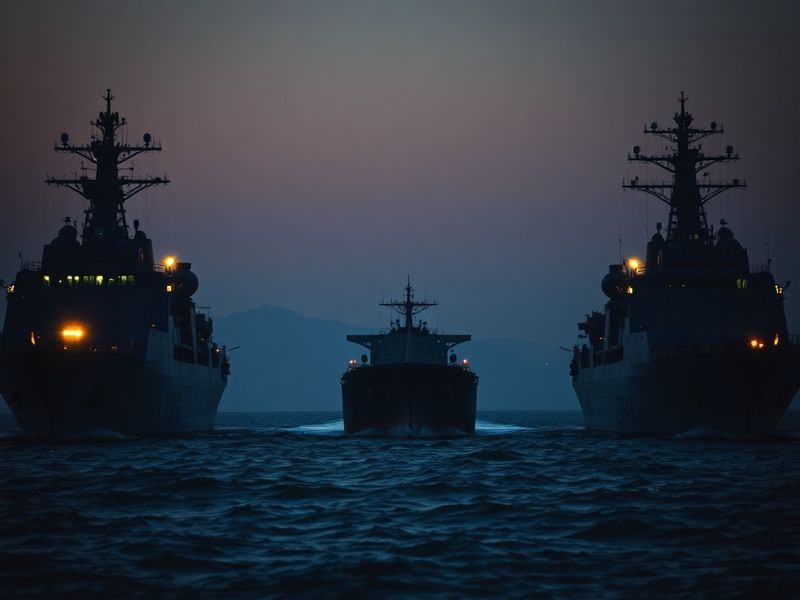
“imageDescription”: “A wide-angle view of a massive oil tanker navigating the narrow Strait of Hormuz, flanked by rugged Omani and Iranian coastlines under a golden sunset, with naval ships visible in the distance. The scene conveys both the scale of global energy transport and the underlying tension of a critical maritime passage.”
}
—END METADATA—
“`