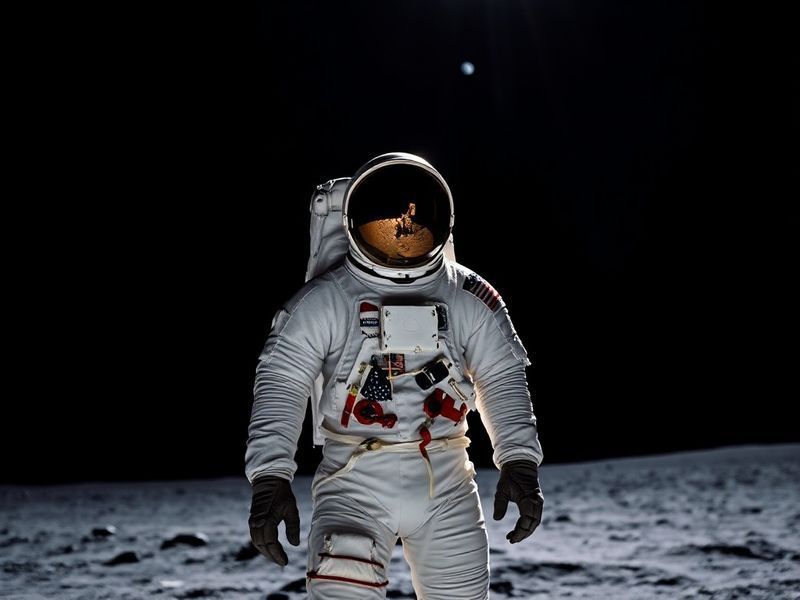
Neil Armstrong: How One Man’s Step Changed Humanity Forever
“`html
Neil Armstrong: The Man Who Redefined Human Ambition
Few names in human history carry the weight of a single moment as Neil Armstrong’s does. His words—”That’s one small step for man, one giant leap for mankind”—echoed through time as more than a declaration. They marked the culmination of centuries of curiosity, engineering, and courage. Armstrong wasn’t merely an astronaut; he became a symbol of what humanity could achieve when fear and ambition collided under the cold glow of the moon.
The Early Years: A Foundation of Curiosity and Discipline
Born on August 5, 1930, in Wapakoneta, Ohio, Armstrong’s fascination with flight began early. He earned his student pilot’s license at just 16, before he could even drive. His path to the stars was paved with discipline—first as a naval aviator during the Korean War, where he flew 78 combat missions, and later as a test pilot at the National Advisory Committee for Aeronautics (NACA), the precursor to NASA.
Armstrong’s career was defined by precision. He flew more than 200 different types of aircraft, from jets to experimental planes. His reputation for composure under pressure earned him a spot in the elite astronaut corps in 1962. But it wasn’t just skill that set him apart. Armstrong possessed an almost philosophical understanding of risk and reward, a trait that would define his most historic moment.
The Apollo 11 Mission: A Triumph of Human Ingenuity
On July 16, 1969, a Saturn V rocket roared to life at Kennedy Space Center, carrying three men toward the moon. Among them was Armstrong, commander of Apollo 11. The mission was fraught with variables no simulation could fully capture. The lunar module, Eagle, had to descend through an unfamiliar terrain while avoiding boulders and craters. Fuel was limited. The world watched, holding its breath.
As Eagle’s computer-guided descent faltered, alarms blared and fuel dwindled. Armstrong took manual control, guiding the lander to a safe spot with just seconds of reserve. At 4:17 p.m. EDT on July 20, the lunar module touched down. Six hours later, Armstrong descended the ladder, his left foot imprinting the moon’s surface as the most watched step in history.
That moment transcended science. It was a statement—one that reshaped global perceptions of possibility. Armstrong’s actions weren’t just about exploration; they were about proving that humanity could conquer the impossible. The mission’s success didn’t just advance technology; it redefined human ambition for generations.
Key Moments of the Apollo 11 Mission
- Launch (July 16, 1969): The Saturn V rocket lifted off, beginning a journey of 240,000 miles.
- Lunar Orbit Insertion (July 19): The crew entered lunar orbit, preparing for descent.
- Eagle’s Descent (July 20): Armstrong and Buzz Aldrin undocked the lunar module, facing unforeseen challenges.
- First Steps on the Moon: Armstrong planted the American flag and collected lunar samples.
- Return to Earth (July 24): The crew splashed down in the Pacific Ocean, greeted as heroes.
Beyond the Moon: The Legacy of a Quiet Hero
Armstrong’s life after Apollo 11 was marked by modesty. He avoided the spotlight, preferring to teach engineering at the University of Cincinnati. Yet his influence endured. He served on commissions investigating space disasters, like the Challenger explosion, bringing his trademark pragmatism to moments of national mourning.
His legacy extends beyond statistics or records. Armstrong embodied the idea that true leadership isn’t about grandeur, but about responsibility. He once said, “I believe every human has a finite number of heartbeats. I don’t intend to waste any of mine.” This philosophy guided his career—from test pilot to astronaut to educator. It’s a reminder that exploration isn’t just about reaching new worlds; it’s about honoring the fleeting nature of time and the boundless potential of human effort.
The Armstrong Effect: Why His Story Still Matters Today
In an era where instant gratification often overshadows long-term vision, Armstrong’s story is a counterpoint. The Apollo program was a decade-long marathon, not a sprint. It demanded collaboration across nations, disciplines, and generations. Today, as debates rage over space exploration’s cost and purpose, Armstrong’s journey offers clarity. Exploration isn’t a luxury; it’s a necessity for survival and progress.
Armstrong’s life also underscores the power of humility. In a culture obsessed with self-promotion, he remained a man of few words, letting actions speak for themselves. His 1969 press conference after Apollo 11 is legendary not for its rhetoric, but for its brevity. When asked about the moon landing’s impact, he replied, “I think we’re going to the moon because it’s in the nature of the human being to face challenges.”
That mindset is more relevant than ever. Climate change, technological disruption, and global competition demand the same audacity Armstrong displayed. His story isn’t just about the past; it’s a blueprint for the future. It challenges us to ask: What are the “giant leaps” our generation must take?
Armstrong passed away in 2012, but his legacy lives on—not just in museums or textbooks, but in the DNA of every dreamer who looks up at the night sky and wonders, “What’s next?”
His life reminds us that the greatest achievements aren’t measured in distance or speed, but in the courage to defy limits. And in that defiance, humanity finds its purpose.