Neil Armstrong: The First Man on the Moon and His Lasting Legacy
“`html
Neil Armstrong: The Man Who Redefined Human Ambition Beyond Earth
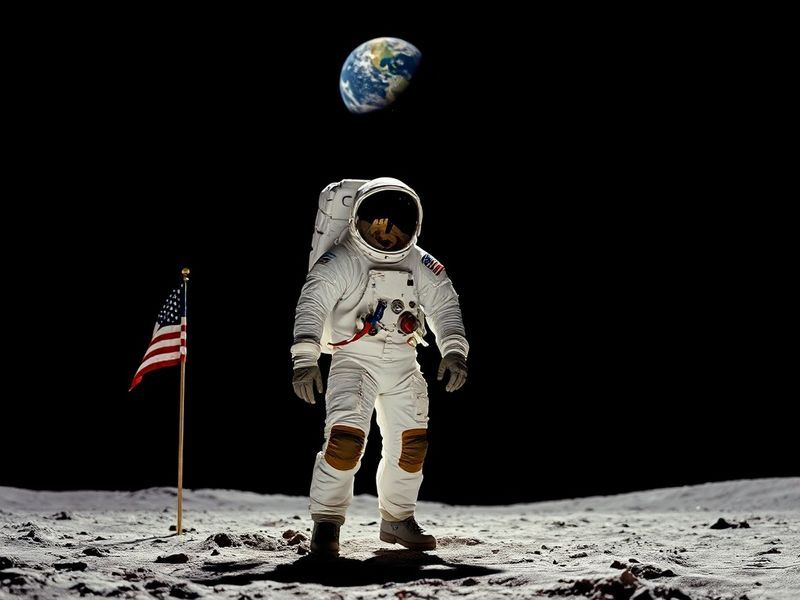
On July 20, 1969, a single step onto the dusty surface of the Moon transformed Neil Armstrong from a test pilot and engineer into a symbol of human achievement. As commander of NASA’s Apollo 11 mission, he became the first person to set foot on another celestial body, uttering the iconic phrase, “That’s one small step for [a] man, one giant leap for mankind.” This moment was not just a scientific triumph—it was a cultural milestone that redefined humanity’s relationship with the cosmos.
The Early Life and Education of a Quiet Pioneer
Born on August 5, 1930, in Wapakoneta, Ohio, Neil Alden Armstrong grew up in a middle-class family with a deep respect for aviation. His fascination with flight began early. At just 15, he earned his student pilot’s license before even obtaining a driver’s license. This precocious passion led him to Purdue University on a U.S. Navy scholarship, where he studied aeronautical engineering and later served as a naval aviator during the Korean War.
After the war, Armstrong returned to his academic pursuits and joined the National Advisory Committee for Aeronautics (NACA), the precursor to NASA. His work as a test pilot at Edwards Air Force Base in California placed him at the forefront of high-speed flight research. Colleagues described him as reserved, analytical, and deeply committed to precision—traits that would define his approach to space exploration.
A Career Built on Precision and Risk
Armstrong’s reputation as a calm and calculated aviator earned him a place in NASA’s astronaut corps in 1962. His first spaceflight came in 1966 as command pilot of Gemini 8, where he and David Scott performed the first successful docking of two spacecraft in orbit. This mission tested the limits of human control in microgravity and demonstrated Armstrong’s ability to handle crises—an experience that would prove invaluable three years later.
By 1969, Armstrong was selected to lead Apollo 11, a mission fraught with technical challenges and political pressure. The Soviet Union had taken an early lead in the space race, and the United States needed a victory to assert its technological dominance. The stakes were astronomical: the success or failure of Apollo 11 would shape the future of human spaceflight.
The Apollo 11 Mission: A Triumph of Engineering and Nerve
The journey to the Moon began on July 16, 1969, when a Saturn V rocket lifted off from Kennedy Space Center. Four days later, Armstrong and Buzz Aldrin descended in the lunar module Eagle while Michael Collins remained in orbit aboard the command module Columbia. As Eagle approached the lunar surface, alarms sounded, and the descent nearly overshot the intended landing site. With only seconds of fuel remaining, Armstrong took manual control, guiding the spacecraft to a safe touchdown in the Sea of Tranquility.
The world watched in suspense as Armstrong stepped onto the Moon’s surface. His words, delivered with deliberate calm, echoed across the globe. The lunar module’s camera broadcast grainy but historic footage to an estimated 650 million viewers. Armstrong and Aldrin spent two and a half hours outside the spacecraft, collecting samples, deploying experiments, and planting the American flag. Their actions were meticulously planned, yet the mission’s success hinged on split-second decisions and the crew’s ability to adapt.
Legacy Beyond the Moon Landing
Following Apollo 11, Armstrong largely retreated from the public eye, though he remained a prominent figure in science and education. He taught engineering at the University of Cincinnati and served on corporate boards, including United Airlines and Eaton Corporation. His reluctance to embrace celebrity status stemmed from a belief that the mission belonged to humanity, not to him personally.
Armstrong’s post-NASA life was marked by a commitment to advancing aerospace technology and inspiring future generations. He frequently emphasized the importance of education in STEM fields, arguing that innovation was the key to solving global challenges. His speeches often reflected on the fragility of Earth and the necessity of exploring beyond its atmosphere to ensure the survival of the species.
The Cultural and Scientific Impact of Armstrong’s Achievement
The Apollo 11 mission was more than a technological feat—it was a cultural watershed. It united a divided nation during a turbulent era, offering a moment of collective pride. Armstrong’s understated demeanor made him a relatable hero, far removed from the larger-than-life personas of other astronauts. His humility contrasted with the grandeur of the achievement, making the accomplishment feel accessible to ordinary people.
The mission also sparked a renewed interest in science and space exploration. Enrollment in aerospace engineering programs surged in the years following the Moon landing. Armstrong’s legacy endures in museums, textbooks, and the imaginations of children who dream of becoming astronauts. His life story serves as a reminder that curiosity and perseverance can push the boundaries of what is possible.
Controversies and Criticisms
Despite the mission’s success, Armstrong and NASA faced criticism in the decades that followed. Some questioned the cost of the Apollo program, arguing that the billions spent could have been allocated to social programs. Others pointed to the lack of follow-up lunar missions after Apollo 17 in 1972, a decision influenced by shifting political priorities and budget constraints.
Armstrong himself rarely engaged in public debates about the mission’s legacy. When asked about the Moon landing’s long-term impact, he often reiterated that its greatest value lay in proving what humanity could achieve when united by a common goal. His measured responses reflected his engineering mindset: results mattered more than rhetoric.
Honors, Tributes, and the Man Behind the Legend
Armstrong received numerous accolades, including the Presidential Medal of Freedom and the Congressional Gold Medal. Despite these honors, he remained grounded, often citing the contributions of the thousands of engineers, scientists, and technicians who made Apollo 11 possible. His humility was a defining trait, one that endeared him to the public and cemented his status as an American icon.
He passed away on August 25, 2012, at the age of 82, following complications from heart surgery. His death was met with an outpouring of tributes from around the world. NASA renamed a research center in his honor, and his family requested that his ashes be scattered at sea, a nod to his naval background.
Today, Armstrong’s legacy lives on in the ongoing efforts to return humans to the Moon under NASA’s Artemis program. The next generation of astronauts will walk in his footsteps, building on the foundation he helped lay. His story remains a testament to the power of human ingenuity and the unyielding desire to explore the unknown.
For those interested in the broader history of space exploration, explore our Science category for more in-depth analysis of humanity’s journey beyond Earth. To learn about the technological innovations that made Apollo possible, visit our Technology section.