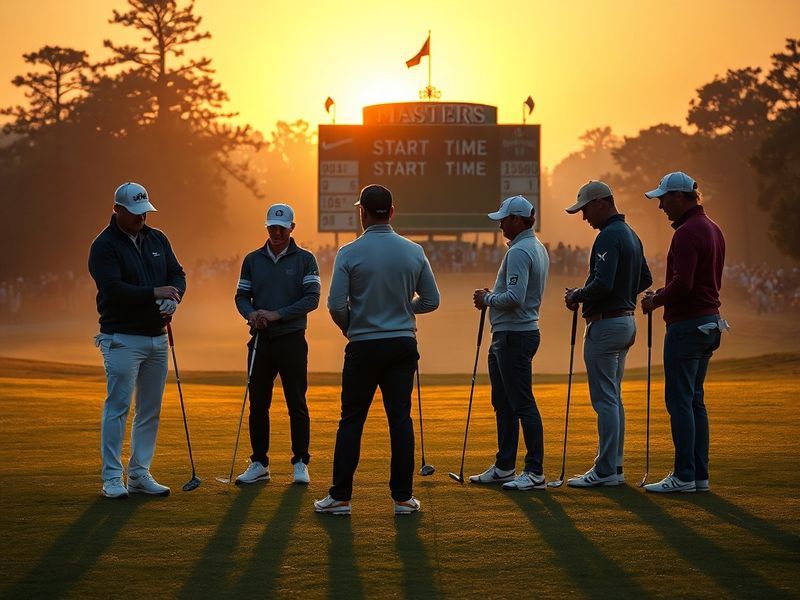
The Masters Tournament is more than a golf championship—it’s a tradition. Since 1934, Augusta National has hosted the sport’s most prestigious event, and one of its most defining features has been the Masters start time. Unlike many tournaments that begin later in the day, the Masters embraces early morning tee times, a decision that shapes everything from player strategy to broadcast appeal.
The Tradition of Morning Tee Times at Augusta
The Masters has maintained a consistent schedule since its inception. Competitors typically tee off between 7:00 and 9:00 AM, with the first two rounds played in the morning and the final two in the afternoon. This structure isn’t arbitrary—it reflects Augusta National’s deep-rooted philosophy about golf’s rhythm and aesthetics.
Augusta’s morning starts are rooted in practicality. In the 1930s, Augusta National’s co-founder, Bobby Jones, envisioned a tournament that harmonized with the natural environment. Cooler morning temperatures reduce player fatigue and help the course firm up, creating firmer fairways and faster greens. This slows down play slightly, allowing for more strategic shot-making and fewer errant drives.
The morning format also enhances the viewing experience. Golf’s purists argue that morning rounds offer clearer skies, crisper air, and a serene atmosphere—ideal for both players and spectators. The Masters’ television broadcasts have long emphasized this visual clarity, making early tee times a key part of the event’s identity.
How Morning Tee Times Influence Strategy
Golfers at the Masters don’t just show up and play—they adapt. The morning start forces players to think differently about risk and reward. With cooler conditions, balls travel shorter distances, and greens hold shots more firmly. This rewards accuracy over power, especially on Augusta’s tight fairways and undulating greens.
Consider the 2023 Masters, where Jon Rahm overcame a slow start to win. His ability to adjust to morning conditions—where the course plays firmer and the wind is often calmer—was crucial. Players who excel in these conditions tend to be those who can control trajectory and spin, rather than relying solely on distance.
Additionally, morning rounds often feature lower winds compared to afternoons, when thermal heating can stir up unpredictable gusts. This consistency allows players to better plan their shots, reducing the element of chance.
The Broadcast and Fan Experience
The Masters’ early start times are a cornerstone of its global appeal. Unlike other major tournaments that begin in the afternoon, Augusta’s morning rounds allow for extended live coverage across multiple time zones. This scheduling benefits networks like ESPN and CBS, which can showcase key moments during primetime in the U.S. and Europe.
Fans also benefit from the early tee times. Golf enthusiasts can follow the action throughout the day without missing extended breaks or delays. The Masters’ two-round format—morning and afternoon—creates natural pauses for analysis, interviews, and highlights, making the event more digestible for viewers.
Social media further amplifies the impact of morning starts. Key moments from the opening rounds often trend on platforms like Twitter and Instagram, generating buzz before the final rounds even begin. This early engagement keeps the tournament in the public eye longer, reinforcing its status as a marquee event.
Controversies and Considerations
Despite its advantages, the Masters’ early start times have faced criticism. Some argue that morning tee times disadvantage players who perform better in warmer conditions. Others point out that the two-round format can lead to fatigue, particularly for those who struggle in the afternoon heat.
There have also been discussions about accessibility. Early starts can be challenging for international fans traveling to Augusta, as well as for broadcasters covering the event from distant time zones. However, the tournament has largely resisted change, prioritizing tradition over convenience.
Another consideration is player health. While cooler morning temperatures are generally beneficial, they can also lead to slower play if the course remains damp from overnight dew. Augusta National has invested in advanced irrigation and drainage systems to mitigate this, but weather remains an unpredictable factor.
The Future of Masters Start Times
As golf evolves, so too might the Masters’ scheduling. The PGA Tour has experimented with later starts in other events, particularly in Asia and the Middle East, where heat and humidity demand flexibility. However, Augusta National’s commitment to tradition suggests that early tee times will remain a staple.
One potential change could be the incorporation of more flexible scheduling, allowing players to choose their tee times based on performance data or weather forecasts. This would add a modern twist to the classic format while preserving the tournament’s core identity.
For now, the Masters’ early start times remain a defining feature of the tournament. They shape strategy, enhance broadcast quality, and uphold a tradition that has endured for nearly a century. Whether through innovation or preservation, Augusta National continues to set the standard for what a major golf championship should be.
Key Takeaways About Masters Start Times
- Tradition: The Masters has maintained morning tee times since 1934, aligning with Bobby Jones’ vision for a harmonious tournament.
- Strategy: Cooler morning conditions reward accuracy and control, making it a test of skill rather than power.
- Broadcast Appeal: Early starts allow for extended live coverage and engagement across multiple time zones.
- Fan Experience: The two-round format provides natural breaks for analysis and highlights, enhancing viewer enjoyment.
- Weather Influence: Morning rounds typically feature calmer winds and firmer conditions, reducing unpredictability.
- Future Considerations: While tradition dominates, potential adjustments could include flexible scheduling or weather-based adjustments.
For those looking to dive deeper into golf’s evolving dynamics, explore our Golf Tournaments and Sports Analysis sections. Whether you’re a seasoned fan or a newcomer, understanding the nuances of events like the Masters adds depth to the experience.
The Masters’ early start times are more than a schedule—they’re a philosophy. They reflect a commitment to tradition, a respect for the game’s intricacies, and an understanding of what makes Augusta National unique. In an era of rapid change, the Masters stands as a reminder that some things are worth preserving.