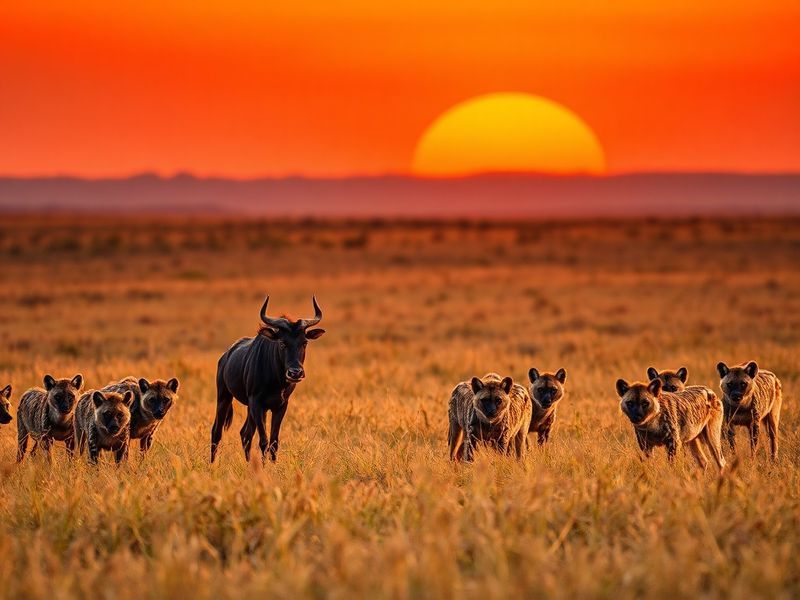
The natural world operates on a brutal equation: survival of the fittest. In the endless cycle of life and death, predators play a critical role in maintaining ecological balance. Yet their relationship with prey species is far more complex than mere hunting. From the African savannah to the Arctic tundra, the dynamic between wild animals and predators shapes entire ecosystems.
The balance is delicate. A decline in predator populations can lead to overgrazing and habitat degradation. Conversely, an unchecked rise in predators can decimate prey populations, causing ripple effects throughout the food web. This delicate equilibrium is now under threat from human activity—habitat loss, climate change, and hunting—disrupting a system that has evolved over millions of years.
The Predator-Prey Relationship: More Than Just Hunting
Predators do more than hunt. They influence prey behavior, migration patterns, and even physical evolution. Studies show that when wolves were reintroduced to Yellowstone National Park in 1995, elk populations shifted their grazing habits, allowing willow and aspen trees to regenerate. This, in turn, stabilized riverbanks and benefited beavers, songbirds, and fish.
Predators also act as natural selection agents. They tend to target the weak, sick, or old, strengthening the gene pool of prey species over time. This selective pressure ensures that only the fittest survive, a process known as natural selection. Without predators, prey populations can become overcrowded, leading to disease and starvation.
In some cultures, predators hold symbolic significance. The lion, for example, is revered in many African traditions as a symbol of strength and leadership. In Hindu mythology, the goddess Durga rides a tiger, representing power and protection. These cultural narratives reflect humanity’s long-standing fascination—and conflict—with predators.
Survival Strategies: How Prey Outsmart Their Hunters
Prey species have evolved remarkable defenses. Camouflage, speed, and keen senses are just a few tools in their arsenal. The chameleon changes color to blend into its surroundings, while the gazelle relies on explosive bursts of speed to evade cheetahs. Some animals, like the armadillo, use armor, and others, like the skunk, employ chemical deterrents.
Social behaviors also play a role. Herd animals like wildebeest or musk oxen rely on group vigilance. A single animal on the periphery is more likely to be targeted. Similarly, meerkats take turns acting as sentinels, watching for predators while others forage.
But survival isn’t just about physical adaptations. It’s also about strategy. Some species, like the African wild dog, hunt in coordinated packs to tire out prey. Others, like the crocodile, use ambush tactics, waiting silently for hours before striking. The relationship is one of constant adaptation—a never-ending evolutionary arms race.
Examples of Survival Tactics in the Wild
- Mimicry: The hoverfly resembles a bee, deterring predators that associate stinging insects with danger.
- Mobbing: Small birds like crows gang up on owls or hawks, driving them away from nesting areas.
- Alarm Calls: Vervet monkeys emit different calls for eagles, leopards, or snakes, warning others to react appropriately.
- Speed and Evasion: The pronghorn antelope, one of the fastest land animals, can outrun predators like wolves over long distances.
- Chemical Warfare: The bombardier beetle sprays a boiling, toxic liquid when threatened, scaring off attackers.
Human Impact: When the Predator Becomes the Prey
Humans have long viewed predators as threats—competitors for food, threats to livestock, or dangers to human life. As a result, wolves, bears, and big cats have been hunted to near extinction in many regions. In Europe, the gray wolf was nearly wiped out by the mid-20th century, only to make a slow recovery through conservation efforts.
Yet this fear has often been misplaced. Fatal attacks by predators are exceedingly rare. In the United States, for example, you’re more likely to be struck by lightning than killed by a bear or mountain lion. Most predation on humans occurs in cases of habituation—when animals associate humans with food, such as in national parks or garbage dumps.
Today, conservationists are working to shift perceptions. Organizations like Wildlife Conservation Society advocate for predator reintroduction programs, recognizing their ecological importance. In India, the reintroduction of tigers in Panna Tiger Reserve has helped restore balance to the ecosystem, boosting prey populations and stabilizing vegetation.
The Future of Wild vs Predators: Can We Coexist?
The challenge of coexistence is growing. Climate change is altering habitats, forcing predators to travel farther for food. In the Arctic, melting ice is reducing hunting grounds for polar bears, leading to increased human-wildlife conflict as they venture into villages in search of sustenance.
Meanwhile, urban expansion is encroaching on wild spaces. In India, leopards have been spotted in Mumbai suburbs, preying on stray dogs and livestock. In North America, mountain lions are increasingly seen in suburban areas, drawn by deer populations that thrive near human development.
Technology offers some solutions. GPS collars allow researchers to track predator movements, helping predict and prevent conflicts. Drones monitor wildlife corridors, ensuring safe passage for animals migrating between protected areas. Community education programs teach locals how to protect livestock without harming predators, using guard dogs or improved fencing.
Yet the path forward is fraught with challenges. Political will, funding, and public support are inconsistent. In some regions, predator control remains a contentious issue. In the U.S., wolf management is a polarizing topic, with ranchers and conservationists often at odds over whether predators should be protected or managed through hunting.
Key Challenges to Predator Survival
- Habitat Loss: Deforestation and urban sprawl reduce available territory for predators.
- Human-Wildlife Conflict: Predators preying on livestock or pets lead to retaliatory killings.
- Poaching and Illegal Trade: Tigers, lions, and other predators are hunted for trophies, skins, or body parts used in traditional medicine.
- Climate Change: Shifting temperatures alter prey availability and migration patterns.
- Lack of Political Will: Conservation efforts often lack funding or enforcement, especially in developing nations.
Despite these obstacles, there are signs of progress. In Europe, brown bears and lynx are slowly returning to their former ranges. In Africa, community-led conservation programs have reduced poaching and increased tolerance for predators like lions and leopards. These efforts prove that with the right balance of policy, education, and science, humans and predators can share the planet.
The story of wild vs predators is ultimately a story of balance. Predators are not villains; they are essential regulators of nature. Their decline does not just affect one species—it reshapes entire landscapes. As climate change accelerates and human populations expand, the need to protect and coexist with predators has never been more urgent. The question is not whether we can afford to share the planet with them, but whether we can afford not to.
For those interested in the broader implications of wildlife conservation, explore our Conservation section for deeper analysis and updates on global efforts to protect endangered species.