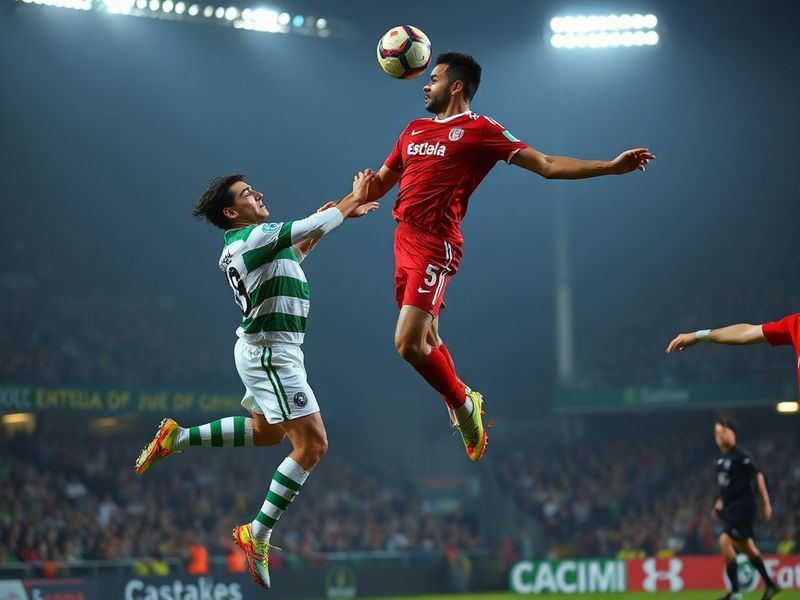
Few fixtures in football carry the weight of history, passion, and rivalry as AC Milan versus Inter Milan. Known as the Derby della Madonnina, this match transcends sport, embedding itself in the cultural fabric of Milan and Italy. The clash between the two clubs is more than a game; it’s a reflection of social, economic, and even political divides that have shaped the city for over a century.
The rivalry began in 1899 when AC Milan was founded by English expatriates and Italian aristocrats. Inter Milan, or FC Internazionale Milano, emerged in 1908 when a group of dissident players broke away, seeking a club that welcomed foreign talent—hence the name “Internazionale.” What started as a philosophical difference evolved into one of football’s most intense and enduring rivalries.
The Historical Roots of the Derby
The Derby della Madonnina is named after the golden statue of the Virgin Mary atop Milan’s Duomo, a symbol of the city’s identity. The rivalry’s origins are deeply tied to class and identity. AC Milan, initially a club for the city’s elite and foreign workers, became associated with the working class over time. Inter, founded as a club that embraced international players, maintained a cosmopolitan image while also attracting the bourgeoisie.
This duality played out on the pitch and in the stands. AC Milan fans, known as rossoneri (red-blacks), often represented the industrial working class. Inter’s supporters, nerazzurri (black-blues), were seen as more affluent, though this stereotype has blurred over the decades. What remains clear is that the derby is a clash of identities—local against cosmopolitan, tradition against modernity, and, above all, Milanese pride.
Key Moments in Derby History
Since their first meeting in 1908—a 2-0 Inter victory—over 230 official matches have been played between the two sides. Some of these encounters have become legendary:
- 1967: The “La Grande Inter” Era – Inter, led by Helenio Herrera and featuring stars like Giacinto Facchetti and Sandro Mazzola, dominated the late 1960s. Their 1-0 win in the 1967 Coppa Italia final cemented their status as Italy’s top team.
- 2003 Champions League Semifinal – A dramatic 1-1 draw at San Siro followed by a 1-0 win for AC Milan in the second leg sent them to the final. This tie marked the peak of their European battles.
- 2021 Supercoppa Italiana – Inter claimed a 2-1 victory in a tightly contested match, showcasing their tactical discipline under Antonio Conte.
- 2023 Derby of the Year – A 5-2 thrashing by Inter at San Siro, featuring a hat-trick by Lautaro Martínez, reinforced their dominance in the late 2010s and early 2020s.
Cultural Impact Beyond the Pitch
The Derby della Madonnina is woven into Milan’s cultural identity. The city stops when the derby arrives. Schools adjust schedules. Businesses close early. Traffic halts as fans flood the streets in red-and-black or black-and-blue. The match is broadcast globally, drawing an audience that extends far beyond Italy’s borders.
In the world of fashion, the derby is a showcase of style. Milan, the global capital of fashion, sees its designers and trends reflected in the supporters’ attire—from vintage scarves to modern streetwear. The rivalry has inspired art, music, and even literature, with writers and poets using the derby as a metaphor for Milan’s dual soul.
Globally, the derby has become a symbol of football passion. For expatriates and international fans, supporting one side or the other is a way to connect with their Italian heritage. Social media amplifies the drama, with debates erupting online in the hours before kickoff. Memes, chants, and banter flood timelines, reflecting the global reach of Serie A’s most storied fixture.
The Tactical Evolution of the Derby
Tactically, the derby has mirrored broader trends in football. In the 1960s, Inter’s catenaccio system—a defensive, counterattacking style—dominated. AC Milan, under Nereo Rocco, later adopted a more fluid, attacking approach in the 1970s, winning two European Cups with the “Milan System.”
In the 1990s and early 2000s, both clubs embraced a more balanced, possession-based style under managers like Arrigo Sacchi and Carlo Ancelotti. The 2010s saw a tactical shift toward high pressing and physicality, with managers like Massimiliano Allegri and Antonio Conte emphasizing organization and intensity.
Today, the derby is a chess match between two tactical philosophies. Inter often sets up in a structured 3-5-2 or 5-3-2, while AC Milan favors a flexible 4-2-3-1 or 4-3-3. The tactical battles are as intense as the physical ones, with managers constantly adjusting to exploit weaknesses.
Notable Players in Derby History
The derby has been graced by some of football’s greatest players. For AC Milan, legends like Paolo Maldini, Franco Baresi, and Gianni Rivera wore the red-and-black shirt with pride. Inter’s hall of fame includes Giuseppe Meazza, Javier Zanetti, and Diego Milito, whose goals in the 2010 Champions League final against Bayern Munich are etched in derby lore.
More recently, Romelu Lukaku’s performances for Inter and Zlatan Ibrahimović’s spells at both clubs have added new chapters to the rivalry. The emergence of young talents like Nicolo Barella and Rafael Leão ensures the derby’s future remains bright.
Why the Derby Still Matters
In an era where football is increasingly globalized and commercialized, the Derby della Madonnina remains a rare constant. It is a reminder of football’s roots—where passion, identity, and local pride take precedence over money and marketing.
The derby also reflects broader societal changes. As Milan evolves into a multicultural metropolis, the traditional class divides that once defined the rivalry have softened. Yet, the intensity of the derby has not waned. If anything, it has grown, drawing new generations of fans who see the match as a rite of passage.
For those who experience it firsthand, the derby is unforgettable. The atmosphere inside San Siro—now known as the Stadio Giuseppe Meazza—is electric. The chants of “Milan! Milan!” and “Inter! Inter!” echo through the stands. The players feel the pressure, knowing that a single mistake can decide the outcome of the city’s pride.
The Derby della Madonnina is more than a football match. It is a cultural event, a historical narrative, and a celebration of Milanese identity. Whether it ends in triumph or disappointment for your side, the derby leaves an indelible mark on all who witness it.
As the two clubs continue to compete at the highest level, the rivalry shows no signs of fading. For fans old and new, the Derby della Madonnina remains the ultimate test of loyalty, passion, and footballing excellence.