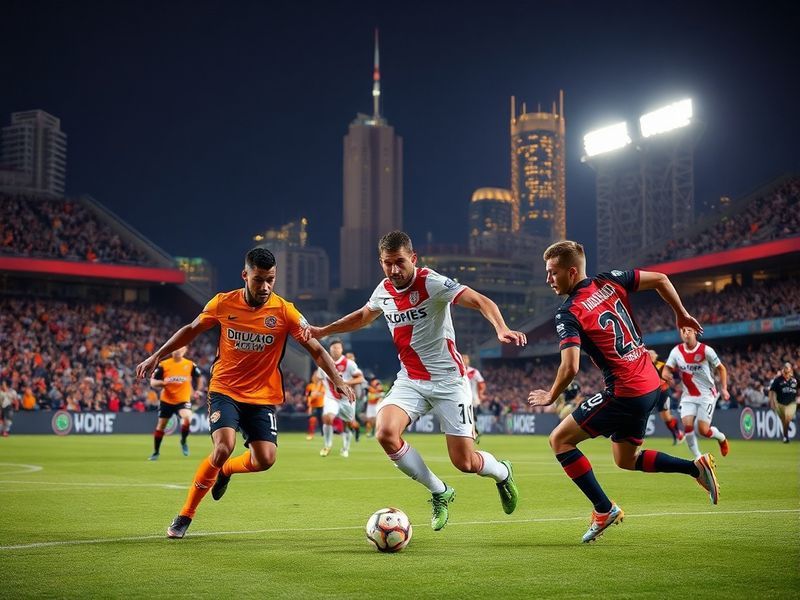
Rising Tensions in MLS: The Houston Dynamo and Colorado’s Growing Rivalry
The Major League Soccer landscape continues to evolve with each season, and few matchups encapsulate this shift better than the growing tension between the Houston Dynamo and the Colorado Rapids. While not a traditional rivalry rooted in decades of history, this fixture has steadily gained intensity. Local fanbases have embraced it, and the clubs have elevated their competitiveness—transforming what was once a routine fixture into a must-watch contest.
This rivalry is not just about points on the table; it reflects broader trends in American soccer. The Dynamo, with their blue-collar identity rooted in Texas energy culture, clash against Colorado’s outdoor-adventure ethos and rapidly expanding soccer community. The contrast in environments—urban sprawl versus mountain vistas—mirrors the diversity of MLS itself, a league increasingly shaped by global influences yet deeply tied to local identity.
The Clubs’ Evolving Identities
The Houston Dynamo entered MLS in 2006 as an expansion team, inheriting the legacy of the original Houston Dynamo that won back-to-back MLS Cups in 2006 and 2007. Their early success established them as a franchise with ambition, though recent years have seen inconsistency. The club’s fan culture, centered around BBVA Stadium, blends Texan pride with a growing soccer consciousness. The stadium’s vibrant atmosphere, fueled by supporters’ groups like the Texian Army, makes every home game feel like a regional festival.
The Colorado Rapids, on the other hand, have a longer MLS tenure, joining in 1996. For decades, they operated in the shadow of bigger-market clubs. But recent years have seen a resurgence under ownership and coaching changes. The club’s identity is tied to the Rocky Mountain region—rugged, resilient, and increasingly soccer-literate. Dick’s Sporting Goods Park, located in Commerce City, has become a fortress, known for its thin mountain air and electric late-summer evenings.
These two clubs represent different sides of America’s soccer evolution. The Dynamo embody the growth of soccer in the Sun Belt, where the sport competes with established traditions. The Rapids reflect the rise of soccer in non-traditional markets, where geography and climate once seemed barriers but are now seen as assets.
Key Matches and Turning Points
While the rivalry is still young, certain games have stoked the flames. The 2020 MLS season, played under pandemic conditions, featured a tightly contested match in Houston where Colorado secured a 2-1 victory thanks to a late winner. The game was played without fans, but the intensity on the field was undeniable—a sign that even in sterile environments, competition burns bright.
The 2022 season saw another pivotal encounter at Shell Energy Stadium. Houston dominated possession but struggled to convert, while Colorado relied on counterattacks and set-pieces to secure a 1-0 win. That result propelled Colorado into the playoff race, while Houston’s frustration grew, deepening the divide between the two fanbases.
More recently, the 2024 season opener saw a thrilling 3-3 draw in Commerce City. The match featured three lead changes and a late equalizer from Houston, showcasing both teams’ offensive firepower and defensive fragility. Fans left the stadium buzzing, and social media erupted with memes and debates—clear evidence that this rivalry is gaining cultural traction.
These moments matter because they contribute to a larger narrative: soccer in America is no longer just about participation. It’s about identity, pride, and regional pride. The Dynamo vs. Rapids games are becoming cultural touchpoints, not just sporting events.
Beyond the Pitch: Fan Culture and Global Influences
The rivalry between Houston and Colorado extends well beyond the 90 minutes of play. It’s visible in the stands, on social media, and in the way both cities embrace soccer culture.
In Houston, soccer has become a unifying force in a city known for its diversity. The Latino community, in particular, has embraced the Dynamo, infusing matches with music, chants, and a festive spirit that rivals what you’d find in Liga MX stadiums. Meanwhile, the Rapids have cultivated a fanbase that values authenticity and connection to the outdoors—elements that resonate in a state where hiking, skiing, and climbing are part of daily life.
Globally, this rivalry reflects broader trends in soccer’s globalization. MLS has increasingly recruited talent from South America, Europe, and Africa, and both clubs have benefited from this trend. Houston’s signing of international stars in the mid-2010s helped elevate their profile, while Colorado’s recent recruitment of young South American prospects signals a shift toward long-term development.
This international influence is reshaping fan expectations. Supporters in both cities no longer just want local heroes; they want world-class entertainment. The Dynamo vs. Rapids rivalry, though still developing, is part of that evolution. It’s a microcosm of how soccer in the U.S. is growing up—demanding more from players, coaches, and clubs.
The Future of the Rivalry
What comes next for this budding rivalry? Several factors will shape its trajectory:
- Playoff Implications: As both clubs push for postseason spots, every game becomes more meaningful. A playoff match between these two would instantly elevate the rivalry’s status.
- Star Power: The arrival of high-profile players—whether Designated Players or academy graduates—could add star quality and narrative depth to future matchups.
- Fan Engagement: The way both clubs market the rivalry will be crucial. Special merchandise, social media campaigns, and supporter events could help cement its place in MLS culture.
- Youth Development: Both academies are investing in local talent. A future homegrown player derailing the other team could become a defining moment.
The Dynamo and Rapids are not traditional rivals like LA vs. San Jose or Seattle vs. Portland. Their competition is still raw, still forming. But that’s precisely why it’s compelling. In a league where history is often borrowed or manufactured, this rivalry feels authentic because it’s being built in real time—by players, by fans, and by the communities they represent.
As MLS continues to expand and globalize, rivalries like this one become essential. They give the league texture. They give fans something to believe in beyond trophies and standings. And they remind us that soccer in America is not just about chasing Europe or South America—it’s about creating something uniquely its own.
For now, the Houston Dynamo and Colorado Rapids are writing their story one match at a time. And with each passing season, their rivalry grows a little stronger, a little more real. That’s the beauty of soccer in the modern era—it’s not just a game. It’s a conversation. And this one is just getting started.