Background of the Chagos Islands Dispute
The Chagos Archipelago, a remote collection of islands in the Indian Ocean, has been a flashpoint in international diplomacy for decades. Home to the British Indian Ocean Territory (BIOT), the archipelago was separated from Mauritius in 1965—three years before the island nation gained independence from Britain. The separation was part of a controversial deal that allowed the U.S. to establish a military base on Diego Garcia, one of the islands, which has since played a critical role in American military operations in the Middle East and beyond.
The expulsion of the Chagossian people, who were forcibly removed from their homes between 1967 and 1973 to make way for the base, remains one of the most contentious episodes in modern British history. The islanders, who were relocated to Mauritius, Seychelles, and the UK, have fought for decades for the right to return, their cause gaining traction in international courts and human rights organizations.
In 2019, the International Court of Justice (ICJ) issued an advisory opinion stating that Britain’s occupation of the Chagos Islands was illegal under international law. The United Nations General Assembly subsequently voted overwhelmingly in favor of a resolution demanding that Britain withdraw from the islands within six months. Despite this, successive UK governments have maintained control, citing the strategic importance of the U.S. military base.
Keir Starmer’s Diplomatic Approach
Keir Starmer’s rise to power in 2024 marked a potential shift in the UK’s stance on the Chagos Islands. Unlike his predecessor, Boris Johnson, who staunchly defended the military base and resisted international pressure, Starmer has signaled a more conciliatory approach. His government has indicated a willingness to engage with Mauritius and the Chagossian community, though without committing to a full withdrawal from the islands.
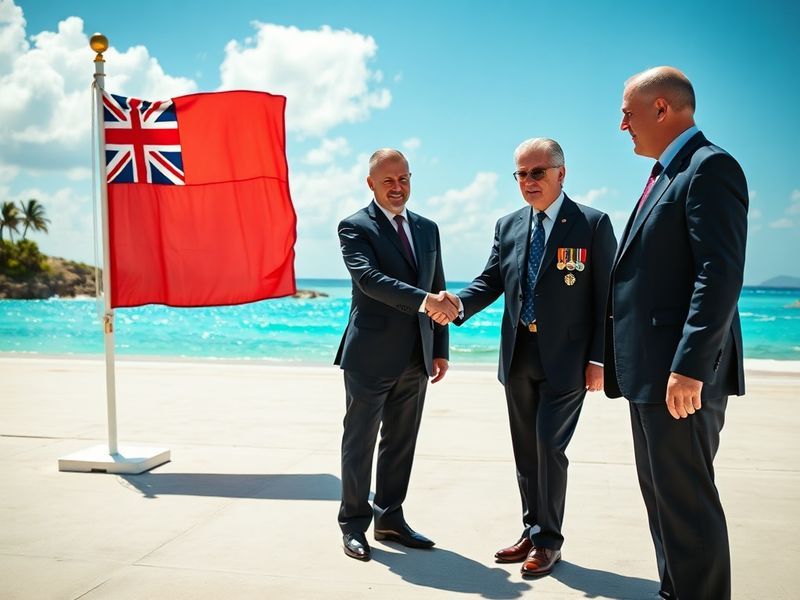
One of Starmer’s first moves was to open formal negotiations with Mauritius, the recognized sovereign power over the archipelago under international law. These talks have focused on three key areas: compensation for the Chagossian people, the future of the U.S. military base, and the possibility of a joint administration or phased withdrawal. While details remain scarce, the tone of the discussions has been markedly different from previous administrations, which often dismissed Mauritius’ claims outright.
The new government’s strategy appears to balance diplomatic pragmatism with domestic political considerations. Starmer, who has positioned himself as a modernizer, seems intent on distancing his administration from the colonial-era policies that have long defined Britain’s relationship with the Chagos Islands. This shift aligns with broader efforts to redefine the UK’s role on the global stage post-Brexit, emphasizing multilateralism and adherence to international law.
Global Reactions and Implications
The international response to Starmer’s approach has been mixed. Mauritius, which has long championed the return of the islands, has welcomed the overtures but remains cautious. Mauritian Prime Minister Pravind Jugnauth has emphasized that any agreement must include the full restoration of Mauritian sovereignty, a non-negotiable stance for his government.
The U.S., which operates the military base on Diego Garcia, has not publicly commented on the negotiations. However, security analysts suggest that Washington is unlikely to relinquish its strategic foothold in the Indian Ocean. The base has been instrumental in counterterrorism operations and has hosted B-52 bombers and drone missions, making it a cornerstone of U.S. military strategy in the region.
Meanwhile, the Chagossian community remains divided. Some factions, particularly those advocating for the right of return, view Starmer’s diplomacy as a positive step. Others, however, remain skeptical, recalling decades of broken promises and empty assurances from British governments. Human rights organizations have urged the UK to prioritize the resettlement of the Chagossians, warning that further delays could exacerbate an already dire humanitarian situation.
For smaller island nations in the Indian Ocean, such as the Maldives and Seychelles, the Chagos dispute carries broader implications. The case sets a precedent for how former colonial powers might address territorial disputes and the rights of displaced populations. It also raises questions about the future of military bases in regions where sovereignty is contested.
What’s Next for the Chagos Islands?
The road ahead is fraught with challenges. Any agreement between the UK and Mauritius will require navigating complex legal, political, and logistical hurdles. One potential compromise could involve a phased withdrawal of British forces, coupled with a transition plan for the U.S. military base. Alternatively, the islands could become a shared administrative zone, though this would likely face resistance from both Mauritius and the Chagossian community.
The humanitarian dimension cannot be overlooked. For the Chagossians, the decades-long struggle for recognition and restitution is far from over. The UK’s commitment to resettlement programs and reparations will be a litmus test for Starmer’s government. Failure to deliver tangible progress could reignite protests and further damage Britain’s reputation on the global stage.
From a geopolitical standpoint, the Chagos Islands remain a critical asset. The U.S. is unlikely to abandon Diego Garcia without assurances of alternative basing options, while Mauritius’ insistence on sovereignty complicates any long-term solution. The UK, meanwhile, must balance its historical obligations with its strategic interests—a delicate tightrope that Starmer’s government is only beginning to traverse.
As negotiations continue, the world watches closely. The Chagos Islands are more than a remote speck in the Indian Ocean; they are a symbol of the enduring legacies of colonialism, the complexities of modern diplomacy, and the urgent need for justice for displaced communities. How the UK and Mauritius navigate this dispute will shape not only the future of the archipelago but also the broader principles of international law and human rights.
For now, one thing is clear: the Chagos Islands are no longer a footnote in global politics. They are at the heart of a defining debate about sovereignty, justice, and the responsibilities of former colonial powers in the 21st century.