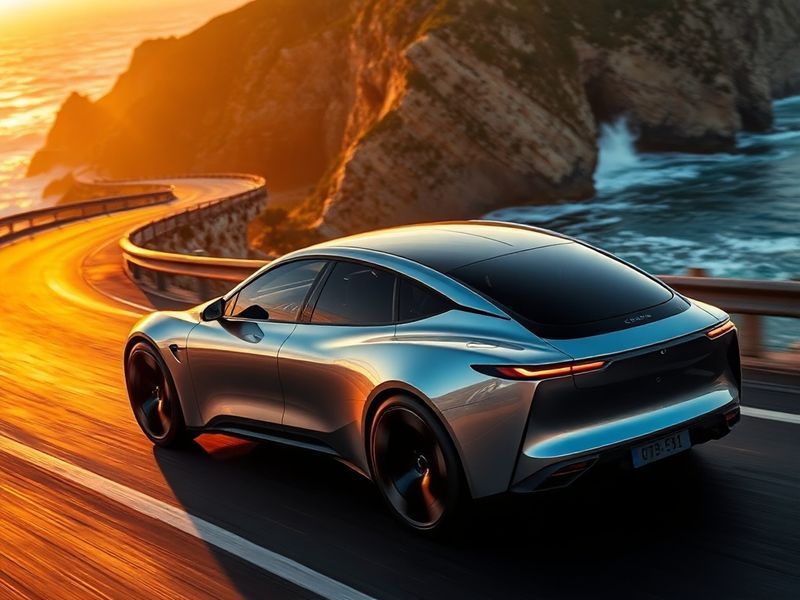
China’s electric vehicle market continues to evolve at a rapid pace, with domestic manufacturers gaining ground against established global brands. Among these rising players, Leapmotor has emerged as a significant contender, particularly in its home market. Founded in 2015 and headquartered in Hangzhou, the company has quickly distinguished itself through innovation, competitive pricing, and a focus on software-defined vehicles.
While Tesla remains the most recognized name in the EV industry, Leapmotor’s growth reflects broader trends in China’s automotive sector. The company’s strategy emphasizes affordability without compromising technology, positioning it as a compelling alternative for cost-conscious yet tech-savvy consumers. With multiple models in production and a strong presence in over 200 cities, Leapmotor is carving out a distinct identity in the global EV landscape.
The Rise of Leapmotor: From Startup to Market Disruptor
Leapmotor was established in 2015 by a team of former Chery and Geely engineers, led by founder Zhu Jiangming. From the beginning, the company set out to challenge the status quo by focusing on electric mobility without the premium price tag often associated with new EV brands. Its first model, the Leapmotor T03, launched in 2019, targeted urban commuters with a compact, affordable electric hatchback.
The company’s early success in China’s competitive EV market was driven by several key decisions. First, it prioritized battery efficiency and range optimization, allowing it to offer competitive pricing. Second, it invested heavily in software and connectivity, positioning its vehicles as not just cars, but digital platforms. By 2021, Leapmotor had delivered over 100,000 vehicles, a milestone that solidified its place among China’s top EV brands.
In 2023, Leapmotor took a major step forward with its initial public offering on the Hong Kong Stock Exchange, raising approximately $500 million. This funding allowed the company to accelerate R&D and expand production capacity. Analysts have noted that Leapmotor’s rapid ascent reflects the broader shift in China’s automotive industry, where domestic brands are increasingly favored by consumers seeking value and innovation.
Technology and Innovation: What Sets Leapmotor Apart
Leapmotor distinguishes itself through a blend of hardware innovation and software integration. One of its most notable technological achievements is the development of its own electric vehicle platform, known as the Leapmotor C101. This platform supports multiple vehicle architectures and enables faster development cycles, reducing time-to-market for new models.
The company also places a strong emphasis on battery technology. Its latest models feature high-energy-density batteries with improved thermal management systems, allowing for longer range and faster charging. The Leapmotor C10, for example, offers a CLTC-rated range of up to 715 kilometers (444 miles), one of the highest in its class. This performance is achieved through partnerships with battery manufacturers like CATL, a leader in lithium-ion battery technology.
Software is another area where Leapmotor invests heavily. Its vehicles run on the Leapmotor OS, a proprietary operating system that integrates infotainment, autonomous driving features, and over-the-air updates. The system supports advanced driver-assistance systems (ADAS), including features like adaptive cruise control and lane-keeping assist. The company has also introduced a voice assistant powered by AI, designed to enhance user interaction and convenience.
In addition to these technological advancements, Leapmotor has been proactive in adopting new industry standards. The company is a member of the China Association of Automobile Manufacturers (CAAM) and actively participates in discussions around vehicle-to-everything (V2X) communication, which could play a critical role in the future of smart mobility.
Key Technological Features of Leapmotor Vehicles
- Leapmotor C101 platform: Modular architecture supporting multiple vehicle types, from compact cars to SUVs.
- High-energy-density batteries: Up to 715 km range with advanced thermal management for safety and longevity.
- Leapmotor OS: Integrated operating system with AI voice assistant, infotainment, and over-the-air update capabilities.
- ADAS features: Adaptive cruise control, lane-keeping assist, and autonomous parking assistance.
- V2X readiness: Compatibility with future smart city infrastructure for enhanced connectivity.
Market Strategy and Global Ambitions
Leapmotor’s market strategy has been built on three core pillars: affordability, accessibility, and aspirational design. By offering vehicles at price points significantly lower than Tesla’s Model 3 or Model Y, the company has attracted a broad segment of the Chinese middle class. Its pricing model typically sits between 100,000 and 200,000 Chinese yuan, making it accessible to a wider audience.
The company has also prioritized retail expansion, with a network of over 500 dealerships across China. Its showrooms are designed to be customer-centric, offering test drives, service centers, and digital experience zones where buyers can explore vehicle features through interactive displays. This approach has helped Leapmotor build strong brand loyalty in a market where customer experience is increasingly important.
Beyond China, Leapmotor has begun exploring international markets. In 2023, the company announced plans to enter Europe, starting with Norway, a country known for its high EV adoption rates. The move is part of a broader strategy to position Leapmotor as a global brand. However, analysts caution that entering mature markets will require overcoming challenges such as brand recognition, regulatory compliance, and competition from established players.
To support its global expansion, Leapmotor has formed strategic partnerships. In 2024, it signed a memorandum of understanding with Stellantis, the multinational automotive giant, to jointly develop electric vehicles for both Chinese and European markets. This collaboration could provide Leapmotor with the resources and expertise needed to scale internationally, while allowing Stellantis to strengthen its EV portfolio in key regions.
The Competitive Landscape: How Leapmotor Compares
Leapmotor operates in one of the most competitive markets in the world—the Chinese EV sector. It competes directly with domestic brands like BYD, NIO, Xpeng, and Zeekr, as well as international manufacturers such as Tesla, Volkswagen, and BMW. Each of these players brings distinct advantages, making the market highly dynamic.
Compared to Tesla, Leapmotor’s primary differentiator is price. While Tesla’s Model 3 starts at around 260,000 yuan in China, Leapmotor’s C10 is priced closer to 150,000 yuan. However, Tesla benefits from a stronger global brand, superior charging infrastructure, and advanced autonomous driving features. Leapmotor, on the other hand, excites consumers with its affordability and integrated software experience.
BYD, another Chinese EV giant, offers a broader portfolio that includes both battery-electric and plug-in hybrid vehicles. BYD’s strength lies in its vertical integration, particularly in battery production, which gives it a cost advantage. Leapmotor, though, has carved a niche in software and user experience, appealing to younger, tech-oriented buyers.
NIO and Xpeng focus on premium segments with higher price points and additional services like battery-swapping and advanced autonomous driving. Leapmotor’s approach is more mass-market, prioritizing accessibility and practicality. This strategy allows it to capture a different segment of the market, particularly first-time EV buyers.
Internationally, Leapmotor faces the challenge of establishing credibility outside China. While brands like BYD have already made inroads in Europe and Southeast Asia, Leapmotor is still building its global footprint. Its collaboration with Stellantis could accelerate this process, but success will depend on adapting to local preferences, regulatory requirements, and competitive dynamics.
Comparison of Key EV Competitors in China (2024)
- Leapmotor C10:
- Price: ~150,000 yuan
- Range: 715 km (CLTC)
- Key Features: Leapmotor OS, ADAS, OTA updates
- Target Market: Urban commuters, first-time EV buyers
- Tesla Model 3:
- Price: ~260,000 yuan
- Range: 675 km (CLTC)
- Key Features: Autopilot, Supercharger network, global brand
- Target Market: Tech-savvy professionals, global buyers
- BYD Seal:
- Price: ~210,000 yuan
- Range: 700 km (CLTC)
- Key Features: Blade Battery, hybrid options, strong brand trust
- Target Market: Families, safety-conscious buyers
- NIO ET5:
- Price: ~330,000 yuan
- Range: 900 km (CLTC)
- Key Features: Battery swap, NOMI AI assistant, premium services
- Target Market: High-income professionals, luxury buyers
Challenges and Future Outlook
Despite its rapid growth, Leapmotor faces several challenges as it seeks to solidify its position in the global EV market. One of the most pressing is brand recognition. While Tesla and BYD are household names, Leapmotor is still relatively unknown outside China. Building a global brand will require significant investment in marketing, customer education, and after-sales service.
Another challenge is competition. The Chinese EV market is crowded, and consumer preferences are shifting rapidly. Leapmotor must continue innovating to stay ahead, particularly in areas like battery technology, autonomous driving, and user experience. Its partnership with Stellantis could provide a much-needed boost, but execution will be critical.