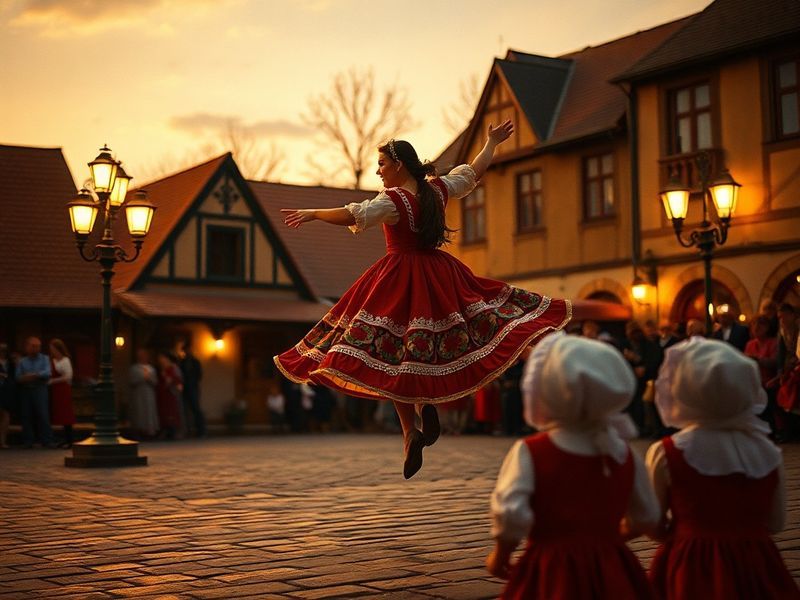
The term Magyar carries deep historical and cultural significance, primarily associated with the Hungarian people and their language. While often used interchangeably with “Hungarian,” Magyar encompasses more than just nationality—it reflects a centuries-old identity shaped by geography, politics, and tradition. The word itself originates from the Hungarian word magyar, which refers to both the people and their language, a linguistic treasure trove with roots tracing back to the Finno-Ugric language family.
Unlike many European languages descended from Latin or Germanic roots, Magyar stands apart as one of the few languages in Central Europe not belonging to the Indo-European family. This uniqueness has made it a subject of fascination for linguists and historians alike. Its preservation through centuries of foreign rule—Ottoman, Habsburg, and Soviet—speaks to the resilience of Hungarian identity. Today, Magyar remains a cornerstone of national pride, taught in schools, celebrated in literature, and defended in policy.
The Linguistic Roots of Magyar
Magyar belongs to the Ugric branch of the Finno-Ugric language family, which also includes languages like Finnish and Estonian. However, its closest living relative is Khanty and Mansi, spoken in western Siberia. This distant connection highlights the ancient migration patterns of the Magyar people, who arrived in the Carpathian Basin around the late 9th century, led by the legendary chieftain Árpád.
The Hungarian language has evolved significantly since its early form, known as Old Hungarian, which used a runic script until the adoption of the Latin alphabet in the 11th century. By the Middle Ages, Magyar had absorbed loanwords from neighboring Slavic, German, and Turkic languages, enriching its vocabulary. Today, modern Hungarian contains over 35,000 words, many of which have been adapted or borrowed from Latin, French, and English, particularly in scientific and technological fields.
One of the most striking features of Magyar is its agglutinative structure, meaning grammatical functions are expressed through suffixes rather than separate words. For example, the word házamban (in my house) combines the root ház (house) with possessive and locative suffixes. This linguistic trait makes Hungarian notoriously difficult for non-native speakers to master but also gives it a rhythmic, almost musical quality when spoken.
Magyar in Culture and Media
The influence of Magyar extends far beyond linguistics—it permeates Hungarian literature, music, and media. Perhaps the most iconic figure in Hungarian literature is Sándor Petőfi, a 19th-century poet whose works like The National Song became rallying cries during the 1848 revolution. Petőfi’s use of colloquial Magyar in poetry helped democratize literature, making it accessible to the broader public.
In music, Magyar traditions are celebrated through folk songs and classical compositions. Béla Bartók and Zoltán Kodály, two of Hungary’s most renowned composers, drew heavily from Magyar folk melodies, infusing their classical works with indigenous rhythms and scales. Bartók’s Romanian Folk Dances and Kodály’s Háry János are testaments to the enduring power of folk culture in shaping national identity.
Modern Hungarian media continues to reflect this cultural pride. State broadcaster MTVA (Media Support and Asset Management Fund) oversees several television and radio channels that broadcast exclusively in Magyar, including news, educational programs, and cultural shows. Meanwhile, independent filmmakers and writers are pushing boundaries, using the language to explore contemporary issues such as migration, urbanization, and generational divides.
Hungarian Language in the Digital Age
The digital revolution has presented both challenges and opportunities for the Magyar language. While English dominates the internet, efforts are underway to ensure Hungarian remains vibrant online. The Hungarian government has funded initiatives like the Hungarian National Digital Archives and the Magyar Elektronikus Könyvtár (Hungarian Electronic Library), which digitizes historical texts and makes them accessible to the public.
Social media platforms have also become battlegrounds for language preservation. Platforms like Facebook and YouTube host countless pages and channels dedicated to teaching Magyar, from beginner lessons to advanced grammar tutorials. Hashtags like #magyartanulás (Hungarian learning) and #magyarország (Hungary) foster online communities where learners and speakers connect across borders.
Despite these efforts, concerns remain about the influence of globalized English. A 2022 study by the Hungarian Academy of Sciences found that nearly 40% of Hungarian internet users frequently mix English loanwords into their posts, particularly in technology and business contexts. While some view this as natural linguistic evolution, others argue it threatens the purity of Magyar. The government has responded by introducing language laws, such as the 2011 National Avowal of Faith, which reaffirms Hungarian as the primary language of education and public life.
Magyar as a Symbol of National Identity
For Hungarians, Magyar is more than a language—it is a symbol of sovereignty and resilience. The country’s turbulent history, marked by partitions, foreign occupations, and revolutions, has forged a national identity deeply tied to language. The 1848 revolution against Habsburg rule, for instance, was as much a linguistic as a political struggle. Revolutionaries like Petőfi used Magyar to rally the masses, emphasizing that language was inseparable from freedom.
This connection between language and identity persists today. Surveys by the Hungarian Central Statistical Office show that over 99% of Hungary’s population speaks Magyar as a first language, with minority languages like Romanian, German, and Romani spoken by smaller communities. The government actively promotes Magyar through education, with mandatory Hungarian language and literature courses in schools. Even in neighboring countries like Slovakia, Romania, and Serbia—where ethnic Hungarians live as minorities—the language serves as a cultural lifeline.
However, the role of Magyar in diaspora communities adds another layer of complexity. In the United States, Canada, and Australia, Hungarian-language churches, schools, and cultural associations keep the language alive. Organizations like the American Hungarian Federation organize language camps and cultural festivals to engage younger generations. Yet, assimilation pressures and the dominance of English pose ongoing challenges.
Preserving Magyar in the 21st Century
Efforts to preserve Magyar are not limited to Hungary. The World Federation of Hungarians, founded in 1990, unites ethnic Hungarians worldwide under a shared linguistic and cultural banner. The federation organizes events like the World Hungarian Congress, where delegates discuss language policy, education, and cultural exchange. These initiatives highlight the global reach of Magyar, transcending national borders.
Technology plays a crucial role in these preservation efforts. Apps like Memrise and Duolingo offer Magyar courses, while online dictionaries such as Szótár provide real-time translations. Even artificial intelligence is being harnessed to preserve the language—projects like the Hungarian Language Technology Center develop tools for automatic speech recognition and machine translation, ensuring Magyar remains relevant in an AI-driven world.
Yet, challenges remain. The COVID-19 pandemic accelerated the shift to remote learning, with many Hungarian schools struggling to adapt to digital education. According to a 2021 report by the OECD, Hungary ranked below the European average in digital literacy among students, raising concerns about the future of Magyar in an increasingly virtual world.
Conclusion: The Enduring Legacy of Magyar
Magyar is more than a language—it is the heartbeat of Hungarian culture, a bridge between past and present, and a testament to the resilience of a people who have endured centuries of upheaval. From its Finno-Ugric roots to its modern digital adaptations, Magyar has evolved while retaining its core identity. It is a language of poetry and protest, of folk songs and futuristic technology, of national pride and global connection.
As Hungary navigates the complexities of the 21st century, the preservation of Magyar will depend on a delicate balance: embracing innovation while honoring tradition; engaging with the wider world while protecting linguistic purity; and uniting a diaspora while strengthening a homeland. For Hungarians, the language is not just a means of communication—it is a living legacy, one that continues to shape their collective future.
Whether you are a linguist studying its agglutinative structure, a traveler enchanted by its melodic cadence, or a Hungarian abroad reconnecting with your roots, Magyar offers a window into a culture that refuses to be forgotten. In a Europe where languages rise and fall with political tides, Magyar stands firm—a linguistic fortress that has withstood the test of time.
For those interested in exploring more about Hungarian culture and language, visit our Culture and Education sections for further reading and resources.