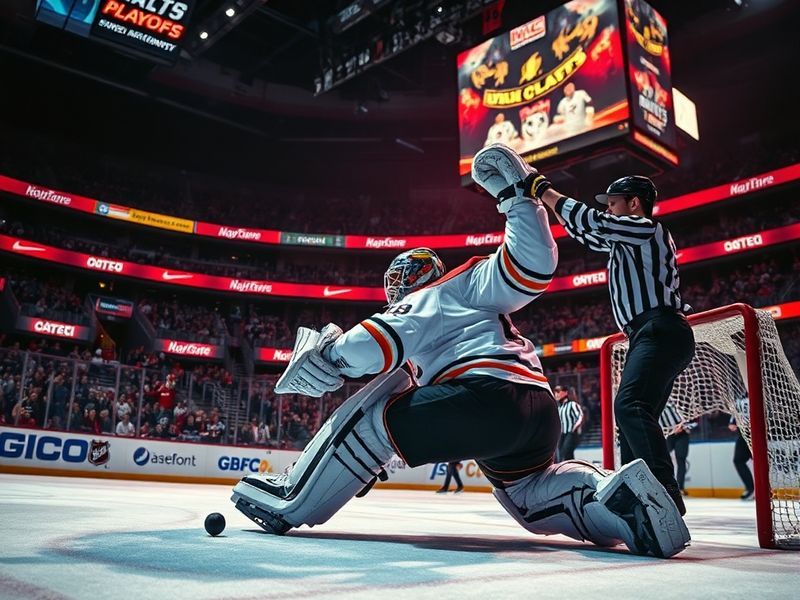
The NHL playoffs represent the pinnacle of professional hockey, where the intensity of competition reaches its peak and the drama unfolds in real time. Unlike the regular season, where consistency matters most, the postseason tests the limits of skill, endurance, and mental toughness. Every year, teams battle through a grueling four rounds, each one eliminating half of the remaining competitors until only one team hoists the Stanley Cup.
This year’s playoffs have already delivered unforgettable moments—from overtime thrillers to underdog triumphs. As the league evolves with new stars emerging and old dynasties fading, the postseason serves as both a proving ground and a stage for hockey’s most legendary performances. Beyond the on-ice action, the playoffs carry significant implications for the league’s future, influencing team strategies, player legacies, and even the financial landscape of the sport.
The Structure of the NHL Playoffs: A Four-Round Gauntlet
The NHL playoffs are designed to separate the best from the rest through a structured, single-elimination format. The tournament begins with the top three teams from each division automatically qualifying, while two wild-card spots in each conference are up for grabs. This system ensures that even teams with inconsistent regular seasons have a chance to make a deep run.
The first round features the division winners facing off against the wild-card teams, creating immediate opportunities for upsets. Historically, lower-seeded teams have pulled off stunning victories, proving that in the playoffs, anything can happen. The subsequent rounds—Second Round, Conference Finals, and Stanley Cup Final—further narrow the field, with each series becoming a best-of-seven battle of attrition.
One of the most compelling aspects of the playoffs is the way momentum shifts from game to game. A team that dominates in one contest might struggle in the next, while a player who was invisible in the regular season could become the hero in overtime. This unpredictability is what makes the NHL playoffs so compelling for fans and so nerve-wracking for general managers.
Key Factors That Separate Playoff Teams from Regular-Season Contenders
While regular-season success is often measured by points and goal differentials, the playoffs demand a different kind of excellence. The intensity ramps up significantly, and even the most talented teams can falter under the pressure. Several factors consistently separate playoff contenders from regular-season also-rans:
- Goaltending: A hot goaltender can carry a team deep into the playoffs. The ability to make timely saves in high-pressure situations often determines series outcomes.
- Depth Scoring: Playoff hockey rewards teams with multiple lines that can contribute offensively. Depth players who step up in key moments provide a crucial edge.
- Special Teams: Power plays and penalty kills become even more critical in the postseason, where one mistake can cost a game.
- Physical Play: The playoffs see an increase in physical battles, with players using their bodies to create space and wear down opponents.
- Mental Toughness: The grind of a long playoff run tests a team’s resilience. Players must maintain focus despite fatigue, injuries, and mounting pressure.
Teams that excel in these areas tend to survive the early rounds and make deep playoff runs. The 2023 Stanley Cup-winning Vegas Golden Knights, for example, relied on strong goaltending from Adin Hill, timely scoring from their third and fourth lines, and a disciplined approach that minimized costly penalties.
The Broader Impact of the NHL Playoffs on the League
The NHL playoffs are more than just a tournament—they shape the league’s future in several meaningful ways. For star players, a deep playoff run can solidify their legacy and justify their contracts. Conversely, a disappointing early exit can raise questions about a franchise’s direction or a player’s clutch ability. This year, the Pittsburgh Penguins’ first-round exit after years of dominance has reignited debates about the team’s aging core and future planning.
Financially, the playoffs drive revenue through ticket sales, merchandise, and television ratings. The Stanley Cup Final consistently ranks among the most-watched sporting events in North America, drawing casual fans who may not follow the regular season. This exposure benefits the league by expanding its fan base and attracting new sponsors.
Additionally, deep playoff runs can boost a team’s value. The Tampa Bay Lightning’s back-to-back championships in 2020 and 2021 not only cemented their status as a modern dynasty but also increased their marketability and franchise valuation. For smaller-market teams, a playoff run can provide a financial lifeline, proving their competitiveness and attracting local investment.
The playoffs also influence league-wide rule changes and officiating trends. As teams push for advantages, the NHL often adjusts its enforcement of rules like slashing, cross-checking, and obstruction. The league’s recent emphasis on calling more penalties in the playoffs reflects a broader effort to prioritize skill and speed over physical play.
Looking Ahead: What’s Next for the NHL After the Playoffs?
The conclusion of the playoffs marks the beginning of another offseason filled with roster decisions, coaching changes, and trade rumors. For the teams that fell short, the summer presents an opportunity to regroup and address weaknesses. The teams that hoisted the Stanley Cup, meanwhile, must navigate the challenges of repeating as champions—a feat that has become increasingly rare in today’s NHL.
For the league as a whole, the playoffs highlight the importance of parity. The NHL has made strides in recent years to ensure that more teams have a realistic chance of competing for the Cup. Initiatives like the salary cap, draft lottery reforms, and expansion into new markets have contributed to a more balanced competitive landscape. However, the dominance of a few franchises—such as the Boston Bruins, who set a regular-season record with 65 wins—raises questions about whether the league’s parity efforts are truly working.
As the NHL continues to grow globally, the playoffs serve as a showcase for the sport’s best athletes. The 2024 postseason could be particularly significant, with young stars like Connor McDavid, Auston Matthews, and Nathan MacKinnon entering their primes. Their performances will shape the league’s narrative for years to come, influencing everything from fan engagement to media rights deals.
For fans, the playoffs represent a chance to witness history. Whether it’s a veteran player finally winning his first Cup, a rookie sensation taking over a series, or a coach outdueling his counterpart in a battle of wits, the NHL playoffs deliver moments that resonate far beyond the rink.
As the season progresses, one thing is certain: the road to the Stanley Cup will be paved with drama, heartbreak, and unforgettable hockey. And for those who follow the league closely, the playoffs are where legends are made.
For more insights into the NHL’s evolving landscape, visit our Sports and Analysis sections.