The Paris-Roubaix, often called L’Enfer du Nord (“The Hell of the North”), remains one of cycling’s most brutal and iconic races. Held annually in northern France, this one-day monument challenges riders with its relentless cobbled sectors, unpredictable weather, and historical weight. More than just a bike race, Paris-Roubaix tests the limits of endurance, strategy, and sheer willpower.
Since its inception in 1896, the race has evolved from a novelty event into a defining challenge for professional cyclists. The cobbled pavé sections, some dating back to the Napoleonic era, create a unique spectacle that separates the best from the rest. Unlike other races that favor climbers or sprinters, Paris-Roubaix rewards those who can endure suffering and adapt to chaos.
The Race’s Brutal Legacy
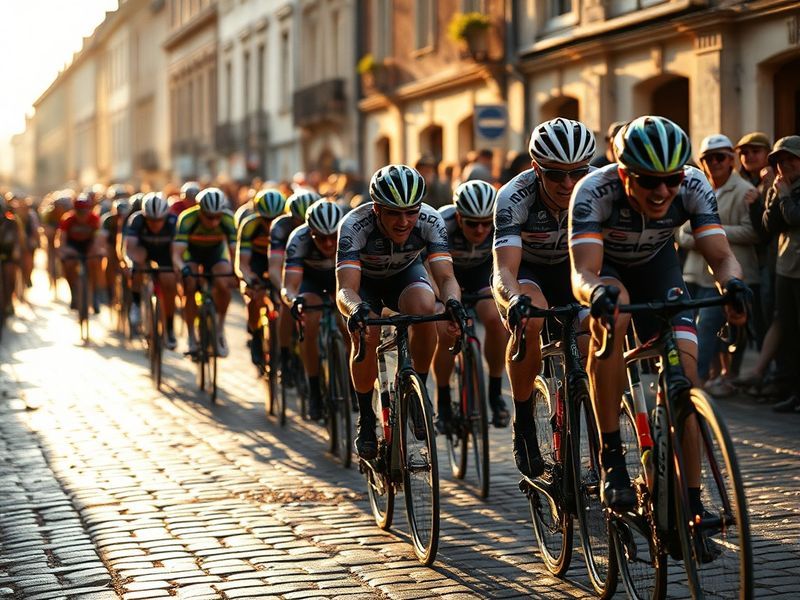
Paris-Roubaix’s reputation stems from its punishing route, which stretches roughly 257 kilometers from Compiègne to the velodrome in Roubaix. The race’s defining feature is its cobbled sectors—55 in total, covering nearly 55 kilometers. These sections, some barely wider than a bike tire, demand precision and resilience. A single puncture or misplaced wheel can end a rider’s hopes in seconds.
The race’s nickname, L’Enfer du Nord, originated in 1898 when a journalist described the muddy, rutted roads as resembling a battlefield. The imagery stuck, and today the phrase evokes the suffering and spectacle of the event. Modern editions of the race still feature sections like the Trouée d’Arenberg, a 2.3-kilometer stretch of pavé that has broken countless careers and launched legends.
Historically, the race has seen dramatic moments that cement its place in cycling lore. In 1949, Italian rider Serse Coppi—brother of Fausto Coppi—crashed on the cobbles and later died from his injuries. More recently, in 2021, Mathieu van der Poel and Sonny Colbrelli engaged in a thrilling duel on the pavé, showcasing the race’s unpredictable nature. These moments underscore why Paris-Roubaix is both revered and feared.
What Makes Paris-Roubaix Unique
Paris-Roubaix stands apart from other cycling monuments for several reasons. First, its reliance on cobbled sectors creates a level of unpredictability that few other races can match. Unlike the Alps or Pyrenees, where climbers dominate, Paris-Roubaix favors riders who can handle rough terrain and maintain speed despite constant vibrations.
Second, the race’s history and culture add to its allure. The velodrome finish in Roubaix is a tradition that dates back over a century. Riders who cross the line here join an exclusive club of champions, including legends like Eddy Merckx, Roger De Vlaeminck, and Tom Boonen. The race’s association with northern France’s industrial past—once a coal-mining region—further enhances its gritty, uncompromising identity.
Finally, Paris-Roubaix’s challenge extends beyond physical endurance. Success requires meticulous preparation, from bike selection to team tactics. Riders must choose between stiff carbon frames for speed or more compliant setups to absorb the constant jolting. Teams often employ specialized lead-out riders to navigate the cobbles and position their starters for the finale.
Key Moments and Memorable Editions
Over the years, Paris-Roubaix has delivered countless unforgettable moments. Here are some of the most iconic:
- 1919: Eugène Christophe’s Broken Fork – The Frenchman famously repaired his broken fork with a local blacksmith’s tools, losing over two hours but finishing third. His resilience became a symbol of the race’s spirit.
- 1948: Louison Bobet’s Triumph – Bobet, a future Tour de France champion, won his first Paris-Roubaix in dramatic fashion, attacking on the cobbles and holding off a late chase.
- 1985: Bernard Hinault’s Dominance – The “Badger” attacked on the pavé and soloed to victory, proving that even a rider known for his aggression could conquer the Hell of the North.
- 2000: Johan Museeuw’s Redemption – After a career-threatening knee injury, Museeuw returned to win Paris-Roubaix, cementing his status as one of the race’s greatest champions.
- 2023: Mathieu van der Poel’s Masterclass – The Dutchman attacked on the cobbles and soloed to victory, outclassing a strong field and proving his versatility.
The Broader Impact of Paris-Roubaix
Paris-Roubaix’s influence extends beyond the race itself. It has shaped cycling’s technological and tactical evolution, pushing manufacturers to develop more durable and compliant bikes. The race has also inspired other events, such as the Strade Bianche in Italy, which blends gravel and tarmac in a similar fashion.
For riders, Paris-Roubaix is often seen as a rite of passage. Winning the Hell of the North is a career-defining achievement that can elevate a cyclist to legendary status. However, the race’s difficulty also means that even the best riders can fall short. Many have come close only to suffer heartbreak, adding to the race’s mystique.
The event’s cultural significance is undeniable. It attracts thousands of spectators who line the cobbled sectors, cheering riders on despite the often-foul weather. The race’s association with northern France’s working-class history resonates with fans who see it as a celebration of grit and determination.
In recent years, the race has also faced challenges. The increasing commercialization of cycling has led to debates about its relevance in the modern era. Some argue that the race’s brutality is outdated in an age of data-driven training and aerodynamics. Others counter that Paris-Roubaix’s raw, unpredictable nature is precisely what makes it special.
A Race That Defines Cycling
Paris-Roubaix endures because it captures the essence of cycling: suffering, strategy, and sheer willpower. It is a race where luck plays a role, where a single mistake can cost everything, and where the strongest—both physically and mentally—prevail. For fans, it offers a spectacle unlike any other in the sport.
As cycling continues to evolve, Paris-Roubaix remains a constant reminder of the sport’s roots. It is a race that tests the limits of human endurance and rewards those who dare to embrace the chaos. Whether you’re a rider, a fan, or simply an admirer of cycling’s rich history, the Hell of the North offers something unforgettable.
For those looking to dive deeper into the world of cycling, Dave’s Locker Trending and Dave’s Locker Sports sections offer additional insights and analysis on the sport’s biggest events.