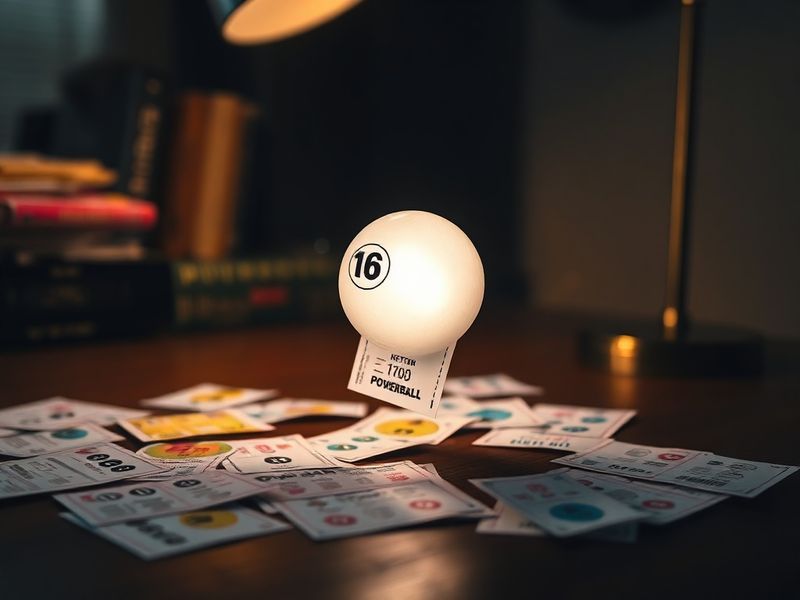
Powerball remains one of the most popular lottery games in the United States, offering players the chance to win life-changing jackpots that often exceed $100 million. The game’s mechanics are straightforward: players select five numbers from 1 to 69 (the white balls) and one Powerball number from 1 to 26 (the red ball). But beneath this simplicity lies a complex system of probability, prize structures, and occasional quirks that influence how winners are determined.
Unlike some lottery games where the order of numbers matters, Powerball draws are completely random. The sequence in which numbers are drawn has no bearing on the outcome, which means every combination has an equal chance of winning. This randomness is central to the game’s integrity, ensuring fairness for all participants.
How Powerball Numbers Are Drawn
Every Powerball drawing follows a strict protocol to maintain transparency and trust. Drawings occur three times a week—on Monday, Wednesday, and Saturday evenings—at Universal Studios Florida in Orlando, under the supervision of independent auditors. The process begins with two separate machines: one for the white balls and another for the Powerball.
The white balls are numbered 1 through 69, and five are selected randomly. Then, a single red Powerball is drawn from a separate machine containing balls numbered 1 through 26. These drawings are broadcast live, and the results are verified by multiple parties before being officially recorded.
One unique aspect of Powerball is its rollover feature. If no player matches all six numbers in a drawing, the jackpot prize increases for the next drawing. This creates the massive prize pools that have made Powerball headlines, including the $2.04 billion jackpot in November 2022—the largest in U.S. lottery history.
Prize Tiers and Odds
Powerball’s prize structure is tiered, meaning players can win smaller amounts even if they don’t match all the numbers. The odds vary significantly depending on the prize level:
- Match 5 + Powerball: Jackpot (odds: 1 in 292,201,338)
- Match 5 without Powerball: $1 million (odds: 1 in 11,688,053)
- Match 4 + Powerball: $50,000 (odds: 1 in 913,129)
- Match 4 without Powerball: $100 (odds: 1 in 36,525)
- Match 3 + Powerball: $100 (odds: 1 in 14,494)
- Match 3 without Powerball: $7 (odds: 1 in 580)
- Match 2 + Powerball: $7 (odds: 1 in 701)
- Match 1 + Powerball: $4 (odds: 1 in 92)
- Powerball only: $4 (odds: 1 in 38)
These odds highlight how difficult it is to win the jackpot, but they also show that smaller prizes are far more attainable. For example, matching just the Powerball alone still wins a fixed $4 prize, making it one of the most accessible winning combinations in the game.
Common Misconceptions About Powerball Numbers
Many players fall into traps based on myths rather than mathematics. One of the most persistent misconceptions is the idea that certain numbers are “hot” or “cold.” Some believe that if a number hasn’t been drawn in a while, it’s due to come up soon. In reality, each Powerball drawing is an independent event, meaning past results have no influence on future outcomes.
Another common mistake is choosing “lucky” numbers based on birthdays, anniversaries, or personal significance. While this makes the experience more meaningful for the player, it doesn’t improve the odds of winning. In fact, limiting choices to numbers below 31 (since most birthdays fall within this range) could lead to splitting a jackpot with more winners if those numbers do come up.
Some players also avoid consecutive numbers, assuming they’re less likely to appear. However, consecutive numbers are just as probable as any other combination. The draw is random, so patterns have no bearing on the result.
Strategies That Don’t Work (And What Actually Helps)
When it comes to selecting Powerball numbers, many strategies promise better odds but ultimately rely on flawed logic. For instance:
- Buying more tickets: While purchasing additional tickets does increase your chances of winning, the odds remain astronomically low. Even buying 100 tickets only improves your chances from 1 in 292 million to 1 in 2.9 million—a still negligible improvement.
- Using “quick pick”: Many players let the terminal randomly select their numbers. This method is statistically identical to choosing numbers manually, as every combination has the same probability.
- Joining a lottery pool: Pooling money with others to buy more tickets can increase your chances of winning, but it also means splitting the prize if you win. This strategy requires trust and careful agreement among participants.
The only true way to improve your chances is to play consistently over time, though this isn’t a guaranteed path to success. Lotteries are designed to be unfavorable to players, with the house (in this case, the lottery system) always holding a statistical edge.
The Cultural Impact of Powerball Jackpots
Beyond the mechanics and odds, Powerball has woven itself into American culture, particularly during record-breaking jackpots. When the prize exceeds $500 million, news outlets cover the drawing extensively, and ticket sales surge. The game becomes a national conversation topic, with people debating whether they’d quit their jobs, travel the world, or donate to charity if they won.
Powerball jackpots have also inspired countless stories of financial ruin and unexpected fortune. Some winners end up bankrupt within years, while others use their winnings to fund education, start businesses, or support their communities. These stories serve as cautionary tales about the psychological and financial challenges of sudden wealth.
The game’s influence extends to entertainment as well. Powerball has been referenced in movies, TV shows, and music, often as a symbol of luck, fate, or the American dream. Its presence in popular culture underscores how deeply lotteries have embedded themselves in societal rituals.
For those interested in the broader world of lottery games, trending games often include similar state-run lotteries with massive jackpots. Understanding how Powerball compares to other games can help players make informed decisions about where to spend their money.
Responsible Play in the Age of Mega-Jackpots
With jackpots regularly surpassing $100 million, it’s easy to see why Powerball captures the public’s imagination. However, it’s crucial to approach the game with caution. Lotteries are a form of entertainment, not an investment, and players should never spend more than they can afford to lose.
Many states allocate a portion of lottery proceeds to public education and other beneficial programs, which adds a layer of social responsibility to the game. Players who choose to participate are indirectly contributing to these causes, though this shouldn’t be the primary motivation for playing.
For those looking to balance excitement with responsibility, setting a strict budget for lottery tickets is a wise approach. Whether playing for fun or dreaming of a life-changing win, understanding the game’s mechanics and limitations is key to enjoying it safely.
Conclusion: The Allure and Reality of Powerball
Powerball’s enduring popularity stems from its simplicity, the sheer size of its jackpots, and the universal appeal of sudden wealth. Yet beneath the glamour lies a game of pure chance, where the odds are overwhelmingly against the player. While strategies and superstitions may add flavor to the experience, they don’t alter the fundamental randomness of the draw.
The game’s cultural significance and its role in funding public programs make it more than just a lottery—it’s a shared national pastime. Whether you’re a casual player or a seasoned enthusiast, approaching Powerball with clear eyes and responsible habits ensures that the experience remains enjoyable, regardless of the outcome.
For those intrigued by the broader world of lotteries and their impact, exploring finance-related articles can provide deeper insights into how games like Powerball fit into the larger economic landscape.