Trump Iran Talks: A Complex Diplomatic Landscape Explored
“`html
Trump Iran Talks: A Complex Diplomatic Landscape
The relationship between the United States and Iran has long been one of the most volatile geopolitical dynamics of the 21st century. During the Trump administration, efforts to negotiate with Iran reached a critical juncture, marked by a mix of direct talks, economic pressure, and strategic posturing. These interactions were not merely diplomatic exercises but pivotal moments that shaped regional stability and global oil markets.
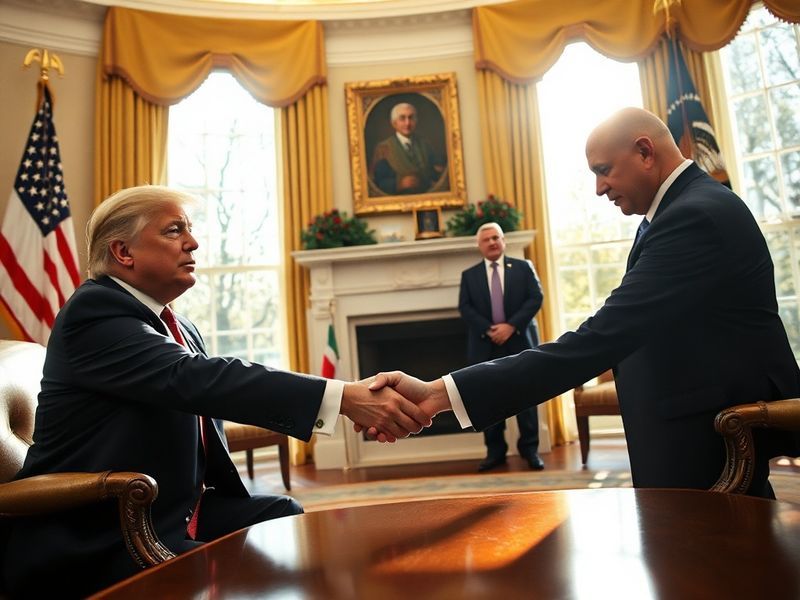
The Trump administration’s approach to Iran was defined by its “maximum pressure” campaign, which sought to alter Iran’s behavior through unprecedented economic sanctions rather than traditional diplomacy. This strategy, however, did not preclude moments of direct engagement, including high-stakes negotiations that occasionally surfaced in public discourse. Understanding these talks requires examining their origins, key players, and the broader implications for international relations.
Origins of Trump’s Iran Policy
Donald Trump’s Iran policy was a direct departure from the Obama administration’s 2015 nuclear deal, known as the Joint Comprehensive Plan of Action (JCPOA). Trump campaigned on a promise to dismantle the agreement, arguing that it failed to curb Iran’s regional aggression and ballistic missile development. In May 2018, he fulfilled that promise by withdrawing the U.S. from the JCPOA and reimposing crippling sanctions on Iran’s economy.
The withdrawal was not an isolated decision but part of a broader strategy aimed at forcing Iran back to the negotiating table under stricter terms. The administration hoped that economic strangulation would compel Iran to renegotiate a deal that addressed not only its nuclear program but also its support for proxy groups in Syria, Yemen, and Lebanon. This approach, however, faced criticism from both domestic and international observers who warned of unintended consequences, including heightened tensions and a potential military escalation.
Key Players in the Negotiation Process
The Trump administration’s Iran policy was shaped by a cast of influential figures, each bringing distinct perspectives to the table. At the forefront was Secretary of State Mike Pompeo, a former CIA director who advocated for a hardline stance against Iran. Pompeo’s tenure was marked by a relentless push to isolate Iran diplomatically while exploring avenues for direct talks.
Another critical figure was John Bolton, Trump’s National Security Advisor from 2018 to 2019. Bolton, a staunch opponent of the JCPOA, pushed for a more confrontational approach, including the possibility of regime change. His influence was evident in the administration’s decision to designate Iran’s Islamic Revolutionary Guard Corps (IRGC) as a foreign terrorist organization in April 2019—a move that further escalated tensions.
On the Iranian side, Supreme Leader Ayatollah Ali Khamenei and President Hassan Rouhani were the primary decision-makers. Khamenei, who held ultimate authority over Iran’s foreign policy, consistently rejected direct talks with the U.S., viewing them as a trap. Rouhani, meanwhile, was left to navigate the delicate balance between Iran’s economic struggles and its defiance of U.S. demands.
Public and Secret Channels of Communication
Despite Iran’s public refusal to engage in direct negotiations with the U.S., there were intermittent moments of indirect communication. In June 2019, after the U.S. blamed Iran for attacks on oil tankers in the Gulf of Oman, Trump claimed he had received a letter from Iran’s leadership expressing a desire to negotiate. While the authenticity of the letter was disputed, it highlighted the existence of backchannel communications between the two nations.
One of the most notable instances of behind-the-scenes diplomacy occurred in September 2019, when Iranian Foreign Minister Mohammad Javad Zarif attended the United Nations General Assembly in New York. During his visit, Zarif held private meetings with European diplomats and U.S. officials, including then-National Security Advisor Robert O’Brien. These discussions, though unofficial, underscored the persistent efforts to find a diplomatic off-ramp to the escalating crisis.
The Trump administration also explored indirect talks through intermediaries such as Oman and Switzerland. These channels were used to convey messages and explore potential concessions, though they rarely led to substantive breakthroughs. The reliance on backchannel diplomacy reflected the political constraints on both sides—Trump faced domestic pressure to appear tough on Iran, while Iran’s leadership struggled to reconcile its ideological opposition to the U.S. with its economic vulnerabilities.
Escalation and Missed Opportunities
The Trump administration’s Iran policy was characterized by a cycle of escalation and missed opportunities. In January 2020, the U.S. conducted a drone strike that killed Iranian General Qasem Soleimani, a move that brought the two nations to the brink of war. The assassination of Soleimani, a figure revered in Iran, triggered a wave of outrage and retaliation, including Iran’s ballistic missile strikes on U.S. bases in Iraq.
Amid this backdrop, there were fleeting moments when diplomacy seemed possible. In August 2020, reports emerged of secret talks between U.S. and Iranian officials in Vienna, facilitated by European intermediaries. These discussions focused on Iran’s compliance with the JCPOA and the potential for a prisoner swap. However, the talks stalled due to mutual distrust and the looming U.S. presidential election, which added another layer of uncertainty to the process.
By the time Trump left office in January 2021, the U.S.-Iran relationship had deteriorated significantly. The “maximum pressure” campaign had failed to achieve its stated goals, and Iran’s nuclear program had advanced beyond the limits set by the JCPOA. The absence of a clear diplomatic strategy left the Biden administration with a daunting challenge: how to re-engage Iran without repeating the mistakes of the past.
Lessons from the Trump Era
The Trump administration’s Iran policy offers several key lessons for future diplomatic efforts. First, economic sanctions alone are unlikely to compel a state like Iran to change its behavior. While sanctions can inflict significant pain, they also create perverse incentives for the targeted regime to entrench its power and resist external pressure.
Second, backchannel diplomacy can play a crucial role in conflict resolution, but it must be accompanied by a clear public commitment to dialogue. Without sustained political will, even the most promising secret talks can collapse under the weight of public skepticism and hardline opposition.
Finally, the Trump era demonstrated the dangers of a disjointed foreign policy, where strategic decisions are driven by domestic political considerations rather than long-term geopolitical goals. The lack of a coherent Iran strategy ultimately left both the U.S. and Iran in a worse position than they started.
Looking Ahead: The Biden Administration’s Approach
With Joe Biden’s inauguration in January 2021, the U.S. shifted gears in its approach to Iran. Biden signaled his intention to revive the JCPOA, provided Iran returned to full compliance with the agreement. However, the path to re-engagement has been fraught with challenges, including Iran’s demands for sanctions relief and the U.S.’s concerns about Iran’s regional activities.
To date, indirect talks between the U.S. and Iran have continued in Vienna, but progress has been slow. The Biden administration has faced pressure from both domestic critics and regional allies, such as Israel and Saudi Arabia, to adopt a tougher stance on Iran. Meanwhile, Iran’s presidential election in June 2021 brought to power Ebrahim Raisi, a hardliner who has shown little enthusiasm for rapprochement with the U.S.
The lessons of the Trump era loom large over these negotiations. The Biden administration must balance the need for diplomacy with the realities of a deeply entrenched conflict. Whether it can succeed where its predecessor failed remains an open question, but one thing is clear: the U.S.-Iran relationship will continue to be a defining challenge for American foreign policy in the years to come.
Key Takeaways
- The Trump administration’s “maximum pressure” campaign failed to achieve its primary objectives and instead intensified tensions with Iran.
- Secret and indirect talks between the U.S. and Iran occurred sporadically but rarely led to substantive progress.
- The assassination of Qasem Soleimani in January 2020 marked a turning point, bringing the U.S. and Iran to the brink of war.
- The Biden administration has sought to revive the JCPOA but faces significant obstacles, including Iran’s domestic politics and regional dynamics.
The history of Trump’s Iran talks is a reminder of the complexities of negotiating with a regime that views engagement with the U.S. as both a strategic necessity and a political liability. For policymakers, the challenge lies in finding a balance between pressure and diplomacy—a task that has proven elusive for decades. As the U.S. and Iran continue to navigate this fraught relationship, the lessons of the past will undoubtedly shape the decisions of the future.
For further reading on U.S. foreign policy and diplomatic strategies, explore our News and Analysis sections.