Trump Iran Talks: A Shifting Strategy in Nuclear Diplomacy
“`html
Trump’s Iran Talks: A Shifting Strategy in Nuclear Diplomacy
The Trump administration’s approach to Iran has been marked by sharp contrasts with its predecessors. From the 2015 nuclear deal to the subsequent withdrawal and imposition of sanctions, the U.S. strategy has evolved dramatically. Recent talks, whether direct or indirect, have added new layers to this complex relationship. Understanding these negotiations requires examining their historical context, the evolving geopolitical landscape, and the potential outcomes for regional stability.
The early days of Trump’s presidency saw a clear departure from the Obama-era Joint Comprehensive Plan of Action (JCPOA). The administration’s “maximum pressure” campaign aimed to force Iran back to the negotiating table under stricter terms. Yet, recent reports suggest a nuanced shift—one that blends coercion with an openness to dialogue, even as tensions remain high.
The Evolution of U.S.-Iran Relations Under Trump
Trump’s Iran policy has been anything but static. In May 2018, he unilaterally withdrew the U.S. from the JCPOA, a deal designed to curb Iran’s nuclear ambitions in exchange for sanctions relief. The move was justified by claims that the agreement was flawed, failing to address Iran’s ballistic missile program and regional influence. The withdrawal was followed by a reinstatement of sanctions, which crippled Iran’s economy and strained its ability to engage in international trade.
Despite this hardline stance, there have been moments of engagement. In 2019, after a series of escalating tensions—including attacks on oil tankers and the downing of a U.S. drone—Iran signaled a willingness to negotiate. Trump’s response was mixed: he ordered a military strike against Iranian targets but later called off the attack at the last minute. This unpredictability has become a defining feature of his approach to Iran.
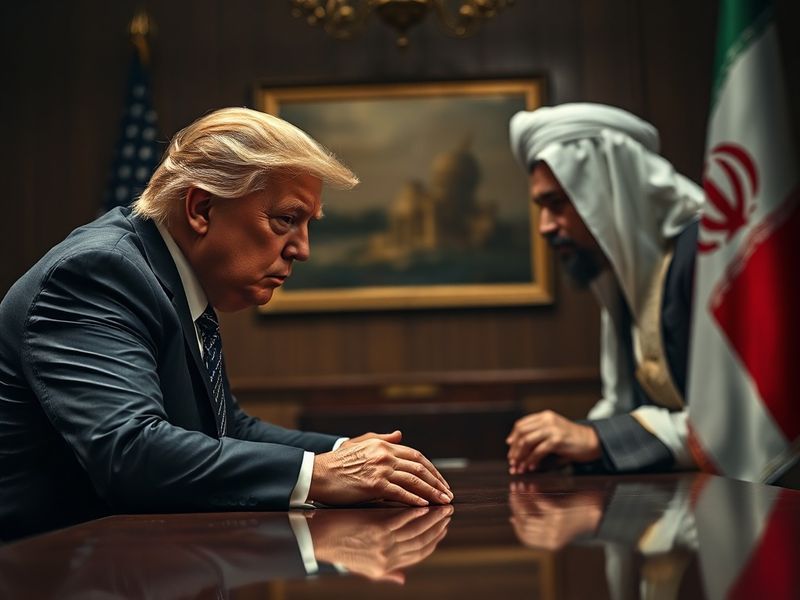
The administration’s strategy has also included backchannel communications. In 2020, reports emerged of indirect talks between U.S. and Iranian officials, facilitated by intermediaries. These discussions focused on potential prisoner swaps and other confidence-building measures, though they did not lead to broader diplomatic breakthroughs. The willingness to engage, however limited, suggests a recognition that total isolation of Iran may not serve U.S. interests.
Key Players and Their Roles in the Negotiations
Several actors have shaped the trajectory of U.S.-Iran talks under Trump. The most prominent is, of course, the U.S. president himself, whose rhetoric has ranged from fiery threats to unexpected overtures. His administration has been divided between hardliners, who advocate for continued pressure, and pragmatists, who see value in limited engagement.
Iran’s leadership has also played a critical role. Supreme Leader Ayatollah Ali Khamenei has consistently opposed direct talks with the U.S., viewing them as a trap. President Hassan Rouhani, meanwhile, has advocated for diplomacy, though his influence has waned amid economic woes and internal dissent. The Islamic Revolutionary Guard Corps (IRGC), a powerful military faction, has also shaped Iran’s stance, often pushing for a more confrontational approach.
International actors have added another layer of complexity. European nations, which remain committed to the JCPOA, have sought to mediate between the U.S. and Iran. Russia and China, both critical of U.S. sanctions, have positioned themselves as potential partners for Iran. Even regional players like Saudi Arabia and Israel have weighed in, with the latter repeatedly warning against any U.S. concessions to Tehran.
The dynamics between these players have created a fragile environment for negotiations. While Trump has expressed openness to talks, his administration’s actions—such as the assassination of IRGC Quds Force commander Qasem Soleimani in January 2020—have undermined trust. Iran’s retaliatory strikes on U.S. bases in Iraq further escalated tensions, leaving little room for diplomatic maneuvering.
What Recent Talks Have Revealed
Recent negotiations, whether public or behind closed doors, have exposed the deep-seated mistrust between the U.S. and Iran. In 2020, indirect talks in Oman and Switzerland focused on two primary issues: Iran’s nuclear program and the release of detained Americans. While some progress was made on prisoner exchanges, the broader nuclear question remained unresolved.
One of the most significant developments was Iran’s gradual enrichment of uranium beyond the limits set by the JCPOA. This move, a direct response to the U.S. withdrawal, has raised concerns about Iran’s nuclear ambitions. Trump’s response has been to tighten sanctions, further isolating Iran economically. Yet, the administration has also left the door open for negotiations, suggesting that it may be willing to lift some sanctions in exchange for concessions.
The talks have also highlighted the role of regional proxies. Iran’s support for groups like Hezbollah in Lebanon and the Houthis in Yemen has been a major point of contention. The U.S. has demanded that Iran curb its regional activities as part of any nuclear deal. Iran, however, views these groups as vital to its security strategy, making compromise difficult.
Another key issue is the future of the JCPOA. While Trump has repeatedly criticized the deal, his administration has not ruled out reviving it under stricter terms. European nations, meanwhile, have sought to preserve the agreement, even as they struggle to counter the impact of U.S. sanctions. The fate of the JCPOA will likely hinge on the outcome of the 2020 U.S. presidential election, with Trump’s opponent, Joe Biden, having pledged to rejoin the deal if elected.
The Road Ahead: Challenges and Opportunities
The path forward for U.S.-Iran talks is fraught with challenges. The most immediate is the lack of trust between the two sides. Years of sanctions, military strikes, and covert operations have created a climate of hostility that will not be easily overcome. Any negotiations will require significant concessions from both sides, as well as a commitment to long-term engagement.
Regional dynamics also pose a significant hurdle. Saudi Arabia and Israel, both wary of Iran, have lobbied the U.S. to maintain a hardline stance. Their influence could limit Trump’s willingness to make concessions, even if he is open to talks. Meanwhile, Iran’s domestic politics are increasingly volatile, with hardliners gaining ground and Rouhani’s authority waning. This could further complicate any diplomatic efforts.
Despite these obstacles, there are opportunities for progress. The humanitarian crisis in Iran, exacerbated by sanctions and the COVID-19 pandemic, may create incentives for both sides to engage. The U.S. could offer limited sanctions relief in exchange for steps toward de-escalation, such as halting uranium enrichment or releasing prisoners. Iran, in turn, could signal a willingness to curb its regional activities or negotiate a new framework for nuclear oversight.
International mediation could also play a crucial role. European nations, Russia, and China have all expressed interest in facilitating dialogue. Their involvement could help bridge the gap between the U.S. and Iran, though it would require a delicate balancing act to avoid exacerbating regional tensions.
Ultimately, the success of any talks will depend on the willingness of both sides to compromise. Trump’s approach has been characterized by unpredictability, but recent signals suggest a recognition that diplomacy, however limited, may be necessary. For Iran, the choice is equally stark: continued economic isolation or a path toward engagement that could ease its suffering but risk its regional influence.
As the situation evolves, one thing is clear: the stakes are too high for either side to ignore. Whether through direct talks, backchannel negotiations, or international mediation, the U.S. and Iran will need to find a way forward—one that balances their competing interests and avoids further escalation.
For those interested in the broader geopolitical implications of these talks, our Politics section offers deeper analysis on the shifting dynamics of U.S. foreign policy. Alternatively, our News section provides real-time updates on developments in the Middle East.