Trump Iran Talks: How Diplomacy and Pressure Shaped US Policy
“`html
Trump Iran Talks: High Stakes and Uncertain Outcomes
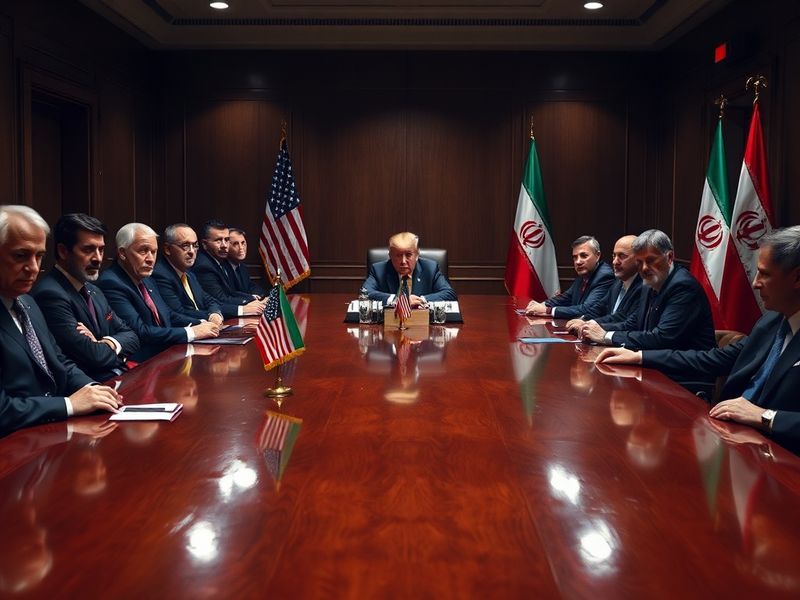
The relationship between the United States and Iran has long been defined by tension, negotiation, and occasional breakthroughs. Under the Trump administration, these dynamics took on new dimensions as attempts were made to broker deals that could reshape Middle Eastern geopolitics. The talks—often conducted behind closed doors and punctuated by public statements—reflect broader struggles over nuclear proliferation, regional influence, and diplomatic credibility.
These negotiations didn’t emerge in a vacuum. They followed decades of fluctuating relations, including the 2015 Iran nuclear deal (JCPOA), which was later abandoned by Trump in 2018. The withdrawal marked a turning point, reimposing sanctions and escalating economic pressure on Tehran. Yet, despite the hardline stance, whispers of dialogue persisted, revealing a paradox: even adversaries sometimes find reasons to talk.
Background: From JCPOA to Maximum Pressure
In 2015, the Obama administration, alongside international partners, finalized the Joint Comprehensive Plan of Action (JCPOA), an agreement designed to curb Iran’s nuclear program in exchange for sanctions relief. The deal was hailed as a diplomatic triumph, yet it remained controversial domestically, particularly among Republicans who viewed it as too lenient.
Upon taking office, President Trump adopted a markedly different approach. He labeled the JCPOA “the worst deal ever” and withdrew the U.S. in May 2018, reimposing stringent economic sanctions through a policy known as “maximum pressure.” The goal was clear: force Iran back to the negotiating table under stricter terms. Iran, however, responded by gradually violating key provisions of the JCPOA, enriching uranium beyond agreed limits and restricting international inspections.
By 2019, tensions escalated dramatically. A series of mysterious attacks on oil tankers in the Strait of Hormuz, drone incursions near U.S. bases, and the downing of a U.S. surveillance drone culminated in the assassination of Iranian General Qasem Soleimani in January 2020—a move that brought the two nations to the brink of war. Yet, even amid such hostility, backchannel communications never fully ceased.
What Were the Trump Administration’s Goals?
The stated objectives of Trump’s Iran policy were ambitious: dismantle Iran’s nuclear infrastructure, curtail its ballistic missile program, and reduce its regional influence in countries like Syria, Yemen, and Iraq. Achieving these goals required leverage, and the administration believed economic sanctions would provide it.
But sanctions alone didn’t yield the desired concessions. Iran’s leadership, led by Supreme Leader Ayatollah Ali Khamenei, refused to renegotiate the JCPOA under U.S. pressure. Instead, Iran pursued a strategy of calibrated escalation—slowly increasing its nuclear activities while avoiding actions that would provoke a full-scale military response.
Unofficial talks did occur, often mediated through European allies or third-party countries. In one notable instance in 2019, Swiss diplomats facilitated indirect communications between U.S. and Iranian officials in Oman. These exchanges reportedly focused on de-escalation, prisoner swaps, and potential future negotiations—though neither side publicly acknowledged them.
Ultimately, the Trump administration’s Iran policy yielded mixed results. While sanctions crippled Iran’s economy—shrinking its GDP by nearly 6% in 2019 and 2020—Tehran continued to expand its nuclear program and regional influence. The policy also strained alliances, particularly with European signatories of the JCPOA who sought to preserve the deal despite U.S. withdrawal.
Key Moments in the Trump-Iran Dialogue
The period from 2017 to 2021 was punctuated by critical incidents that shaped the trajectory of U.S.-Iran talks. Here are several defining moments:
- May 2018: The U.S. formally withdraws from the JCPOA, reimposing nuclear-related sanctions and targeting Iran’s oil exports.
- July 2018: Iran files a complaint with the International Court of Justice (ICJ) against the U.S. for violating the Treaty of Amity, challenging sanctions.
- June 2019: The U.S. deploys an aircraft carrier strike group and B-52 bombers to the Middle East amid rising tensions.
- September 2019: A drone and missile strike on Saudi oil facilities, widely attributed to Iran, temporarily halts half of Saudi Arabia’s oil production.
- January 2020: Qasem Soleimani is killed in a U.S. drone strike in Baghdad, escalating fears of a direct war.
- August 2020: Iran begins enriching uranium to 4.5% purity, exceeding the 3.67% limit set by the JCPOA.
These events illustrate a pattern: escalation followed by tentative backchannel communications, with neither side willing to fully disengage. The pattern underscores a harsh reality in diplomacy—when direct talks are impossible, indirect channels often become the only lifeline.
Broader Implications: What the Talks Reveal About Diplomacy and Power
The Trump administration’s approach to Iran was not just about policy—it was a case study in coercive diplomacy. The use of sanctions, military posturing, and maximum pressure was designed to extract concessions without direct negotiation. Yet, the outcome revealed the limits of such tactics.
First, economic pressure alone rarely forces behavioral change in authoritarian regimes. Iran’s leadership, facing internal unrest and external threats, doubled down on defiance rather than capitulation. The regime’s survival strategy relied on nationalism, anti-American rhetoric, and strategic patience—not capitulation.
Second, the absence of direct dialogue increases the risk of miscalculation. Each side operated with incomplete information, relying on intermediaries and intelligence reports. This opacity fueled mistrust and nearly triggered a catastrophic conflict.
Third, the talks highlighted the fragility of multilateral agreements. The JCPOA’s collapse demonstrated how easily international consensus can unravel when a major power withdraws. It also showed that even flawed deals can serve as stabilizing frameworks—until they don’t.
Finally, the Trump-Iran experience underscored a paradox of modern diplomacy: the more a nation insists on “winning” through pressure, the more it risks losing the opportunity to shape outcomes through negotiation. In international relations, power without dialogue often leads to stalemate.
Conclusion: Lessons for Future Diplomacy
The Trump administration’s engagement—or lack thereof—with Iran offers valuable lessons for future policymakers. Diplomacy, even with adversaries, remains essential. Direct or indirect talks, even under duress, can prevent miscalculation and reduce the risk of conflict.
Moreover, the episode demonstrates that sanctions, while powerful, are not a panacea. They can cripple economies and weaken populations, but they rarely alter the strategic calculus of determined regimes. Real change requires a combination of pressure, incentives, and sustained diplomatic engagement.
As the Biden administration took office in 2021, it faced a daunting task: rebuild trust with Iran while addressing its nuclear advances. The Trump era had shown that withdrawal from agreements emboldens hardliners and weakens moderates. It also proved that in geopolitics, silence is not absence—it’s often a precursor to crisis.
For now, the legacy of Trump’s Iran talks remains a cautionary tale. It shows that even the most powerful nations cannot dictate outcomes unilaterally. In the end, diplomacy—messy, slow, and imperfect—may be the only way forward.
For deeper analysis on U.S. foreign policy and international negotiations, visit our Politics and Analysis sections.