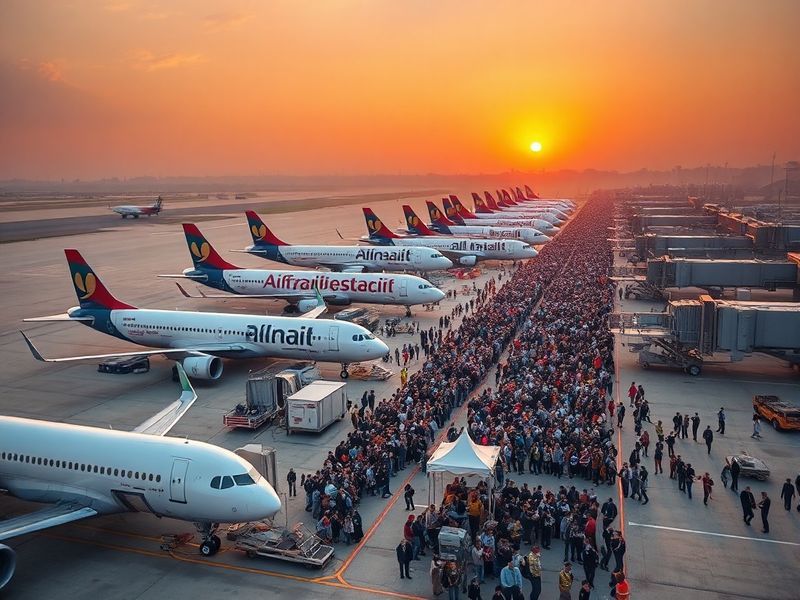
The past year has seen a dramatic increase in flight cancellations and delays across Asia, disrupting travel plans for millions. From extreme weather to operational challenges, the causes are varied and often interconnected. Understanding these issues is crucial for anyone planning a trip or currently stranded at an airport.
Industry data reveals that in 2023, over 15% of flights departing from major Asian hubs experienced some form of disruption. This represents a significant jump from pre-pandemic levels, where disruption rates typically hovered around 10%. The trend shows no signs of slowing, with the first quarter of 2024 already matching last year’s disruption rates.
Common Causes Behind the Chaos
The challenges facing Asian aviation are multifaceted, with several key factors contributing to the current situation:
- Extreme Weather Events: Monsoon seasons in Southeast Asia and typhoon seasons in East Asia have intensified, causing widespread airport closures. In 2023, Typhoon Saola alone led to the cancellation of over 500 flights across Hong Kong, Taipei, and Manila.
- Air Traffic Control Strikes: Industrial action by air traffic controllers in countries like South Korea and Thailand has repeatedly paralyzed operations. These strikes often coincide with peak travel periods, exacerbating the impact.
- Staffing Shortages: The aviation industry continues to struggle with post-pandemic staffing gaps. Pilots, cabin crew, and ground staff shortages have created bottlenecks at every level of the operation.
- Technical Issues: Aging aircraft fleets and maintenance backlogs have contributed to increased technical failures. Airlines like AirAsia and Lion Air have faced repeated groundings of entire aircraft types due to safety concerns.
These factors often combine to create compounded disruptions. For example, a strike by air traffic controllers in Japan might delay flights, which then triggers a chain reaction of delayed crews and aircraft positioning issues across the region.
Regional Hotspots: Where Delays Are Most Common
Not all Asian airports are equally affected by these disruptions. Certain hubs consistently appear at the top of delay and cancellation lists:
- Bangkok Suvarnabhumi Airport (BKK): Thailand’s main international gateway has seen cancellation rates as high as 22% during peak monsoon seasons. The airport’s single runway system exacerbates delays when weather conditions deteriorate.
- Hong Kong International Airport (HKG):strong>: Political protests in 2019 and ongoing pandemic-related staffing issues have left a lasting impact. The airport’s three-runway system hasn’t been enough to prevent chronic delays.
- Narita International Airport (NRT): Tokyo’s older airport struggles with capacity constraints, particularly during typhoon season. Many airlines have shifted operations to Haneda Airport (HND), but this creates additional logistical challenges for passengers.
- Kuala Lumpur International Airport (KUL): Malaysia’s primary hub faces frequent disruptions due to haze from forest fires in neighboring Indonesia. These visibility issues can ground flights for days at a time.
Interestingly, some secondary airports have become preferred alternatives during peak disruption periods. Singapore’s Changi Airport (SIN) and Seoul’s Incheon Airport (ICN) have absorbed much of the overflow traffic, though they too face their own capacity challenges.
How Airlines Are Responding to the Crisis
Airlines operating in Asia are implementing various strategies to mitigate the impact of these disruptions. Most major carriers have adopted a multi-pronged approach:
- Schedule Buffering: Many airlines have built in additional ground time between flights to account for potential delays. While this reduces the number of cancellations, it often leads to longer layovers for passengers.
- Rerouting Strategies: Airlines are increasingly using alternative routes that avoid congested airspace. For example, flights from Europe to Australia often now route through the Middle East rather than traditional Asian hubs.
- Passenger Compensation: In response to regulatory pressure, airlines are offering more generous compensation packages for delayed passengers. This includes hotel vouchers, meal allowances, and extended rebooking windows.
- Technology Investments: New AI-driven systems are being deployed to predict disruptions and adjust schedules in real-time. Singapore Airlines and Cathay Pacific have invested heavily in these predictive technologies.
However, these measures come with significant costs. The additional ground time and rerouting options require more aircraft and crew, increasing operational expenses by as much as 15% for some airlines. This financial pressure has led to higher ticket prices across many routes.
What Travellers Can Do to Minimize Disruptions
For passengers navigating this challenging environment, preparation and flexibility are key. Here are practical steps to reduce the impact of cancellations and delays:
- Choose Alternative Hubs: Consider routing through airports known for better on-time performance, such as Singapore or Seoul. While these options may be more expensive, they often provide more reliable connections.
- Monitor Multiple Channels: Don’t rely solely on airline notifications. Check airport websites, flight tracking apps like FlightAware, and local news sources for real-time updates.
- Build in Extra Time: The standard two-hour buffer before international flights may no longer be sufficient. Consider arriving at the airport a day early if your schedule allows it.
- Understand Your Rights: Many Asian countries have strict passenger rights regulations. Familiarize yourself with the compensation policies for your specific itinerary, as these can vary significantly by country.
- Consider Travel Insurance: Comprehensive travel insurance that covers trip interruption and delay compensation can provide peace of mind. Make sure to review the fine print regarding what constitutes a valid delay claim.
For those currently stranded, most airlines recommend contacting their customer service hotline immediately rather than waiting at the airport. Many carriers now offer automated rebooking options through their mobile apps, which can significantly reduce wait times.
Looking Ahead: Can the Situation Improve?
The future of Asian aviation remains uncertain, with both challenges and opportunities on the horizon. Several developments could help alleviate the current crisis:
- New Airport Construction: Projects like the new Kuala Lumpur International Airport 2 and the expansion of Bangkok’s U-Tapao Airport aim to increase capacity. However, these won’t come online until at least 2025.
- Regional Cooperation: ASEAN countries are discussing a unified air traffic management system to reduce congestion at major hubs. This could help distribute traffic more evenly across the region.
- Alternative Transport Options: High-speed rail connections between major Asian cities are expanding. For example, the new China-Laos railway has already reduced air traffic between Kunming and Vientiane.
- Sustainability Pressures: The push for carbon-neutral aviation may lead to reduced flight frequencies, particularly on short-haul routes. While this could alleviate some congestion, it may also limit travel options.
In the meantime, passengers will need to adapt to this new reality of travel in Asia. The days of assuming flights will operate as scheduled may be behind us, at least for the foreseeable future. Those who plan carefully, remain flexible, and understand their rights will be best positioned to navigate this challenging landscape.
As the industry works to address these issues, travelers can take solace in the fact that Asian aviation has weathered crises before. The region’s airlines and airports have demonstrated remarkable resilience in the past, and there’s every reason to believe they can rise to this challenge as well.