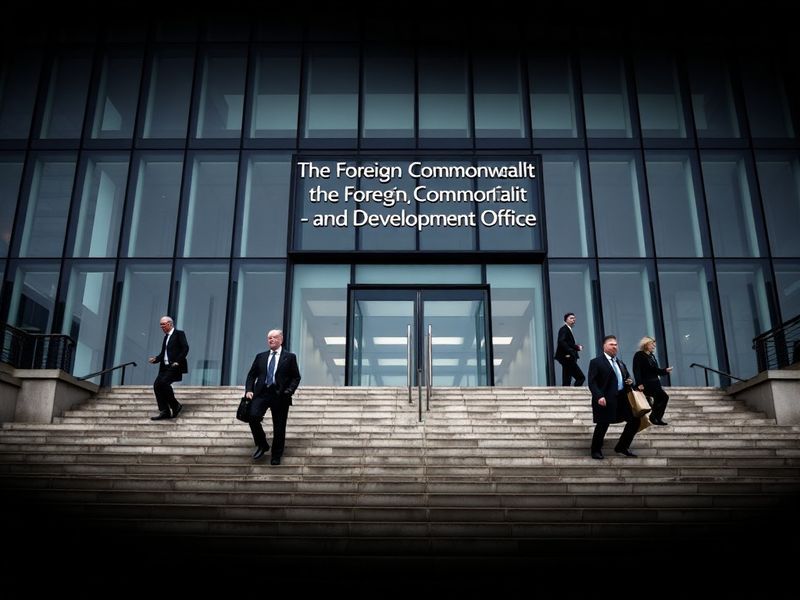
The Foreign, Commonwealth and Development Office: A Global Perspective
The Foreign, Commonwealth and Development Office (FCDO) stands as one of the United Kingdom’s most influential institutions, shaping international relations, development policy, and humanitarian efforts across the globe. Established in 2020 through the merger of the Foreign and Commonwealth Office (FCO) and the Department for International Development (DFID), the FCDO represents a bold restructuring of Britain’s approach to global engagement. Its mission extends from diplomacy and conflict resolution to poverty alleviation and climate action, reflecting the interconnected challenges of the 21st century.
Operating in an era defined by geopolitical tensions, economic inequality, and environmental crises, the FCDO navigates a complex web of relationships with nations, multilateral organizations, and civil society. The department’s work touches nearly every corner of the world, from post-conflict reconstruction in Africa to trade negotiations in Asia and crisis response in the Middle East. Understanding its role requires examining both its historical roots and its evolving strategies in response to modern global dynamics.
The Evolution of Britain’s Global Engagement
The creation of the FCDO marked a significant shift in how the UK positions itself on the world stage. The merger of the FCO and DFID was not merely administrative—it signaled a commitment to integrating diplomacy with development goals. Traditionally, the FCO focused on political and security concerns, while DFID concentrated on overseas aid and poverty reduction. By combining these mandates, the UK aimed to create a more cohesive and strategic approach to international challenges.
This restructuring also reflected broader trends in global governance, where traditional foreign policy increasingly overlaps with development work. Climate change, pandemics, and migration crises have blurred the lines between diplomacy and aid, forcing governments to adopt more holistic strategies. The FCDO’s dual focus on “foreign” and “development” reflects this reality, emphasizing that sustainable peace and prosperity cannot be achieved through military or economic measures alone.
The department’s priorities are outlined in its official publications, which highlight key areas such as:
- Promoting human rights and democratic values
- Supporting economic growth and trade partnerships
- Addressing humanitarian crises and conflict prevention
- Combating climate change and biodiversity loss
- Strengthening global health security
These priorities are not static; they adapt to emerging threats and opportunities. For instance, the COVID-19 pandemic forced the FCDO to pivot toward vaccine diplomacy and crisis coordination, while the war in Ukraine has reshaped Britain’s approach to European security and energy policy.
Diplomacy in a Multipolar World
The FCDO operates in a global landscape that is increasingly multipolar, with traditional Western powers facing competition from rising economies like China and India, as well as regional blocs such as the African Union and ASEAN. This shift has complicated Britain’s diplomatic efforts, requiring a nuanced balance between alliance-building and strategic autonomy.
One of the FCDO’s key challenges is maintaining influence in regions where Western dominance is no longer guaranteed. In Africa, for example, the UK competes with China’s Belt and Road Initiative, which has invested heavily in infrastructure projects across the continent. The FCDO has responded by emphasizing partnerships based on mutual benefit rather than conditional aid, a strategy that aligns with broader British foreign policy goals.
Another critical aspect of the FCDO’s work is its engagement with the Commonwealth, a voluntary association of 56 member states, most of which are former British colonies. The Commonwealth provides a unique platform for dialogue and cooperation, particularly on issues like education, trade, and climate resilience. The FCDO plays a central role in organizing events such as the Commonwealth Heads of Government Meeting (CHOGM), which brings together leaders to discuss shared challenges and opportunities.
The department’s diplomatic efforts also extend to multilateral forums like the United Nations, NATO, and the G7. These institutions remain vital for addressing global issues such as nuclear proliferation, cybersecurity, and pandemics. The FCDO’s ability to navigate these spaces—often in coordination with allies like the United States and the European Union—determines its effectiveness in shaping international norms and policies.
Development as a Tool for Stability and Prosperity
Beyond diplomacy, the FCDO’s development work is a cornerstone of its mission. DFID’s legacy of poverty reduction lives on in the FCDO’s commitment to sustainable development goals (SDGs). These goals, adopted by the UN in 2015, provide a blueprint for eradicating poverty, protecting the planet, and ensuring prosperity for all by 2030. The FCDO contributes to these goals through funding, technical expertise, and partnerships with governments, NGOs, and private sector entities.
One of the department’s most visible initiatives is its humanitarian aid program, which responds to crises such as conflicts, natural disasters, and refugee emergencies. In 2023, the FCDO allocated £2.5 billion to humanitarian assistance, supporting millions of people affected by crises in Yemen, Sudan, and Ukraine. This aid is not just about immediate relief; it also aims to build resilience and prevent future conflicts by addressing root causes like poverty, inequality, and climate vulnerability.
The FCDO’s development strategy also prioritizes education and women’s empowerment, recognizing that these areas are critical to long-term stability. For example, the UK’s Girls’ Education Challenge, funded by the FCDO, has supported over 1.5 million girls in some of the world’s poorest countries to access quality education. Similarly, programs focused on women’s economic participation aim to reduce gender disparities and foster inclusive growth.
Climate change is another area where the FCDO is making a significant impact. The department has pledged £11.6 billion in international climate finance, supporting projects that promote renewable energy, sustainable agriculture, and climate adaptation in vulnerable communities. This work is essential not only for environmental protection but also for preventing climate-induced conflicts and mass displacement.
The FCDO’s Cultural and Soft Power Influence
The FCDO’s role extends beyond hard policy and development work—it also serves as a cultural ambassador for the UK. Through initiatives like the British Council and the Chevening Scholarship program, the department promotes British values, education, and artistic expression worldwide. These efforts contribute to the UK’s “soft power,” the ability to influence others through attraction rather than coercion.
The British Council, for instance, operates in over 100 countries, fostering cultural exchanges, English language education, and arts collaborations. Its programs often serve as bridges between the UK and other nations, creating goodwill and long-term partnerships. Similarly, the Chevening Scholarship, which funds international students to study in the UK, has become a prestigious symbol of British educational excellence, with over 50,000 alumni worldwide.
The FCDO’s cultural diplomacy also intersects with trade and economic interests. By showcasing British innovation, creativity, and academic rigor, the department helps create favorable conditions for UK businesses and investors abroad. This is particularly important in sectors like technology, finance, and creative industries, where British expertise is highly sought after.
However, the FCDO’s cultural influence is not without challenges. In an era of rising nationalism and skepticism toward globalization, promoting British values abroad can be contentious. The department must carefully balance its advocacy for democracy and human rights with respect for local cultures and traditions. This requires a nuanced approach that avoids the pitfalls of cultural imperialism while staying true to the UK’s core principles.
Challenges and Criticisms
Despite its ambitious goals, the FCDO faces numerous challenges that test its effectiveness. Budget constraints, bureaucratic inefficiencies, and shifting political priorities can hinder its ability to deliver on its promises. For example, the UK’s decision to reduce its foreign aid budget in 2020 sparked widespread criticism, with many arguing that it undermined the country’s global leadership on development issues.
Another challenge is the growing scrutiny of development aid, particularly in countries where corruption or mismanagement is rampant. Critics argue that some aid money is wasted or misused, leading to calls for greater transparency and accountability in how funds are allocated and spent. The FCDO has responded by emphasizing results-based programming and local ownership, ensuring that aid is aligned with the priorities of beneficiary communities.
The department also grapples with the complexities of working in conflict zones, where access to populations in need is often restricted by warring parties or unstable governments. In such environments, humanitarian aid workers face significant risks, including kidnapping, violence, and bureaucratic obstacles. The FCDO’s ability to navigate these challenges while maintaining a commitment to humanitarian principles is a constant test of its resolve.
Finally, the FCDO must contend with the evolving nature of global threats, from cyber warfare to disinformation campaigns. Traditional diplomacy is increasingly complemented by digital engagement, requiring the department to invest in cybersecurity, digital diplomacy, and countering foreign interference. This shift demands not only new skills and technologies but also a rethinking of how diplomacy is conducted in the 21st century.
Looking Ahead: The Future of the FCDO
As the world continues to change at an unprecedented pace, the FCDO’s role will only grow in importance. The department’s ability to adapt to new challenges—whether pandemics, climate disasters, or geopolitical rivalries—will determine its legacy in the decades to come. One of its most pressing tasks is redefining Britain’s place in a post-Brexit world, where the UK must forge its own path while maintaining strong alliances.
The FCDO’s future success will depend on several key factors. First, it must continue to prioritize innovation, leveraging technology and data to improve the efficiency and impact of its programs. Second, it must foster deeper partnerships with local communities, ensuring that development and diplomatic efforts are inclusive and sustainable. Finally, it must remain agile, ready to pivot in response to emerging crises and opportunities.
For those interested in global affairs, the FCDO offers a fascinating case study in how nations navigate the complexities of the modern world. Its work reminds us that diplomacy and development are not just abstract concepts—they are tangible forces that shape the lives of millions. As the UK charts its course in an increasingly interconnected yet fragmented world, the FCDO will remain at the heart of its efforts to build a more peaceful, prosperous, and sustainable future.
Further Reading and Resources
For those looking to explore the FCDO’s work in greater depth, the following resources provide valuable insights:
- FCDO Official Website – Access reports, news, and policy documents.
- UK International Climate Finance Results Report – Details on the FCDO’s climate initiatives.
- Politics Section – Explore related articles on global governance and diplomacy.