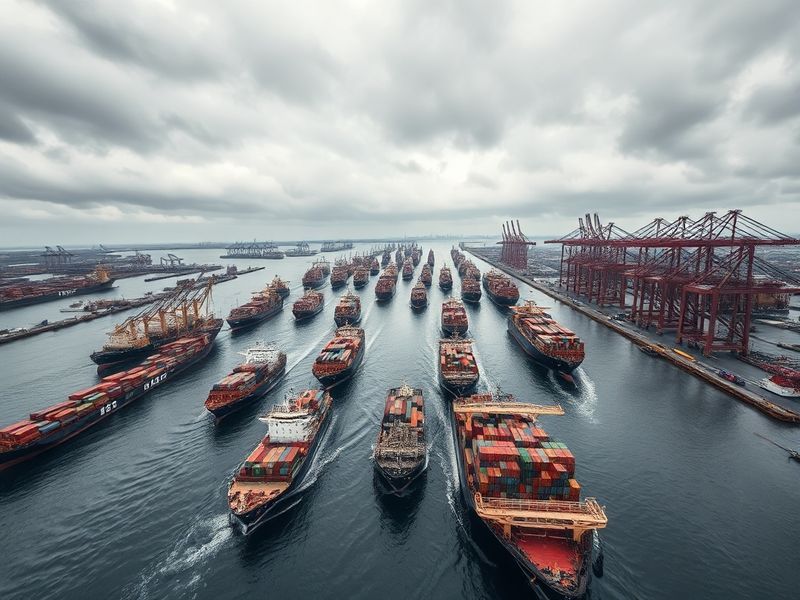
How Marine Traffic Powers the Global Economy and Shapes Culture
“`html
The Invisible Highways of the Sea
Every day, without fanfare, more than 90% of the world’s trade travels across oceans. The vessels carrying everything from smartphones to soybeans navigate an invisible network of maritime routes that pulse with activity 24 hours a day. This is marine traffic—the lifeblood of globalization, a silent force that connects continents, fuels economies, and quietly defines the rhythm of modern life.
Unlike highways clogged with cars or airspace crowded with planes, marine traffic unfolds across vast, open waters where space seems limitless. Yet, the scale is staggering. Over 50,000 merchant ships crisscross the globe annually, with the largest container vessels stretching longer than four football fields. These ships are piloted by crews from diverse backgrounds, speaking different languages, united by the shared mission of moving goods that power industries thousands of miles away.
The Technology Behind the Movement
The orchestration of this global ballet relies on a blend of ancient navigation principles and cutting-edge technology. Automatic Identification Systems (AIS) act as the nervous system of marine traffic, broadcasting real-time data on a ship’s identity, position, speed, and destination. Governments, port authorities, and shipping companies use this data to manage congestion, prevent collisions, and optimize routes.
Satellite monitoring supplements AIS, providing coverage in remote ocean regions where land-based receivers fail. These systems feed into global databases that map marine traffic patterns, revealing not just where ships are, but where they’re likely to be in the future. This intelligence helps ports prepare for arrivals, reduces idle time, and minimizes fuel consumption—an increasingly vital concern as climate pressures mount on the shipping industry.
Emerging technologies are pushing the boundaries further. Artificial intelligence now helps predict traffic hotspots and reroute ships to avoid delays caused by weather or geopolitical tensions. Drones and autonomous vessels are beginning to enter the fray, promising to revolutionize how goods are transported, though they also raise new questions about safety and regulation.
Cultural Echoes on the Open Sea
Marine traffic is more than an economic engine; it carries cultural currents that shape coastal communities and distant cities alike. The port of Rotterdam, once a Dutch trading hub, now handles cargo from around the world, with cranes hoisting containers emblazoned with Japanese kanji and Arabic script. Meanwhile, the port of Singapore, a gleaming crossroads in Southeast Asia, reflects the region’s diversity, with ships crewed by Filipinos, Indians, and Europeans passing through its waters daily.
The influence extends beyond ports. In small fishing villages in Greece or Peru, the sight of a massive cargo ship on the horizon is a reminder of the global market’s reach. For many coastal residents, the sea is both provider and pathway—a dual role that has defined livelihoods for generations. Even in inland cities like Detroit or Prague, the goods arriving via marine routes eventually find their way into homes, stores, and factories, linking daily life to the rhythm of the tides.
Music and folklore often capture this connection. Sea shanties, once work songs sung by sailors, now appear in modern films and festivals, blending tradition with contemporary influences. Festivals like Norway’s “Day of the Seafarer” celebrate the invisible workforce that keeps marine traffic moving, honoring the often-overlooked contributions of deckhands, engineers, and navigators from countries like Ukraine, Indonesia, and Myanmar.
The Challenges Beneath the Surface
Despite its ubiquity, marine traffic faces growing scrutiny. Environmental concerns top the list. Ships powered by heavy fuel oil emit significant amounts of sulfur oxides and particulate matter, contributing to air pollution in port cities. The industry is under pressure to adopt cleaner fuels like liquefied natural gas (LNG) or invest in hybrid-electric propulsion systems, though these transitions come with steep costs and technical hurdles.
Piracy remains another persistent threat. In the Gulf of Aden or the Strait of Malacca, armed groups target vessels for ransom or cargo theft. The international response has included naval patrols, private security teams, and improved coordination between shipping companies and governments. Yet, the problem persists, underscoring the vulnerabilities of a system that spans multiple jurisdictions and legal frameworks.
Infrastructure also struggles to keep pace. Some of the world’s busiest ports, like Los Angeles or Shanghai, face chronic congestion as they expand to accommodate larger ships. Upgrading docks, cranes, and rail connections requires billions in investment and years of planning. Meanwhile, smaller ports in Africa and South America often lack the resources to modernize, leaving them at a disadvantage in the global trade network.
Geopolitical tensions add another layer of complexity. Trade routes can become flashpoints during diplomatic disputes. When tensions rise between China and the Philippines, for instance, ships may reroute to avoid contested waters. Similarly, sanctions on countries like Russia or Iran can disrupt established trade patterns, forcing companies to rethink their supply chains and routes.
The Future: Navigating Uncertain Waters
Looking ahead, marine traffic must adapt to a world reshaped by climate change, technological innovation, and shifting economic priorities. The International Maritime Organization (IMO) has set ambitious targets to reduce greenhouse gas emissions from shipping by at least 50% by 2050, compared to 2008 levels. Achieving this will require a shift to zero-emission fuels, improved energy efficiency, and smarter route planning to reduce fuel consumption.
Digitalization is accelerating this transformation. Blockchain technology is being tested to streamline customs clearance and reduce paperwork. Predictive analytics help shipping companies anticipate delays caused by storms or port congestion, while digital twins—virtual replicas of ships—allow engineers to simulate and optimize performance before changes are made to real vessels.
Yet, the human element remains irreplaceable. The maritime industry employs over 1.5 million seafarers, many of whom endure long periods away from home and challenging working conditions. Initiatives to improve crew welfare, such as better training standards and mental health support, are gaining traction, but progress is uneven across the globe.
As autonomous ships become more common, the role of seafarers may evolve, but it won’t disappear. Remote monitoring centers will likely take over some tasks, but the need for skilled navigators, engineers, and problem-solvers will persist. The industry must find ways to attract new talent, particularly in Western countries where aging workforces threaten to create shortages.
A Connected World Rides the Waves
Marine traffic is the invisible thread weaving together the global economy. It’s the reason your morning coffee might come from Colombia, your smartphone from South Korea, and your shoes from Vietnam. It’s the reason a container ship delayed in the Suez Canal can cause ripple effects across supply chains, from electronics factories in Germany to auto plants in Mexico.
This network of ships and ports doesn’t just move goods—it moves cultures, ideas, and people. It’s a testament to human ingenuity and cooperation, even as it faces unprecedented challenges. From the deckhands braving rough seas to the engineers designing the next generation of vessels, marine traffic is a shared endeavor that transcends borders and languages.
As technology advances and environmental pressures grow, the future of marine traffic will require innovation, collaboration, and a commitment to sustainability. The silent pulse of the sea may not always be visible, but its impact is undeniable. It’s a reminder that in an interconnected world, the journey of a single ship can echo across continents, shaping lives in ways both seen and unseen.
For more insights into global trade and logistics, explore our Business section, where we analyze how supply chains adapt to changing economic landscapes.
To learn about the intersection of technology and transportation, visit our Technology category, which covers innovations like AI-driven logistics and autonomous vehicles.