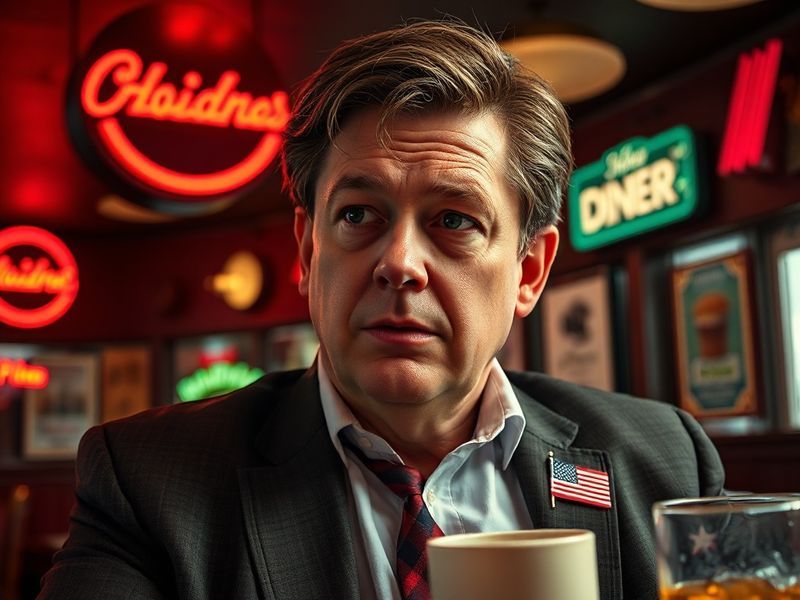
J.D. Vance’s political rise has been as rapid as it has been polarizing. From his 2022 election to the U.S. Senate to his prominent role in national conversations about the economy and cultural identity, Vance has become a defining figure in contemporary American politics. His journey reflects broader global trends, where working-class narratives intersect with political ambition in ways that challenge traditional power structures.
Born James David Vance in Middletown, Ohio, in 1983, he grew up in a Rust Belt town emblematic of America’s post-industrial struggles. His memoir, Hillbilly Elegy, catapulted him into the national spotlight in 2016, offering a raw, unfiltered look at poverty, addiction, and the erosion of the American Dream. The book resonated far beyond Appalachia, becoming a touchstone for discussions about class and opportunity in an era of globalization.
The Political Ascent: From Memoir to Senate
Vance’s political career began in earnest with his 2022 Senate victory in Ohio, where he defeated a field of established Republicans in the primary before winning the general election. His campaign emphasized economic nationalism, skepticism of globalism, and a commitment to revitalizing America’s industrial heartland—positions that aligned him with the populist wing of the GOP. This approach mirrored the rise of similar figures across Europe, where anti-establishment politics have reshaped national debates.
As a senator, Vance has positioned himself as a critic of both corporate elites and progressive policies, advocating for policies that prioritize American workers. His voting record reflects a mix of traditional Republican stances on defense and immigration alongside more unconventional positions on trade and labor. This blend has made him both a darling of the right and a target for critics who argue that his policies lack coherence.
Policy Priorities: A New Direction for the GOP?
Vance’s policy platform is built on several key pillars. First, his economic nationalism calls for protecting American industries from foreign competition, particularly in manufacturing and technology. This stance has drawn comparisons to policies pursued by governments in China and India, where state intervention in the economy is more accepted. Second, his approach to social issues—such as abortion and LGBTQ+ rights—has been marked by a blend of libertarian and conservative views, reflecting the diversity of opinions within his base.
A third pillar is his focus on foreign policy, where he has been a vocal critic of America’s involvement in overseas conflicts. This perspective aligns with a broader global trend of skepticism toward interventionism, seen in movements across Europe and Latin America. Vance’s views on Ukraine and China, in particular, have sparked debate within his own party, highlighting the tensions between traditional conservatism and populist nationalism.
The Cultural Impact: Beyond Politics
Vance’s influence extends beyond legislation. As a cultural figure, he embodies the tensions between rural and urban America, tradition and modernity. His critique of coastal elites and his defense of working-class values have struck a chord with audiences worldwide, where similar divides are playing out in countries like France, Germany, and Brazil. In these nations, debates about globalization, immigration, and national identity often mirror the conflicts Vance addresses.
His public persona is a study in contrasts: the Yale-educated lawyer who champions the struggles of the working class, the venture capitalist who critiques corporate greed. This duality has made him a compelling figure for media analysis, with journalists and commentators dissecting his every move. In an era where authenticity is prized—and often manufactured—Vance’s background gives him a credibility that many politicians lack.
The Global Context: A Model for Populist Politics?
Vance’s political style is not unique to the United States. Across the globe, politicians are leveraging similar narratives to gain power. In Europe, figures like Marine Le Pen in France and Giorgia Meloni in Italy have built careers on promises to protect national identity and economic sovereignty. In Latin America, leaders like Nayib Bukele in El Salvador have used anti-establishment rhetoric to reshape governance. Vance’s ability to navigate this terrain has made him a case study for political strategists and scholars alike.
Yet, his rise is also a cautionary tale. The same populist energy that propels figures like Vance can just as easily turn against them, as seen in the backlash against leaders like Boris Johnson in the UK or Jair Bolsonaro in Brazil. The challenge for Vance—and for any politician riding the populist wave—is to sustain momentum without succumbing to the pitfalls of polarization and overpromising.
Challenges and Controversies
No political figure of Vance’s prominence escapes scrutiny, and his career has been marked by both achievements and controversies. Critics argue that his policies are overly simplistic, offering solutions that ignore the complexities of global trade and domestic economics. Others point to his past statements on issues like race and gender as evidence of a lack of nuance. These critiques are not unique to Vance; they reflect broader debates about the role of identity and ideology in modern politics.
Another challenge is Vance’s relationship with former President Donald Trump. While he has been a vocal supporter of Trump’s policies, their alliance has not been without tension. Trump’s endorsement was crucial to Vance’s primary victory, but the two have clashed on issues like trade and foreign policy, highlighting the fractures within the Republican Party. These tensions are emblematic of a party struggling to define its identity in a post-Trump era.
The Road Ahead: What’s Next for J.D. Vance?
As Vance looks to the future, his political trajectory remains uncertain. Will he become a leading voice in the Republican Party, or will he fade into the background as the political landscape shifts? His potential presidential ambitions add another layer of intrigue. Should he run in 2024 or beyond, he would join a crowded field of candidates vying to define the party’s future.
For now, Vance remains a figure to watch, not just for his policies but for what he represents: the intersection of personal narrative and political power. In an era where politics is increasingly personal, his story offers a window into the forces shaping America—and the world.
Key Takeaways
- J.D. Vance’s rise reflects broader global trends in populist politics, where working-class narratives challenge traditional power structures.
- His policy priorities—economic nationalism, skepticism of globalism, and a focus on American workers—align him with a growing movement across the world.
- Vance’s cultural impact extends beyond politics, embodying the tensions between rural and urban America, tradition and modernity.
- His political future is uncertain, but his influence on the Republican Party and American politics is undeniable.
For more on the intersection of politics and culture, explore our News and Politics categories. To understand how global trends shape local politics, read our analysis on Analysis.
J.D. Vance’s story is far from over. As America grapples with its identity in a changing world, his voice will continue to resonate—whether as a unifying force or a divisive one. One thing is certain: his journey offers a lens through which to view the forces shaping the future of politics, both at home and abroad.