<!DOCTYPE html>
<html lang="en">
<head>
    <meta charset="UTF-8">
    <meta name="viewport" content="width=device-width, initial-scale=1.0">
    <title>Understanding Sensex: India's Premier Market Indicator</title>
</head>
<body>
    <article>
        <h1>Understanding Sensex: India's Premier Market Indicator</h1>

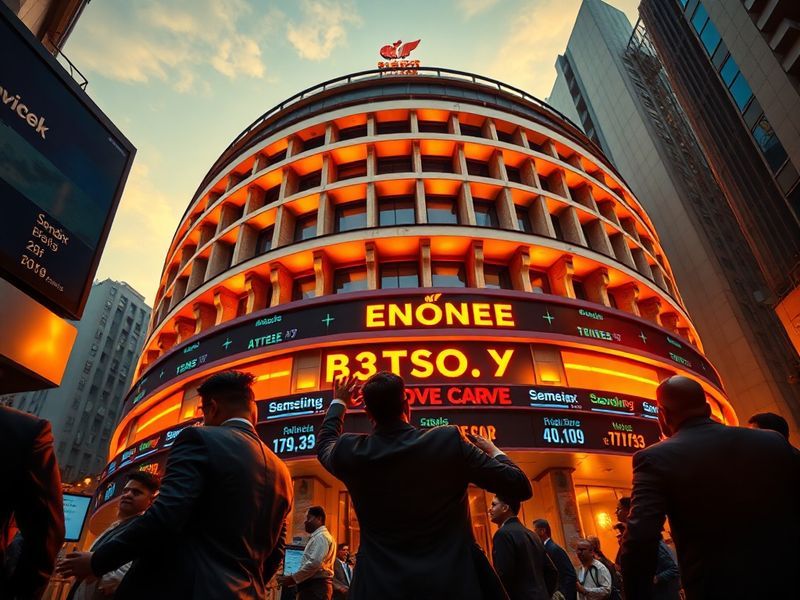
        <p>The Sensex, officially known as the S&P BSE Sensex, stands as India's oldest and most widely tracked stock market benchmark. Launched in 1986 by the Bombay Stock Exchange (BSE), this index comprises 30 of India's largest and most financially sound companies across key sectors. These blue-chip stocks represent approximately 40% of the total market capitalization on the BSE, making the Sensex a reliable barometer of the Indian economy's health.</p>

        <p>Investors, economists, and policymakers frequently reference the Sensex to gauge market sentiment and economic trends. Its movements influence investment decisions worth billions of dollars daily, both domestically and internationally. The index's performance often correlates with broader economic indicators, such as GDP growth, corporate earnings, and foreign institutional investments.</p>

        <h2>The Composition and Selection Criteria of Sensex</h2>

        <p>The Sensex is not a static list of companies. Instead, it undergoes periodic reviews—typically every six months—to ensure it reflects the evolving economic landscape. The selection committee, appointed by BSE, evaluates companies based on several stringent criteria:</p>

        <ol>
            <li><strong>Market Capitalization:</strong> Companies must rank among the top 100 by market cap on the BSE.</li>
            <li><strong>Liquidity:</strong> Stocks should demonstrate high trading volumes and investor interest.</li>
            <li><strong>Sector Representation:</strong> The index aims for balanced representation across all major sectors of the economy.</li>
            <li><strong>Financial Performance:</strong> Companies must exhibit consistent profitability and robust financial health.</li>
        </ol>

        <p>Currently, the Sensex includes heavyweights from sectors like information technology, finance, energy, and consumer goods. For instance, Reliance Industries, Tata Consultancy Services, and HDFC Bank are among its top constituents. This diversity ensures the index captures a broad spectrum of economic activity, reducing the impact of sector-specific downturns.</p>

        <p>The selection process also considers a company's track record in corporate governance and sustainability practices. In recent years, the BSE has increasingly emphasized environmental, social, and governance (ESG) factors, reflecting global investment trends. Companies failing to meet these evolving standards may face exclusion from the index during review periods.</p>

        <h2>How the Sensex Influences India's Financial Ecosystem</h2>

        <p>The Sensex serves as a critical tool for multiple stakeholders in India's financial ecosystem. For retail investors, it provides a snapshot of market performance, helping them make informed decisions about equity investments. Mutual funds and pension funds often benchmark their portfolios against the Sensex to evaluate their performance relative to the broader market.</p>

        <p>Corporate entities also rely on the Sensex to assess investor confidence in their sector or business environment. A rising Sensex typically signals optimism, encouraging companies to expand operations, raise capital, or pursue mergers and acquisitions. Conversely, a declining index may prompt caution, leading to reduced spending and hiring.</p>

        <p>Government policymakers monitor the Sensex closely, as its fluctuations can reflect the impact of fiscal and monetary policies. For example, the Reserve Bank of India (RBI) may adjust interest rates in response to sustained Sensex volatility, aiming to stabilize markets and control inflation. Additionally, the index plays a role in shaping India's global financial image, influencing foreign direct investment (FDI) flows and international portfolio allocations.</p>

        <p>Beyond its economic significance, the Sensex has become a cultural symbol in India. Media outlets dedicate extensive coverage to its daily movements, and its performance is often discussed in households across the country. This widespread attention underscores its role not just as an economic indicator, but as a reflection of national economic sentiment.</p>

        <h2>Challenges and Criticisms of the Sensex</h2>

        <p>Despite its prominence, the Sensex is not without its critics. One common criticism is its heavy reliance on large-cap stocks, which can sometimes mask underlying weaknesses in smaller companies or sectors. For instance, during periods of economic stress, the index may appear stable due to the resilience of its top constituents, while mid- and small-cap stocks struggle.</p>

        <p>Another challenge is the index's exposure to global economic trends. Since many Sensex companies derive significant revenue from international markets, their stock prices can be vulnerable to geopolitical tensions, trade wars, or global recessions. The COVID-19 pandemic, for example, caused the Sensex to plummet by over 30% in early 2020, reflecting the widespread uncertainty and disruption at the time.</p>

        <p>Some analysts argue that the Sensex's methodology could be modernized to better reflect India's growing digital economy. While IT giants like TCS and Infosys are included, critics suggest that the index underrepresents emerging sectors such as electric vehicles, fintech, and green energy. This gap has led to discussions about expanding the Sensex to 50 or even 100 stocks to capture a more diverse range of economic activities.</p>

        <p>Additionally, the Sensex has faced scrutiny over corporate governance issues within its constituent companies. Scandals involving accounting fraud or insider trading can erode investor confidence, even if the index as a whole appears robust. The 2020 case involving the Wirecard scandal, which indirectly impacted Indian fintech stocks, highlighted the risks of over-reliance on a narrow set of large-cap stocks.</p>

        <h2>Investing in the Sensex: Strategies and Considerations</h2>

        <p>For investors looking to gain exposure to the Sensex, several options are available. The most direct method is purchasing shares of the 30 companies that comprise the index, though this requires significant capital and research. Alternatively, investors can opt for index funds or exchange-traded funds (ETFs) that track the Sensex, such as the <a href="https://www.daveslocker.net/business/finance">BSE Sensex ETF</a> or mutual funds that replicate its performance.</p>

        <p>Investing in index funds offers several advantages, including diversification, lower fees, and passive management. Since these funds mirror the Sensex's composition, they automatically adjust to include or exclude stocks during periodic reviews. This eliminates the need for active stock picking, making it an attractive option for long-term investors.</p>

        <p>However, investing in the Sensex also comes with risks. Market downturns can lead to significant losses, and the index's concentration in a few sectors or companies may amplify volatility. For example, if the top 5 stocks in the Sensex underperform, the entire index could decline sharply, even if other components perform well. Investors should carefully consider their risk tolerance and investment horizon before committing capital.</p>

        <p>Another strategy is to use the Sensex as a benchmark for actively managed portfolios. Fund managers may aim to outperform the index by selecting stocks they believe will perform better than the average constituent. This approach, known as active management, requires deep market knowledge and the ability to identify undervalued or high-growth opportunities.</p>

        <h2>Looking Ahead: The Future of the Sensex</h2>

        <p>The Sensex's future will likely be shaped by India's economic trajectory and global trends. As the country aims to become a $5 trillion economy by 2025, the index is expected to reflect this growth through the inclusion of more dynamic and innovative companies. Sectors like renewable energy, artificial intelligence, and electric mobility are poised to gain prominence, potentially reshaping the Sensex's composition in the coming years.</p>

        <p>Technological advancements are also transforming how the Sensex is traded and analyzed. The rise of algorithmic trading and artificial intelligence is enabling faster, more precise market predictions, while blockchain technology could enhance transparency in stock transactions. These innovations may democratize access to the Sensex, allowing retail investors to participate more actively in the market.</p>

        <p>However, challenges such as regulatory changes, geopolitical tensions, and climate-related risks could also impact the Sensex's long-term performance. For example, stricter environmental regulations might pressure polluting industries, while trade disputes could disrupt supply chains. Investors and policymakers must remain vigilant to navigate these complexities and ensure the Sensex continues to serve as a reliable economic indicator.</p>

        <p>Ultimately, the Sensex remains a cornerstone of India's financial system, reflecting both the opportunities and challenges of one of the world's fastest-growing economies. Whether you're an investor, economist, or simply an observer, understanding the Sensex provides valuable insights into India's economic pulse and its place in the global market.</p>
    </article>