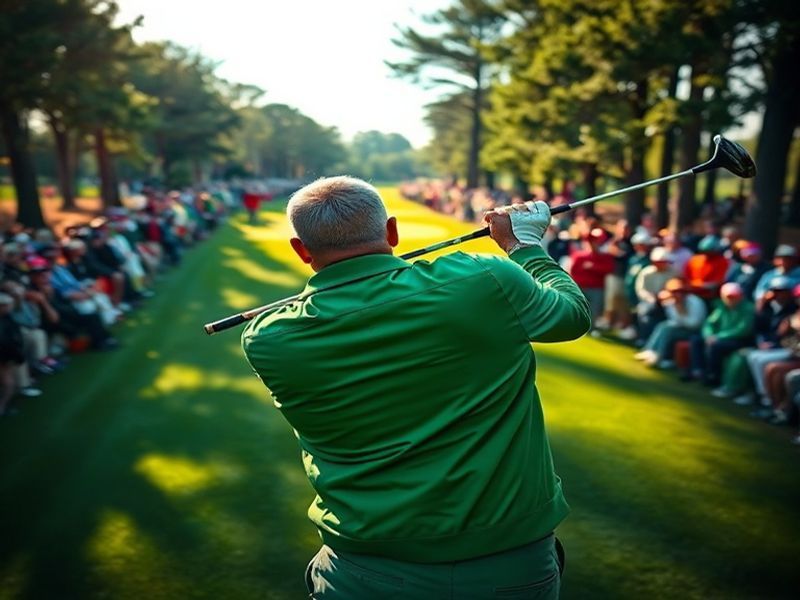
Few names in golf carry the weight of history and precision as Sir Nick Faldo. Born in 1957 in Welwyn Garden City, England, Faldo didn’t begin his professional career with the polished swing that would later become his trademark. Instead, he underwent a dramatic transformation—one that reshaped not just his own game but the very expectations of what it meant to be a champion on the green.
From Amateur to Major Champion: The Turning Point
Faldo turned professional in 1975, but his early years were marked by inconsistency. His breakthrough came in 1983 when he won the Heathrow Tournament, signaling the beginning of a relentless pursuit of excellence. However, it was the following decade that cemented his legacy. Between 1987 and 1996, Faldo claimed six major championships, including three Masters titles and three Open Championships. His victory at the 1987 Masters—coming down the stretch with a nerve-wracking final round—remains one of golf’s most unforgettable moments.
What set Faldo apart wasn’t just his skill but his meticulous approach to the game. He revolutionized golf instruction by emphasizing technical precision, mental resilience, and adaptability. His rivalry with Greg Norman, especially their 1993 Masters showdown, became the stuff of legend—a tactical masterclass where Faldo’s calculated play outmaneuvered Norman’s aggressive style.
A Legacy Built on Discipline
Faldo’s success can be distilled into several key principles that defined his career:
- Mechanical Perfection: Faldo’s swing was the result of years of refinement. He worked closely with coaches like David Leadbetter to perfect his posture, grip, and follow-through, turning mechanics into an art form.
- Mental Fortitude: Faldo thrived under pressure. His ability to stay composed in critical moments—whether in a playoff or a final round—set him apart from contemporaries who crumbled.
- Adaptability: Golf courses and conditions change. Faldo’s willingness to adjust his strategy, whether in windy conditions at St. Andrews or the tight fairways of Augusta, demonstrated his versatility.
- Work Ethic: His dedication to practice was legendary. Faldo often logged hours on the range, refining every aspect of his game, from driving to putting.
The Broader Impact on Golf and Beyond
Faldo’s influence extends far beyond his tournament wins. He played a pivotal role in elevating golf’s global profile, particularly in Europe. During the late 20th century, golf was still finding its footing as a mainstream sport in many parts of the world. Faldo’s dominance, alongside peers like Seve Ballesteros and Bernhard Langer, helped bridge the gap between European and American golf, fostering a more competitive and interconnected tour landscape.
His impact is also evident in the way modern players approach the game. Today, golfers like Rory McIlroy and Jon Rahm emphasize the same blend of technical precision and mental toughness that Faldo embodied. Even his broadcasting work for CBS and NBC has shaped how fans perceive the sport, offering insights that blend expertise with accessibility.
Life After Competition: A New Chapter
Since retiring from professional golf in 2015, Faldo has remained active in the sport. He has served as a captain for the European Ryder Cup team, leveraging his leadership to inspire a new generation. His golf course design ventures, including collaborations with projects in Asia and the Middle East, reflect his deep understanding of the game’s strategic nuances. Faldo’s post-playing career underscores his commitment to golf’s growth, ensuring his legacy transcends his competitive years.
Why Faldo Still Matters Today
In an era where golf is increasingly dominated by power and athleticism, Faldo’s legacy serves as a reminder of the importance of fundamentals. His approach—rooted in discipline, adaptability, and mental strength—remains a blueprint for aspiring golfers. Even as equipment technology and training methods evolve, the core principles Faldo championed endure.
Moreover, Faldo’s story is one of reinvention. He didn’t start as a prodigy; he became one through sheer determination. That narrative resonates beyond golf, offering a lesson in perseverance for anyone striving for greatness in a competitive field.
For fans and players alike, Sir Nick Faldo’s career is a testament to the power of precision and the enduring allure of the game. Whether revisiting his Masters victories or analyzing his swing mechanics, his influence is woven into golf’s fabric. And as the sport continues to evolve, his contributions will undoubtedly remain a touchstone for excellence.
For those looking to explore more about golf’s greatest moments and figures, visit Dave’s Locker’s Golf Legends section for in-depth profiles and historical insights.
A Final Reflection
Sir Nick Faldo’s journey from a young amateur to one of golf’s most decorated champions is more than a story of trophies and titles. It’s a story of transformation, resilience, and the pursuit of mastery. In a sport often defined by fleeting moments of glory, Faldo’s career stands as a monument to consistency and class. His legacy isn’t just in what he achieved but in how he redefined the expectations of greatness.