Tori Amos: How the Piano Became a Voice of Unfiltered Truth
“`html
Tori Amos: A Lifetime of Reinvention
Tori Amos has spent four decades carving a space where classical training meets raw emotional confession. Born Myra Ellen Amos in 1963 in Newton, North Carolina, she began playing piano at age two and was accepted into the Peabody Conservatory of Music at Johns Hopkins University at just five years old—the youngest student ever admitted. Yet rather than conforming to the rigid expectations of classical tradition, Amos dismantled those boundaries, weaving her virtuosic technique into songs that felt like diary entries set to music.
Her debut solo album Little Earthquakes (1992) arrived not as a debut but as a statement. Recorded after years of struggling in the bar scene and a brief stint in a synth-pop duo called Y Kant Tori Read, the album fused baroque flourishes with confessional lyrics about faith, sexuality, and self-discovery. Tracks like “Silent All These Years” revealed a voice that could be both tender and defiant, a duality that would define her career. Amos didn’t just sing about pain—she forced listeners to sit in it, often uncomfortably.
The Piano as Confessional Booth
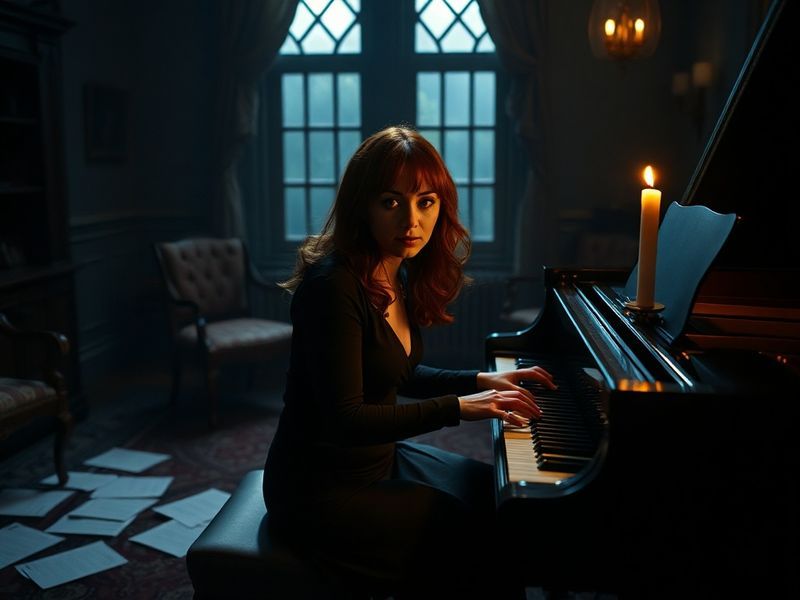
What sets Amos apart is not just her technical skill but her ability to treat the piano as an extension of her voice. Unlike many singer-songwriters who use guitar as a rhythmic backbone, Amos treats the keyboard like a second vocalist—sometimes melodic, sometimes percussive, always present. On Boys for Pele (1996), she abandoned the pop structures of her earlier work, embracing dissonance and unpredictability. The album’s title track, with its haunting organ and cryptic lyrics, felt like a séance—part worship, part exorcism.
Her 2001 album Strange Little Girls marked another pivot. For this project, Amos reimagined songs originally written by men, flipping gender dynamics and reclaiming narratives. From Tom Waits’ “Time” to the Rolling Stones’ “Under My Thumb,” her interpretations were neither reverent nor dismissive—they were transformative. This wasn’t just cover artistry; it was feminist revisionism, using the piano to dissect power and vulnerability.
A Global Perspective: Amos Beyond America
While often labeled a “singer-songwriter,” Amos’ influence stretches far beyond the confines of Americana. In the UK, where Little Earthquakes was embraced early, she became a cult figure whose lyrical complexity resonated with listeners navigating their own identities. In Japan, her music found a home among artists and audiences who valued both technical precision and emotional rawness—qualities highly prized in Japanese artistic traditions.
Amos’ 2012 album Gold Dust featured reworked versions of her older songs with the Metropole Orkest, a Dutch jazz orchestra. The collaboration highlighted how her music transcends genre, appealing to classical audiences in Amsterdam as much as rock enthusiasts in Los Angeles. This global reach speaks to a universal truth: Amos’ songs are not just personal—they are archetypal, tapping into shared human experiences of love, loss, and transcendence.
Cultural Impact: More Than Just Music
Amos has long been a voice for the voiceless, particularly in discussions about sexual assault and trauma. In 2011, she partnered with RAINN (Rape, Abuse & Incest National Network) to launch the RAINN Songwriting Challenge for survivors. Her openness about her own assault in the late ’80s helped destigmatize conversations around victimization, especially in the music industry where exploitation is often normalized.
Her influence extends into fashion and visual art. Amos’ eclectic style—think flowing gowns paired with combat boots—challenged expectations of femininity in rock. Her 2010 memoir Piece by Piece, co-written with journalist Ann Powers, became a touchstone in music literature, blending memoir with cultural critique. The book didn’t just chronicle her life; it dissected the pressures on women in the music industry, from industry gatekeeping to bodily autonomy.
Legacy and the Next Generation
Today, artists from Florence Welch to St. Vincent cite Amos as a foundational influence. Florence + the Machine’s orchestral intensity and St. Vincent’s genre-blending virtuosity both echo Amos’ refusal to be boxed in. Even in the indie-pop scene, artists like Phoebe Bridgers and Julien Baker carry forward her tradition of lyrical honesty married to melodic sophistication.
Amos’ 2021 album Ocean to Ocean arrived during a global pandemic, offering solace to a world in crisis. Tracks like “Spies” and “Ocean to Ocean” felt like meditations on isolation and connection, themes that resonated deeply during lockdowns. The album’s production—minimal, intimate—stripped away the orchestral grandeur of earlier works, proving that her voice alone could still command attention.
A Masterclass in Evolution
What makes Tori Amos enduring is not nostalgia but necessity. In an industry that often demands reinvention every few years, she has never repeated herself. Whether through the avant-garde experimentation of American Doll Posse (2007), a concept album featuring personas she inhabited, or the raw acoustic intimacy of Midwinter Graces (2009), a collection of holiday songs reimagined through a pagan lens, she has consistently defied categorization.
Her live performances remain legendary. Amos is known for shows that can last over three hours, where she improvises, tells stories, and interacts with the audience as if they’re guests in her living room. These concerts aren’t just events—they’re rituals. They demand presence, patience, and emotional engagement, a stark contrast to the disposable nature of much modern music consumption.
Why Her Music Still Matters
In an era where streaming algorithms prioritize instant gratification, Amos’ music offers something rare: depth. Her songs reward patience. They unfold like novels, revealing new layers with each listen. In a cultural moment obsessed with quick takes and hot takes, Amos invites slow reflection.
She also represents a quiet rebellion against the commercialization of artistry. While streaming platforms have made music more accessible, they’ve also devalued the labor of musicians. Amos’ career—marked by artistic control and an insistence on integrity—serves as a counterpoint to the industry’s excesses. Her 2023 residency at New York’s Beacon Theatre, where she performed Little Earthquakes in its entirety, sold out in minutes. The demand wasn’t for nostalgia; it was for substance.
As we navigate a world where authenticity is often commodified, Tori Amos remains a rare constant: an artist who has never compromised her vision, even when it made her a niche figure. Her music doesn’t just soundtrack life—it interrogates it. It doesn’t just reflect emotion; it dissects it. In an industry that often prioritizes youth and novelty, Amos’ career is a testament to the power of evolution, integrity, and unflinching honesty.
Whether you encounter her music for the first time or return to it after decades, one thing is clear: Tori Amos doesn’t just play the piano. She plays the audience—mind, body, and soul—and leaves them forever changed.
For more on influential artists who redefined their genres, explore our Music section, where we dive into the stories behind groundbreaking musicians across eras and styles.
To understand how Amos’ lyrical themes intersect with broader cultural movements, check out our Culture coverage, which examines art as a reflection of societal shifts.