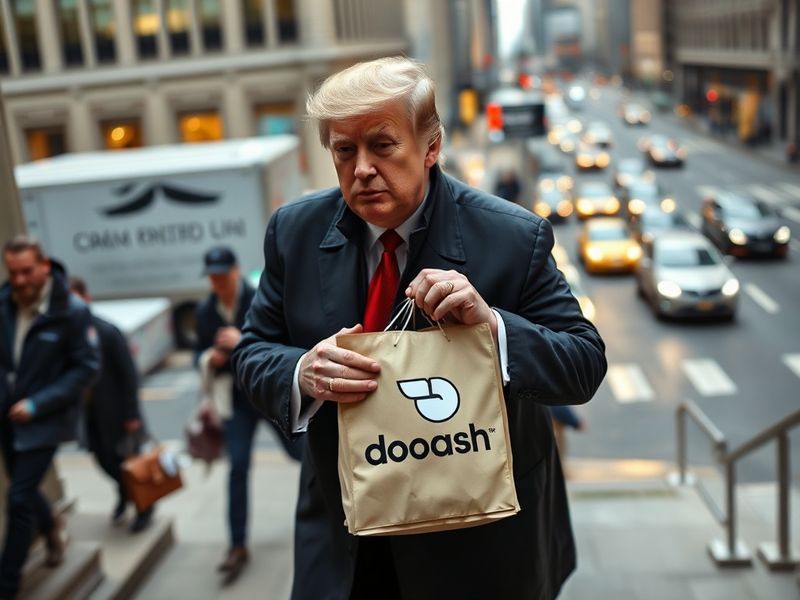
The internet has a new obsession, and it arrives in a grease-stained bag. Donald Trump’s recent Doordash order—totaling $53.47 for a pepperoni pizza from a Waco, Texas location—has somehow transcended the mundane act of food delivery. What began as a routine transaction on Truth Social quickly spiraled into a cultural flashpoint, blending fast food, political theater, and the absurdity of modern consumption.
This isn’t just about a pizza. It’s about visibility, messaging, and the strange ways brands become part of the national conversation. Doordash, a platform built on convenience, now finds itself accidentally starring in a political spectacle. Meanwhile, Trump’s supporters have turned the receipt into a meme masterpiece, while critics question the optics of a former president using a service tied to gig economy labor practices.
From Receipt to Rorschach Test: How the Order Became a Cultural Artifact
Within hours of Trump posting his Doordash confirmation screen—complete with tip breakdown and itemized charges—the internet erupted. The $53.47 total wasn’t just a number; it was a statement. For supporters, it signaled frugality and relatability. For detractors, it highlighted contradictions—luxury lifestyles versus populist rhetoric. The receipt itself became a digital canvas.
Social media users dissected every line:
- A $12.99 pizza base, priced as if it were a premium artisanal slice
- A $4.99 “Tip for Driver” that some argued was both generous and performative
- A $0.89 “Doordash Fee” that felt like the real cost of participation
Designers recreated the receipt in meme formats. Late-night comedians used it as punchline fodder. Even Doordash’s stock price saw a brief uptick, though whether due to algorithmic meme trading or genuine interest remains unclear.
The order wasn’t just a transaction—it was a performance. In an era where public figures curate every Instagram post, a raw Doordash receipt reads like unfiltered authenticity. But authenticity in what context? That’s where the real debate begins.
The Gig Economy Meets Political Theater: Who Really Benefits?
The irony wasn’t lost on many observers: Trump, a billionaire who has railed against “elites” and “coastal elites,” was leveraging a platform built on low-wage labor. Doordash drivers are classified as independent contractors, meaning they absorb gas costs, wear and tear on their vehicles, and unpredictable earnings—often below minimum wage after expenses.
When Trump’s order went viral, some drivers saw a surge in requests from users hoping to ride the meme wave. One Dallas-area Dasher reported a 30% increase in orders that evening, with customers jokingly asking, “Is this for the president?” The platform’s algorithm, designed to maximize deliveries, suddenly became a tool for political performance art.
This raises uncomfortable questions about labor, visibility, and exploitation. Do gig workers benefit when their platform is used as a political prop? Or are they merely collateral in a larger cultural moment they didn’t choose?
Doordash, for its part, has stayed silent—smartly avoiding engagement with a story that could alienate either side of the aisle. But the optics are damning for an industry already under scrutiny for worker treatment. When a former president’s pizza order becomes a trending topic, it exposes how thin the line is between commerce, culture, and labor rights.
Beyond the Meme: What This Says About Power and Platforms in 2024
This moment is less about pizza and more about platforms. Doordash isn’t just delivering food—it’s delivering influence. In a fragmented media landscape, where trust in institutions is eroding, even mundane digital interactions carry weight. A Doordash receipt, in the right hands, becomes a symbol.
It symbolizes access. It symbolizes choice. It symbolizes the illusion of democracy—anyone can order, anyone can tip, anyone can post the receipt. But in reality, not everyone has the same economic freedom. Not everyone can afford a $53 pizza, even if it’s a “great deal.”
Trump’s order also reflects a broader trend: the personalization of politics. Leaders no longer speak in broad strokes; they perform intimacy. Whether it’s a president posting a food delivery or a senator sharing a coffee order, these acts are curated to humanize—or weaponize—authenticity.
Doordash, by allowing this moment to unfold, has unwittingly become part of the political machinery. Its algorithm doesn’t care about ideology. It only cares about speed, ratings, and completion. That neutrality is both its strength and its Achilles’ heel.
So What’s Next? The Aftermath of a $53 Pizza
The internet’s attention span is short, but the implications linger. Doordash may see a temporary boost in users from curious onlookers, but the real test will be whether the brand can navigate future political entanglements without alienating customers or workers.
For Trump, the order was a win—another viral moment in a campaign built on disruption. For gig workers, it was a reminder that their labor powers more than just deliveries. For Doordash, it was a stress test of neutrality in a polarized world.
One thing is certain: the next time a public figure orders through an app, the receipt will be scrutinized. The question is no longer just “what did you order?” but “who paid for it, and what does it mean?”
In an age where every digital footprint can be weaponized, even a $53 pizza receipt carries weight. And in the end, that might be the real cost of convenience.
Want to explore more on how technology intersects with culture? Check out our Technology and Culture sections for deeper analysis on digital trends and societal shifts.