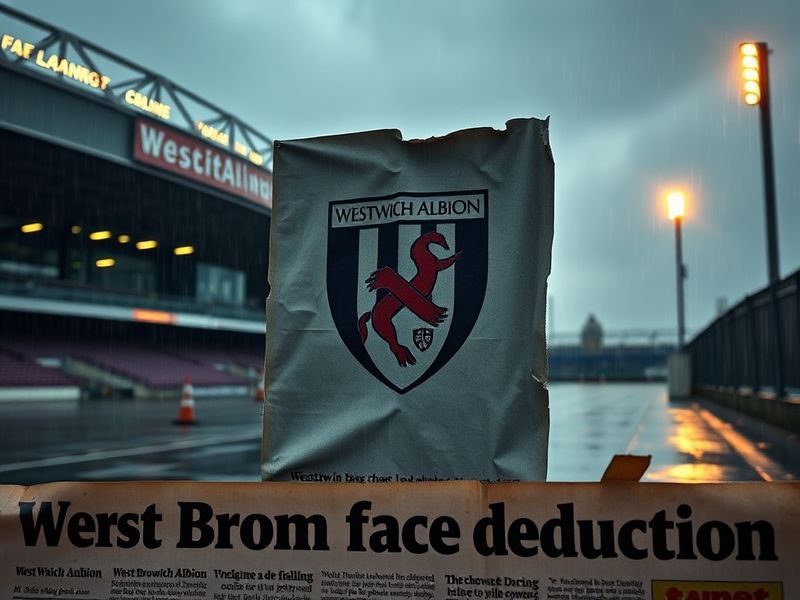
An in-depth look at how West Bromwich Albion’s punishment will reshape the EFL race and what it means for the club’s future.
How West Brom Ended Up With a Points Penalty
West Bromwich Albion’s recent points deduction has become one of the most talked-about stories in English football. The club, currently managed by Steve Bruce, was hit with a six-point penalty by the English Football League (EFL) for breaching profitability and sustainability rules. The charges stem from financial irregularities tied to player contracts and wage structures, violations that the EFL deemed serious enough to warrant significant punishment.
The decision was not made lightly. The EFL’s independent disciplinary commission reviewed evidence over several months before delivering its verdict. West Brom, which has long been a Championship stalwart, now faces an uphill battle to retain its position in the league’s top tier. The penalty drops them from mid-table to the relegation zone, a dramatic shift that could have long-term consequences.
Key Factors Leading to the Penalty
- Profitability Rule Breaches: The EFL found West Brom exceeded the allowed losses in their financial reporting periods. The club’s wage-to-turnover ratio was flagged as unsustainable, a common issue among Championship clubs.
- Contractual Irregularities: Some player contracts were deemed to have included clauses that distorted financial reporting, such as inflated wages or bonuses that did not align with league regulations.
- Lack of Mitigating Circumstances: Unlike past cases where clubs avoided severe penalties due to financial restructuring plans, West Brom failed to present a convincing recovery roadmap to the disciplinary panel.
Immediate Impact on West Brom’s Season
The six-point deduction has plunged West Brom into a relegation battle they were not expecting. Before the penalty, the club sat comfortably in 12th place with 45 points. Now, they’re just three points above the bottom three, with a vastly reduced margin for error. The psychological toll on the squad cannot be understated—players accustomed to mid-table safety must now fight for survival.
Manager Steve Bruce has publicly expressed frustration with the decision, arguing that the club acted in good faith and was cooperating fully with financial audits. Yet, the EFL’s ruling stands, forcing Bruce to recalibrate his tactics. The team’s recent form has been inconsistent, with key wins against direct rivals now feeling like missed opportunities due to the points deduction.
What’s Next for West Brom?
- Relegation Fight: The club must secure an immediate turnaround, winning games against teams in similar positions. Failure to gain at least 10 more points could see them relegated to League One.
- Legal Challenges: West Brom has indicated it will explore all avenues to appeal the decision. If successful, the penalty could be reduced or overturned, though such appeals rarely succeed in altering the core ruling.
- Fan Backlash: Supporters have already voiced their discontent, with protests expected outside The Hawthorns. The points deduction has reignited debates about club ownership and financial mismanagement.
Broader Implications for English Football
The West Brom case is not an isolated incident. It reflects a growing trend in the Championship, where financial fair play rules are being enforced more strictly. Clubs like Coventry City and Derby County have faced similar penalties, though none as severe as West Brom’s six-point deduction. The EFL is sending a clear message: financial irresponsibility will not be tolerated, even if it means reshaping league standings mid-season.
For West Brom, the penalty could accelerate a shift in ownership. The club’s long-time owner, Guochuan Lai, has faced criticism for his financial management. If the relegation scenario becomes reality, investors may reconsider their involvement, potentially leading to a change in leadership or even a takeover.
Championship’s Financial Tightrope
The Championship operates in a precarious balance. Clubs are incentivized to spend heavily to secure promotion to the Premier League, where revenue skyrockets. Yet, the EFL’s profitability rules are designed to prevent unsustainable spending. The West Brom case highlights the tension between ambition and compliance—a struggle that could define the league’s future.
Smaller clubs, in particular, may now think twice before challenging the financial might of promoted teams. If the EFL continues to hand down harsh penalties, the league could see a shift toward more conservative spending, leveling the playing field but also reducing the excitement of promotion battles.
What Fans Should Watch in the Coming Weeks
West Brom’s immediate focus must be on securing wins, but the road ahead is fraught with challenges. Here’s what to keep an eye on:
- Managerial Changes: If results don’t improve, Steve Bruce’s position could become untenable. A managerial switch, whether temporary or permanent, could inject new energy into the squad.
- Player Exodus: Frustrated by the club’s situation, key players may seek transfers elsewhere. Loan players could be recalled, and permanent deals may fall through if the club’s future looks uncertain.
- EFL’s Enforcement: The league may use the West Brom case as a precedent for stricter financial oversight. Clubs found in violation could face similar penalties, creating a ripple effect across the Championship.
- Relegation Implications: If West Brom slips into League One, the Championship loses one of its most historic clubs. The league’s identity could shift, with smaller teams benefiting from reduced competition.
The coming weeks will be pivotal. West Brom’s ability to rally under pressure will determine whether this penalty is a temporary setback or the beginning of a deeper crisis. For the rest of the Championship, the message is clear: financial prudence is no longer optional—it’s a necessity.
Conclusion: A Wake-Up Call for English Football
West Brom’s points deduction is more than just a punishment—it’s a warning. The EFL’s decision underscores the financial fragility of many Championship clubs and the league’s willingness to enforce rules, even at the cost of reshaping the season. For West Brom, the fight to avoid relegation is now existential. For the rest of the league, the case serves as a reminder of the high stakes in professional football’s lower tiers.
As the season progresses, the ripple effects of this penalty will be felt far beyond The Hawthorns. Clubs, players, and fans alike must navigate a landscape where financial compliance is as crucial as on-field performance. Whether West Brom can recover remains to be seen, but one thing is certain: the EFL’s ruling has already changed the game.