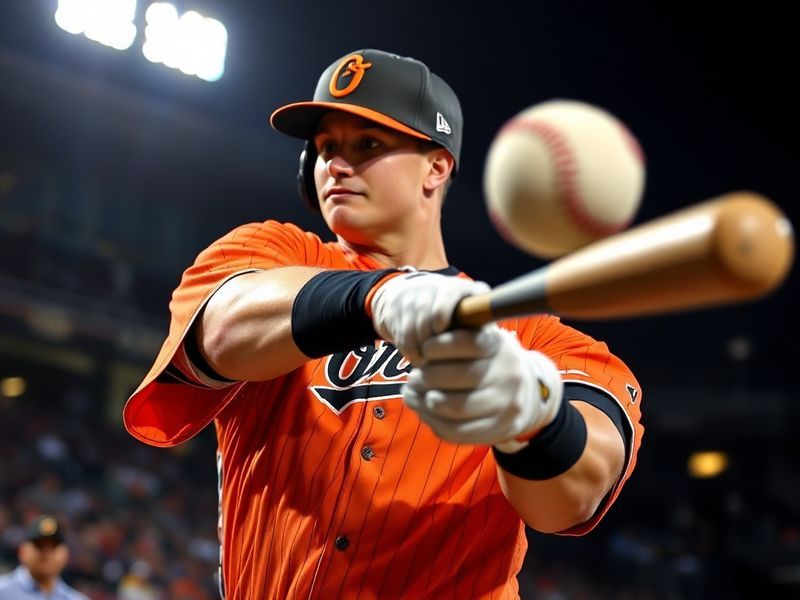
The Baltimore Orioles stand as one of Major League Baseball’s most storied franchises, a team whose identity has been shaped by decades of triumph, heartbreak, and reinvention. From their roots in the 19th century to their modern era under ownership that prioritized analytics and youth development, the Orioles have mirrored the evolution of baseball itself. Their story is not just about wins and losses but about cultural shifts, economic challenges, and the enduring connection between a team and its city.
Baltimore’s baseball tradition dates back to 1872, but the Orioles as we know them today emerged in 1954 when the St. Louis Browns relocated to Charm City. The move marked a turning point for both the franchise and the city, which had long awaited a competitive big-league team. The Orioles quickly became synonymous with excellence, particularly during the 1960s and 1970s, when they dominated the American League with a blend of power pitching and clutch hitting. Names like Brooks Robinson, Frank Robinson, and Jim Palmer became legends, their legacies etched into baseball’s history.
The Golden Era: When Baltimore Ruled Baseball
The Orioles’ golden period began in the early 1960s under manager Paul Richards and general manager Lee MacPhail. However, it was under manager Earl Weaver, who took over in 1968, that the team truly became a dynasty. Weaver’s teams were defined by a disciplined approach to baseball—patience at the plate, sharp defense, and a pitching staff that consistently ranked among the league’s best. The Orioles won World Series titles in 1966, 1970, and 1983, with the 1970 team featuring one of the greatest rotations in baseball history: Palmer, Mike Cuellar, Dave McNally, and Pat Dobson.
This era also cemented the Orioles’ reputation for developing homegrown talent. The team’s farm system produced not just All-Stars but Hall of Famers, including third baseman Brooks Robinson, whose defensive brilliance remains unmatched. The Orioles’ success during this time reflected a broader shift in baseball, where small-market teams could compete by prioritizing player development over expensive free-agent signings. Their model influenced how franchises approached building winners, long before analytics became a buzzword.
Decline, Rebirth, and the Cal Ripken Jr. Effect
By the late 1980s, the Orioles’ fortunes waned. The team struggled with ownership instability, roster missteps, and a shifting baseball landscape that favored high-spending teams like the New York Yankees. Attendance plummeted, and for much of the 1990s, the Orioles were an afterthought in a league that had moved on. The nadir came in 1992, when the team lost 90 games by midseason, leading to fan protests and calls for a complete overhaul.
Yet, just as the Orioles seemed destined for irrelevance, a single player redefined their future. Cal Ripken Jr., who debuted in 1981, became the face of the franchise and, for a time, the most recognizable athlete in America. His consecutive games played streak—breaking Lou Gehrig’s record in 1995—transcended sports, symbolizing perseverance in an era of labor strife and player disillusionment. Ripken’s legacy extended beyond his on-field achievements; he embodied the gritty, blue-collar ethos of Baltimore, a city often overlooked in the national conversation.
The Ripken era also coincided with a renaissance in the city itself. Baltimore’s Inner Harbor underwent a transformation in the 1980s and 1990s, becoming a cultural and economic hub. The Orioles’ ballpark, Oriole Park at Camden Yards, opened in 1992 and set a new standard for stadium design, blending retro aesthetics with modern amenities. The park’s retro-style brick facade and asymmetrical outfield walls became iconic, reviving interest in ballparks as community landmarks rather than corporate ventures.
Modern Challenges and the Analytics Revolution
The 21st century brought new challenges for the Orioles. After a brief resurgence in the late 1990s and early 2000s—highlighted by playoff appearances in 1996 and 1997—the team entered another prolonged period of struggle. Poor drafting, misguided trades, and a failure to adapt to baseball’s analytics revolution left the Orioles mired in one of the longest playoff droughts in franchise history. Between 2012 and 2022, the team averaged over 90 losses per season, a stark contrast to their glory days.
However, the Orioles’ recent trajectory suggests a franchise in the midst of a dramatic turnaround. Since 2022, the team has embraced a rebuild centered on young talent, with players like Adley Rutschman, Gunnar Henderson, and Grayson Rodriguez emerging as cornerstones. The front office, led by general manager Mike Elias and manager Brandon Hyde, has prioritized data-driven decision-making, a stark departure from the traditional scouting-heavy approach that once defined the Orioles. This shift reflects a broader trend in baseball, where even small-market teams must leverage analytics to compete.
The Orioles’ revival has also been fueled by a renewed connection to Baltimore’s diverse communities. The team has actively engaged with local youth programs, particularly in underserved neighborhoods, using baseball as a tool for social development. This outreach is crucial in a city where economic disparities and crime often dominate headlines. The Orioles’ commitment to their community underscores how sports franchises can serve as pillars of civic pride, even when on-field success is elusive.
The Orioles in a Global Context
While the Orioles’ story is deeply rooted in Baltimore, their impact extends beyond Maryland. The franchise has played a role in shaping international baseball, particularly in Latin America, where the Orioles have a long history of scouting and developing talent. Players like Roberto Alomar, Sammy Stewart, and more recently, Ramón Urías, have carried the Orioles’ banner while serving as ambassadors for the game in their home countries. The team’s Dominican academy has become a pipeline for talent, reflecting baseball’s globalized nature.
The Orioles have also been a part of baseball’s cultural shifts. In the 1970s, the team was one of the first to embrace the designated hitter rule, a change that reflected baseball’s evolving strategies. In the 2000s, the Orioles struggled to adapt to the steroid era, a challenge that mirrored the league’s broader identity crisis. Today, the team’s emphasis on analytics and player development aligns with baseball’s modern emphasis on data and efficiency, a far cry from the scouting-driven models of the past.
Globally, the Orioles represent a microcosm of baseball’s challenges and opportunities. In an era where the sport is increasingly dominated by a handful of mega-markets, the Orioles’ ability to rebuild through homegrown talent offers a blueprint for small-market success. Their story also highlights the importance of community engagement, a lesson that resonates in cities worldwide where sports franchises play a vital role in local identity.
Looking Ahead: What’s Next for the Orioles?
The Orioles’ future appears brighter than it has in decades. With a core of young, talented players and a front office committed to innovation, the team is poised to return to relevance. The 2023 season, which saw the Orioles finish with a winning record for the first time since 2016, was a promising sign. Fans are cautiously optimistic that the team’s rebuild will culminate in a playoff berth, if not a championship run.
Yet, the Orioles’ journey is about more than just wins and losses. It’s about resilience, adaptability, and the enduring bond between a team and its city. In an era where sports franchises are often seen as corporate entities, the Orioles remain a symbol of Baltimore’s spirit—a team that has weathered storms, celebrated triumphs, and continues to evolve.
As the Orioles move forward, their story serves as a reminder of baseball’s power to unite, inspire, and endure. Whether they’re contenders or rebuilding, the Orioles will always be Baltimore’s team, a franchise that reflects the city’s past, present, and future.
For fans old and new, the Orioles’ legacy is a testament to the enduring magic of baseball—a game where anything can happen, and where the journey is just as important as the destination.
Explore more about the history of baseball and its cultural impact on Sports.
For insights into how analytics are reshaping modern sports, visit our Analysis section.