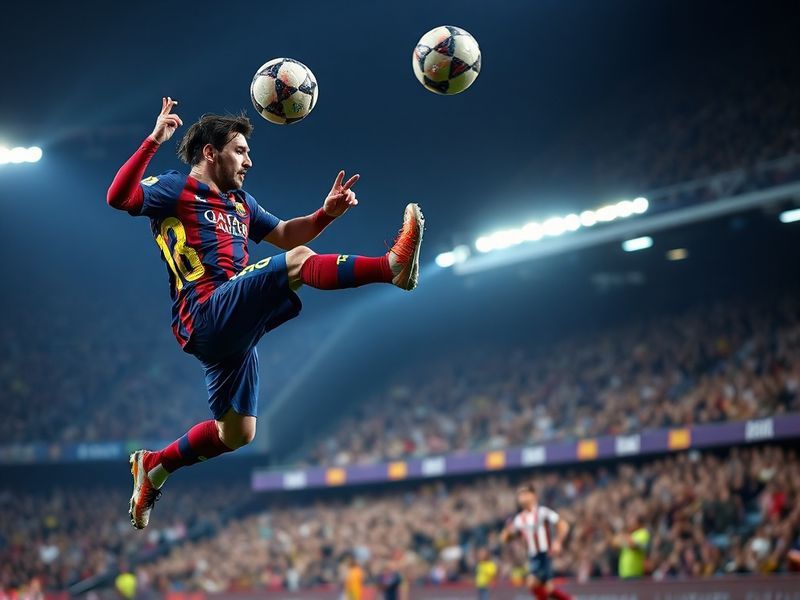
The clash between FC Barcelona and Atlético Madrid transcends the boundaries of Spanish football. It represents a collision of ideologies, economic models, and cultural identities that resonate far beyond the confines of LaLiga. While the matches themselves are spectacles of tactical brilliance and individual talent, the rivalry encapsulates deeper narratives about Spain’s social fabric, the evolution of European football, and the enduring legacy of two clubs that have defined eras in the sport.
This confrontation is not merely about three points or a place in the Champions League. It’s about the soul of football itself—a sport increasingly divided between romanticism and pragmatism, between dreams and reality. To understand this rivalry, we must look beyond the pitch and into the histories, philosophies, and global impacts of these two institutions.
The Historical Foundations of a Modern Rivalry
FC Barcelona was founded in 1899 by a group of Swiss, English, and Catalan footballers under the leadership of Joan Gamper. From its inception, the club became a symbol of Catalan identity, especially during the Franco dictatorship when it stood as a defiant cultural institution against oppression. The famous motto “Més que un club” (“More than a club”) reflects this role—Barcelona was not just a team, but a statement of identity and resistance.
Atlético Madrid, on the other hand, emerged in 1903 as a club for workers and students, rooted in the working-class neighborhoods of Madrid. Unlike Real Madrid, which aligned itself with the royalist elite, Atlético became a club of the people. Its early identity was shaped by its connection to the working class, a legacy that endures in its fan base and cultural resonance today.
The rivalry between the two clubs intensified in the 2010s, particularly during the era of Pep Guardiola at Barcelona and Diego Simeone at Atlético. Their tactical battles in the Champions League—most notably the 2014 final, where Atlético nearly pulled off one of football’s greatest upsets—elevated the fixture to global prominence. That match, decided by a last-minute goal from Sergio Ramos, crystallized the essence of the rivalry: heartbreak for one, redemption for the other.
Tactical Philosophies: Art vs. Science
The philosophical divide between the two clubs is evident in their approaches to the game. Barcelona, under Guardiola and later Luis Enrique, became the embodiment of tiki-taka—a style rooted in possession, positional play, and technical mastery. This philosophy was not just about winning; it was about expressing a vision of football as an art form. The team’s golden era, featuring players like Lionel Messi, Xavi, and Iniesta, became a global reference point for beautiful, attacking football.
Atlético Madrid, under Simeone, represents a diametrically opposed philosophy. Known for its defensive solidity, high pressing, and physical intensity, Atlético’s style is built on pragmatism and collective effort. Simeone’s teams are often less glamorous but brutally efficient, prioritizing results over aesthetics. This approach has earned Atlético the reputation of being the spoiler in LaLiga, disrupting the dominance of Barcelona and Real Madrid.
The contrast between the two styles reflects broader debates in modern football. Is the game an art to be admired or a battle to be won? Can beauty and effectiveness coexist? The Barcelona vs. Atlético rivalry forces these questions into sharp focus every time the two teams meet.
Key Tactical Differences
- Possession vs. Pressure: Barcelona thrives on controlling the tempo through possession, while Atlético disrupts opponents with relentless pressing and counterattacks.
- Defensive Shape: Barcelona’s high defensive line demands technical defenders, whereas Atlético’s compact mid-block allows for physical, aggressive defenders.
- Attacking Approach: Barcelona’s playmakers orchestrate attacks from deep, while Atlético’s wingers and forwards rely on direct, vertical transitions.
The Global Stage: A Rivalry That Transcends Spain
The Barcelona vs. Atlético Madrid rivalry has become a global phenomenon, not just because of the quality of football on display, but because of the narratives it carries. For international fans, the rivalry represents different ideals of what football should be. European audiences, accustomed to the financial dominance of clubs like PSG and Manchester City, see in Atlético a David vs. Goliath story—a club that punches above its weight through sheer will and tactical discipline.
For supporters of Barcelona, the club’s global appeal lies in its association with values like inclusivity, creativity, and social responsibility. The club’s foundation, its commitment to La Masia (its famed youth academy), and its identification with Catalonia’s struggle for autonomy resonate deeply with fans worldwide. Atlético, meanwhile, has cultivated a reputation for loyalty and authenticity, attracting fans who value grit and authenticity over glamour.
The rivalry extends beyond the pitch into the realm of culture and politics. When Barcelona visits Madrid, the fixture is not just a football match; it’s a cultural event. The clash between Catalan and Castilian identities, between artistic expression and defensive pragmatism, plays out in stadiums and living rooms across the globe. Social media amplifies these narratives, with debates about the “right” way to play football often devolving into broader discussions about identity and values.
The Economic Divide: Two Models of Modern Football
At a structural level, Barcelona and Atlético represent two competing models of football economics. Barcelona’s model, built on a global fan base and commercial revenue, has historically prioritized on-field success over financial sustainability. This approach led to the club’s near-collapse in 2021, when it faced a debt crisis and was forced to sell assets, including parts of its training facility.
Atlético Madrid, by contrast, has adopted a more conservative financial model. Under the leadership of President Enrique Cerezo and the guidance of manager Diego Simeone, the club has prioritized financial stability alongside competitive success. Atlético’s ability to develop young talent (e.g., Antoine Griezmann, Koke) while maintaining a balanced budget has made it a model for other clubs seeking to compete without overspending.
This economic divide reflects a broader tension in European football. Clubs like Barcelona, Real Madrid, and Paris Saint-Germain operate in a financial ecosystem where success is measured by trophies and global brand value. Clubs like Atlético, Borussia Dortmund, and Ajax represent an alternative—one where sustainability, youth development, and community ties are prioritized. The Barcelona vs. Atlético rivalry is, in many ways, a microcosm of this global debate.
A Rivalry That Defines an Era
The Barcelona vs. Atlético Madrid rivalry is more than a series of matches; it is a cultural artifact that captures the contradictions and complexities of modern football. It challenges us to consider what we value in the sport—beauty or effectiveness, dreams or pragmatism, identity or universality. In an era where football is increasingly dominated by financial power and global brands, Atlético’s refusal to surrender to the status quo and Barcelona’s enduring fight for its soul make this rivalry one of the most compelling in the world.
As the two clubs continue to evolve, their rivalry will remain a touchstone for debates about the future of the game. Whether through tactical innovation, financial strategy, or cultural impact, Barcelona and Atlético Madrid ensure that the conversation about football’s soul is never far from the surface. For fans, the matches are not just about points or trophies—they are about what it means to love the game.
In a sport often criticized for losing its soul to money and spectacle, this rivalry reminds us that football is still capable of telling stories that resonate on a human level. And that is why, for millions around the world, the next Barcelona vs. Atlético Madrid fixture is always eagerly anticipated.
Explore more football analysis and match previews on Sports.