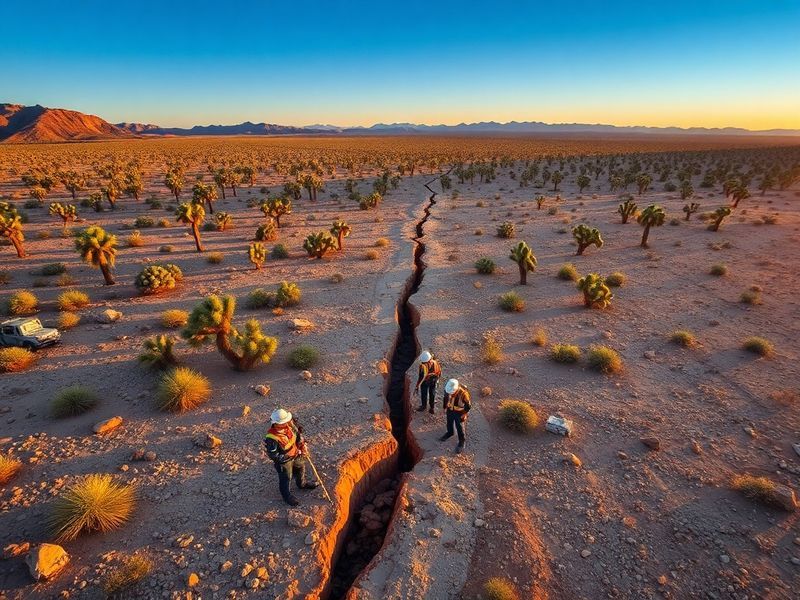
Nevada sits on some of the most seismically active terrain in the United States, a fact often overshadowed by its glitzy reputation in Las Vegas or its vast stretches of desert. The state experiences thousands of earthquakes each year, though most go unnoticed. A closer look at Nevada’s seismic activity reveals a complex geological story, one that shapes everything from building codes to tourism.
The ground beneath Nevada is in constant motion, pulled and stretched by tectonic forces that have sculpted the landscape over millions of years. Unlike California, which grabs headlines for its major quakes, Nevada quietly handles a steadier, more frequent drumbeat of tremors. This makes the state a critical case study for seismologists and a reminder of nature’s unpredictable power.
The Geological Forces Behind Nevada’s Earthquakes
Nevada’s seismic activity stems from its location within the Basin and Range Province, a vast region stretching from southern Oregon to western Texas. This area is characterized by parallel mountain ranges and valleys formed by the stretching and thinning of the Earth’s crust. The stretching occurs as tectonic plates pull apart, creating faults where earthquakes originate.
Two major fault systems dominate Nevada’s seismic landscape: the Walker Lane and the Central Nevada Seismic Belt. The Walker Lane runs along the western edge of the state and is considered a potential rival to California’s San Andreas Fault in terms of earthquake risk. Meanwhile, the Central Nevada Seismic Belt has produced some of the state’s most significant quakes, including a 7.3-magnitude temblor near Dixie Valley in 1954.
These faults aren’t static. They’re part of a dynamic system where stress builds over decades or centuries until it’s released in sudden jolts. Scientists monitor these faults closely, knowing that Nevada’s next major quake isn’t a matter of if, but when.
Notable Earthquakes in Nevada’s History
While Nevada’s earthquakes are often less destructive than those in California, they’ve left their mark. The state’s most powerful recorded quake struck on December 16, 1954, near the town of Fallon. Measuring 7.3 on the Richter scale, it caused significant damage to buildings and infrastructure, including the collapse of chimneys and the cracking of roads. Miraculously, only one person died, thanks to the region’s sparse population.
Another significant event occurred in 2008 near Wells, a small town in northeastern Nevada. A 6.0-magnitude quake damaged over 50 buildings and injured two people. The event highlighted the vulnerability of older structures and spurred updates to building codes in rural areas.
Smaller quakes are far more common. In 2020 alone, Nevada recorded over 700 earthquakes, most below magnitude 3.0. These minor tremors rarely cause damage but serve as constant reminders of the state’s restless geology.
The Human Impact: From Science to Society
Earthquakes in Nevada aren’t just geological events; they shape communities and influence policy. The state’s rapid population growth, particularly in Las Vegas and Reno, has intensified the need for earthquake-resistant construction. Modern buildings in urban areas are designed to withstand significant shaking, but older structures and rural infrastructure remain at risk.
Emergency preparedness is another critical focus. Nevada participates in the Great ShakeOut, an annual earthquake drill that encourages residents to practice “Drop, Cover, and Hold On.” Schools, businesses, and government agencies take part, reinforcing the importance of readiness in a state where disaster can strike without warning.
The tourism industry also feels the tremors—literally. While Las Vegas casinos rarely report damage from quakes, the psychological impact on visitors can be substantial. Earthquake swarms near popular destinations like Lake Tahoe or the Sierra Nevada foothills sometimes spark social media speculation, even if the tremors are minor. For those who live and work in Nevada, these events are a normal part of life.
How Nevada Compares Globally
Nevada’s seismic activity isn’t unique. Similar fault systems exist around the world, from Turkey’s North Anatolian Fault to New Zealand’s Alpine Fault. Like Nevada, these regions experience frequent small quakes punctuated by occasional large ones. The difference lies in Nevada’s relatively low population density, which limits the human toll of such events.
Globally, earthquake-prone regions often grapple with a paradox: the same geological forces that create stunning landscapes also pose existential risks. In Japan, for example, subduction zones generate both devastating quakes and fertile volcanic soil. In Nepal, the collision of tectonic plates created the Himalayas but also leaves the country vulnerable to catastrophic temblors.
Nevada’s story is less about catastrophe and more about resilience. Its earthquakes are a reminder that even in a state known for its entertainment and excess, nature remains the ultimate force.
Preparing for the Next Big One
For Nevadans, earthquake awareness is a way of life. The Nevada Seismological Laboratory at the University of Nevada, Reno, plays a central role in monitoring activity and educating the public. Their real-time data and research help policymakers and residents stay informed about the state’s seismic risks.
If you live or travel in Nevada, there are practical steps you can take to prepare:
- Identify safe spots in your home or workplace, such as under sturdy furniture or against interior walls.
- Keep an emergency kit with water, food, and first aid supplies for at least 72 hours.
- Know how to shut off utilities like gas and water in case of damage.
- Participate in local earthquake drills and stay informed through official channels.
For visitors, particularly those from regions unaccustomed to earthquakes, Nevada offers a unique opportunity to learn about seismic risks. While the chance of experiencing a major quake is low, awareness can make all the difference in staying safe.
A State Built on Shaky Ground
Nevada’s identity is a blend of extremes: glittering cities and empty deserts, relentless heat and sudden tremors. Its earthquakes are a testament to the Earth’s restless energy, a force that shapes not just the land but the lives of those who call Nevada home. As the state continues to grow, balancing development with safety will be a defining challenge.
The next time you hear about an earthquake in Nevada, remember that it’s not just a news item—it’s a reminder of the planet’s power and the quiet resilience of those who live with it. Whether you’re a scientist, a resident, or a tourist, Nevada’s shaky ground is a story worth paying attention to.
For more on Nevada’s geological history, explore our Science section, where we dive deeper into the forces shaping the Silver State.