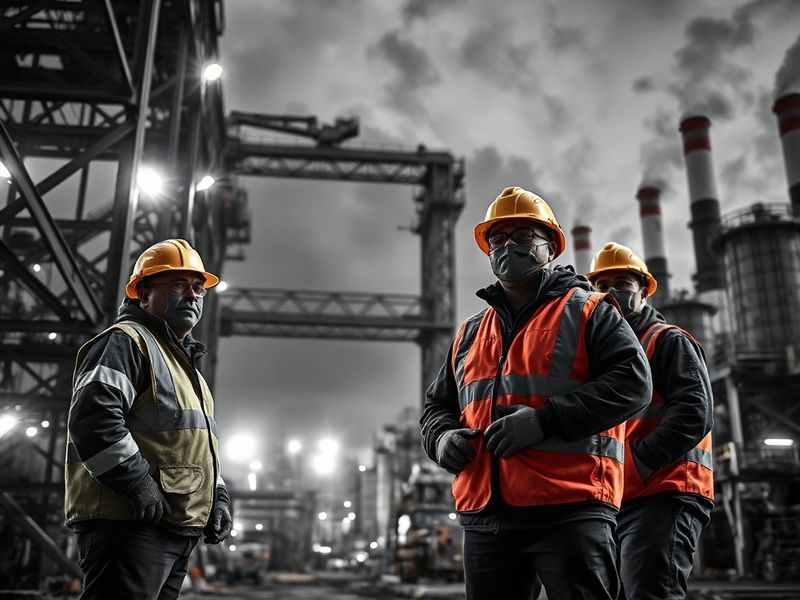
In an era where industrial innovation often takes a backseat to digital disruption, Elmet Group has quietly established itself as one of the world’s most influential manufacturers. With operations spanning multiple continents, the company specializes in high-performance materials and advanced manufacturing solutions, serving industries from aerospace to renewable energy. Its rise reflects broader trends in global manufacturing—where precision, sustainability, and adaptability are no longer optional but essential.
Founded in 1990 in Italy, Elmet began as a niche supplier of specialized metal alloys. Over the past three decades, it has expanded into a diversified conglomerate with subsidiaries across Europe, North America, and Asia. Today, it employs over 5,000 people and operates state-of-the-art production facilities equipped with robotics, AI-driven quality control, and zero-waste processing systems. What sets Elmet apart is not just its technical prowess but its commitment to circular economy principles—turning industrial byproducts into valuable resources.
The Evolution of a Manufacturing Leader
The company’s growth story is one of strategic adaptation. In the 1990s, Elmet focused on serving the automotive sector, supplying lightweight alloys that improved fuel efficiency. As environmental regulations tightened, it pivoted toward sustainable materials, developing recyclable composites for electric vehicle battery casings. By 2015, it had entered the aerospace market, producing components for commercial aircraft that reduce weight without compromising strength.
This evolution wasn’t accidental. Elmet’s leadership recognized early that manufacturing would soon demand greater environmental responsibility. Today, over 70% of its research and development budget is allocated to green technologies, including hydrogen storage alloys and biodegradable packaging solutions. The company’s recent partnership with a German renewable energy firm to produce corrosion-resistant coatings for offshore wind turbines underscores this shift.
Key Milestones in Elmet’s Expansion
- 1990: Founded in Milan, Italy, as a small metal alloy supplier.
- 2005: Opened its first international facility in Poland, targeting Eastern European automotive clients.
- 2012: Acquired a U.S.-based aerospace components manufacturer, expanding into North American markets.
- 2018: Launched a joint venture in Japan to develop advanced aluminum-lithium alloys for high-speed rail systems.
- 2022: Partnered with a Scandinavian firm to pioneer carbon-neutral steel production using hydrogen plasma technology.
Global Reach, Local Impact: A Manufacturing Network
Elmet’s global footprint is not just about scale—it’s about integration. Unlike many multinational corporations that operate as decentralized entities, Elmet maintains tight quality control across its facilities. Each plant adheres to standardized protocols, ensuring consistency in products like high-entropy alloys used in medical implants and industrial turbines.
The company’s presence in emerging markets has also created ripple effects. In India, where Elmet operates a major facility near Pune, it has trained over 1,000 local engineers in advanced manufacturing techniques. Similarly, in Morocco, its Casablanca plant has become a training hub for North African technicians, addressing regional skill gaps while supporting local economies.
Yet Elmet’s global strategy isn’t without challenges. Supply chain disruptions during the pandemic forced the company to rethink its logistics networks. It now maintains regional hubs stocked with critical materials, reducing dependency on long-distance shipping. This approach aligns with a broader industry trend toward resilience—a lesson Elmet has embraced wholeheartedly.
Innovation as a Core Competency
At the heart of Elmet’s success is its relentless focus on innovation. The company operates three dedicated R&D centers—in Italy, Germany, and the United States—each specializing in different material sciences. One of its most groundbreaking projects involves materials science breakthroughs in graphene-enhanced metals, which could revolutionize everything from smartphone durability to spacecraft shielding.
Elmet’s innovation ecosystem also includes collaborations with universities and startups. For example, its partnership with a Swiss nanotechnology lab has yielded a new class of self-healing alloys that repair micro-cracks autonomously. Such advancements position Elmet not just as a manufacturer but as a thought leader in industrial materials.
The company’s commitment to sustainability extends to its production processes. Its plants in Scandinavia and Canada utilize hydroelectric power, while solar arrays cover warehouses in Spain. Even its packaging is designed for reuse—customers return empty containers for recycling, creating a closed-loop system that minimizes waste.
How Elmet Stays Ahead of Industry Trends
- Investment in AI: Uses machine learning to predict equipment failures before they occur, reducing downtime by 30%.
- Modular Manufacturing: Designs production lines that can be reconfigured for different materials, allowing rapid adaptation to market demands.
- Customer Co-Development: Works directly with clients to prototype new materials, ensuring tailored solutions for industries like sports equipment and medical devices.
- Talent Pipeline: Runs apprenticeship programs in collaboration with technical schools, ensuring a steady supply of skilled workers.
Cultural and Economic Influence Beyond the Factory Floor
Elmet’s impact transcends manufacturing. In Italy, where the company maintains its headquarters, it has become a symbol of industrial pride. The firm sponsors local art exhibitions and STEM education programs, reinforcing its role as a corporate citizen. In the U.S., Elmet’s presence in Ohio—a state with a rich manufacturing history—has revitalized a region hit by industrial decline.
Culturally, the company represents a shift in how global manufacturers are perceived. No longer seen as exploitative or environmentally harmful, firms like Elmet are redefining industrial capitalism. Their success hinges on balancing profitability with planetary health, a model that resonates with younger generations increasingly skeptical of traditional corporate practices.
Yet challenges remain. Geopolitical tensions, such as trade restrictions between the U.S. and China, have forced Elmet to diversify its supply chains further. The company has increased sourcing from Vietnam and Mexico, mitigating risks while supporting new economic partners.
Conclusion: The Future of Manufacturing is Here
Elmet Group’s journey offers a blueprint for the future of manufacturing—one where precision, sustainability, and adaptability are inseparable. As industries worldwide grapple with climate change, resource scarcity, and technological disruption, companies that prioritize innovation and responsibility will lead the way. Elmet’s story is not just about growth; it’s about reimagining what industry can—and should—be.
For manufacturers, engineers, and policymakers alike, Elmet serves as both an inspiration and a challenge. The question isn’t whether the future of industry will look like Elmet’s vision—it already does. The real task is ensuring that more companies follow this path before it’s too late.