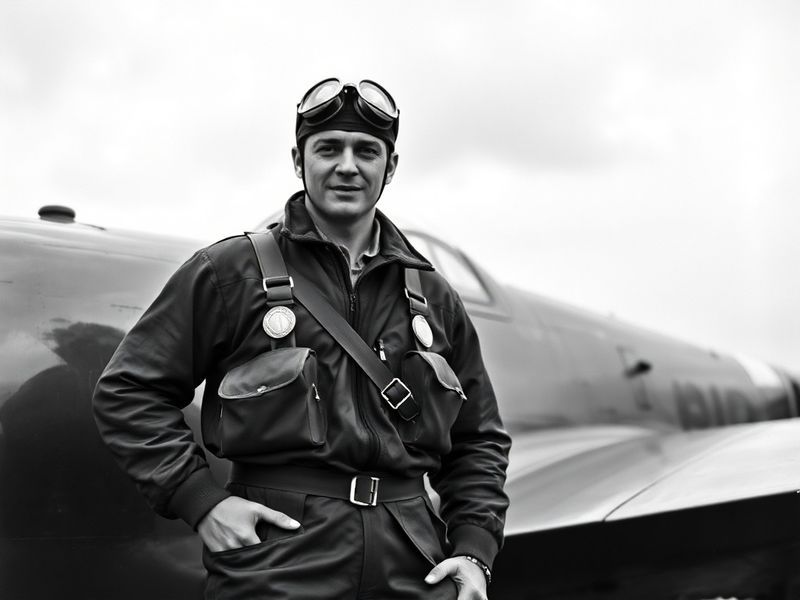
The Royal Air Force (RAF) stands as one of the world’s most storied and technologically advanced air forces. Founded in 1918 during the final months of World War I, it was the first independent air force in the world, a bold move that recognized air power as a critical component of national defense. Over the past century, the RAF has evolved from biplanes and open-cockpit fighters to stealth aircraft and unmanned systems, maintaining its position at the forefront of aerial warfare and global security.
Its legacy is built not only on technological innovation but on the courage of the men and women who have served. From the Battle of Britain to modern peacekeeping missions, the RAF has repeatedly demonstrated operational excellence, adaptability, and a commitment to protecting both national and international interests. Today, it remains a cornerstone of the United Kingdom’s defense strategy and a symbol of British aerospace engineering and military proficiency.
Foundations and Early Years: From Birth to the Interwar Period
The RAF was officially formed on April 1, 1918, through the amalgamation of the Royal Flying Corps (RFC) and the Royal Naval Air Service (RNAS). This unification was driven by the growing recognition that air power could no longer be an auxiliary arm of the army or navy but required its own command structure. The new service was led by Major General Sir Hugh Trenchard, who became its first Chief of the Air Staff—a position he held until 1929.
In its infancy, the RAF faced significant challenges, including limited funding, skepticism from traditional military branches, and the technological limitations of early aircraft. Yet, it quickly established itself during the interwar period through a combination of strategic bombing experiments, air defense exercises, and the development of air doctrine. The RAF’s early focus on strategic bombing, exemplified by the Independent Air Force’s raids on German industrial targets during World War I, laid the groundwork for future air power theory.
Despite these advances, the RAF struggled during the 1920s and 1930s due to budget cuts and political disarmament efforts. The expansion of the Luftwaffe in Nazi Germany in the late 1930s forced a rapid modernization program, leading to the development of iconic aircraft such as the Spitfire and Hurricane—both of which would later prove pivotal in the Battle of Britain.
The Battle of Britain and Global Influence During WWII
Few moments in military history are as defining as the Battle of Britain (July–October 1940). As Germany sought air superiority in preparation for a potential invasion, the RAF’s Fighter Command, led by Air Chief Marshal Sir Hugh Dowding, faced the Luftwaffe in a high-stakes aerial duel. Outnumbered but highly trained and supported by an advanced radar network, RAF pilots—many of them young and inexperienced—defended British airspace with extraordinary skill and resilience.
The Spitfire, with its sleek design and eight machine guns, became a national symbol of resistance. The Hawker Hurricane, although slower, accounted for the majority of enemy aircraft destroyed. The RAF’s victory prevented Operation Sea Lion, Hitler’s planned invasion, and marked the first major defeat of the German war machine. Winston Churchill’s tribute—“Never in the field of human conflict was so much owed by so many to so few”—enduringly honored the RAF’s pilots and ground crew.
Beyond Europe, the RAF played a crucial role in global operations. Bomber Command conducted extensive strategic bombing campaigns against Germany, culminating in devastating raids on cities like Dresden and industrial centers such as the Ruhr Valley. While controversial for their civilian toll, these missions were part of a broader strategy to cripple Nazi war production and morale. Meanwhile, RAF Coastal Command and Transport Command supported Allied operations across Africa, the Middle East, and Asia, demonstrating the versatility of air power in diverse theaters.
Notable Aircraft of the WWII Era
- Supermarine Spitfire: Iconic single-seat fighter renowned for its speed and agility.
- Hawker Hurricane: Workhorse fighter that shot down more enemy aircraft during the Battle of Britain than all other aircraft combined.
- Avro Lancaster: Heavy bomber central to RAF’s night-time strategic bombing campaign.
- De Havilland Mosquito: Versatile twin-engine aircraft used for bombing, reconnaissance, and night-fighting.
Post-War Evolution: From Cold War to Modern Multirole Forces
The end of World War II brought rapid demobilization, but the RAF quickly adapted to the realities of the Cold War. The advent of jet propulsion transformed aerial warfare, and the RAF introduced its first operational jet fighter, the Gloster Meteor, during the war. Post-war, it transitioned to the Gloster Javelin and de Havilland Venom before adopting the English Electric Lightning, Britain’s first supersonic interceptor.
During the 1960s and 1970s, the RAF underwent significant restructuring, shifting from a global empire-based force to a more focused, NATO-aligned defense posture. The introduction of the Blackburn Buccaneer and later the Panavia Tornado allowed for precision strike and nuclear deterrence roles. The Falklands War in 1982 showcased the RAF’s operational reach when it deployed Harrier GR3 aircraft to the South Atlantic, demonstrating the versatility of vertical/short takeoff and landing (V/STOL) technology.
The end of the Cold War brought new challenges: humanitarian crises, peacekeeping, and expeditionary operations. The RAF participated in the Gulf War (1991), Kosovo (1999), Iraq (2003), and Afghanistan (2001–2021), deploying advanced aircraft such as the Tornado GR4 and later the Eurofighter Typhoon. These missions emphasized precision, intelligence-led operations, and integration with allied forces—hallmarks of modern air power.
Modern Capabilities: Technology, Training, and Global Reach
Today, the RAF is a technologically advanced, expeditionary force capable of rapid deployment worldwide. Its frontline strength includes the Eurofighter Typhoon, a multirole stealth fighter designed for air superiority and ground attack, and the Lockheed Martin F-35B Lightning II, a fifth-generation stealth aircraft operated from both land bases and the Royal Navy’s Queen Elizabeth-class aircraft carriers.
The RAF’s fleet also includes the Airbus A400M Atlas, a strategic airlifter that enhances rapid deployment and humanitarian response, and the Boeing RC-135W Rivet Joint, a sophisticated signals intelligence aircraft used for electronic warfare and surveillance. These platforms reflect the RAF’s shift toward networked, data-driven operations, where information superiority is as critical as firepower.
Training remains a cornerstone of RAF capability. The RAF College Cranwell, established in 1920, continues to train officers and aircrew using advanced simulators and real-world exercises. The RAF operates the world’s oldest military flying training school, the Central Flying School, which sets the standard for pilot instruction across NATO.
In addition to combat roles, the RAF plays a vital role in humanitarian assistance, disaster relief, and international cooperation. It has delivered aid to earthquake zones, supported UN peacekeeping missions, and participated in multinational exercises such as Red Flag and Exercise Cobra Warrior. The RAF’s reach extends from the Arctic to the South Pacific, reflecting its global responsibilities.
Key Modern Aircraft and Systems
- Eurofighter Typhoon: Multirole fighter with advanced radar, electronic warfare, and air-to-air/air-to-ground capabilities.
- Lockheed Martin F-35B Lightning II: Fifth-generation stealth aircraft with vertical landing capability, operated from land and sea.
- Airbus A400M Atlas: Tactical and strategic airlifter with heavy-lift capacity and short-field performance.
- Boeing RC-135W Rivet Joint: Electronic intelligence (ELINT) and signals intelligence (SIGINT) platform for real-time data collection.
Future of the RAF: Challenges and Strategic Vision
The RAF faces a rapidly evolving security environment marked by great power competition, cyber threats, and the proliferation of advanced missile systems. Russia’s invasion of Ukraine and China’s military modernization have intensified debates about air defense, deterrence, and technological superiority. In response, the RAF is investing in next-generation capabilities, including the Tempest Future Combat Air System—a sixth-generation fighter program developed in partnership with Italy and Japan.
Space and cyber domains are also becoming critical to RAF operations. The service has established the RAF’s Space Command, headquartered at RAF High Wycombe, to oversee satellite operations, missile warning, and space domain awareness. Cyber capabilities are being integrated into all operational domains, ensuring resilience against digital threats.
Sustainability and climate change are emerging priorities. The RAF has committed to achieving net-zero carbon emissions by 2040, exploring synthetic fuels, electric aircraft, and sustainable aviation initiatives. This aligns with broader UK defense objectives and reflects a growing recognition of environmental responsibility in military planning.
Despite these challenges, the RAF remains a force of innovation and adaptability. Its culture of excellence, underpinned by rigorous training, operational experience, and technological investment, ensures it will continue to defend the skies and project power globally for decades to come.
Conclusion: A Legacy of Courage, Innovation, and Service
From its origins in the muddy fields of World War I to its current role as a leader in aerospace technology, the Royal Air Force embodies the evolution of air power. It has defended nations, saved lives, and pioneered technologies that reshaped warfare and global security. Through every era—from the dogfights over Kent to the cyber battlefields of the 21st century—the RAF has demonstrated an unwavering commitment to duty, innovation, and excellence.
As it looks toward the future, the RAF is not only preparing for new conflicts but also shaping the very nature of aerial warfare. With the Tempest program, space command, and a renewed focus on sustainability, it is ensuring that the next century of flight will be as bold and transformative as the last. For those who serve, and for the nation it protects, the Royal Air Force remains a symbol of resilience, ingenuity, and unmatched aerial prowess.
Whether patrolling the skies over the North Atlantic, delivering aid to disaster zones, or training the next generation of aircrew, the RAF continues to soar