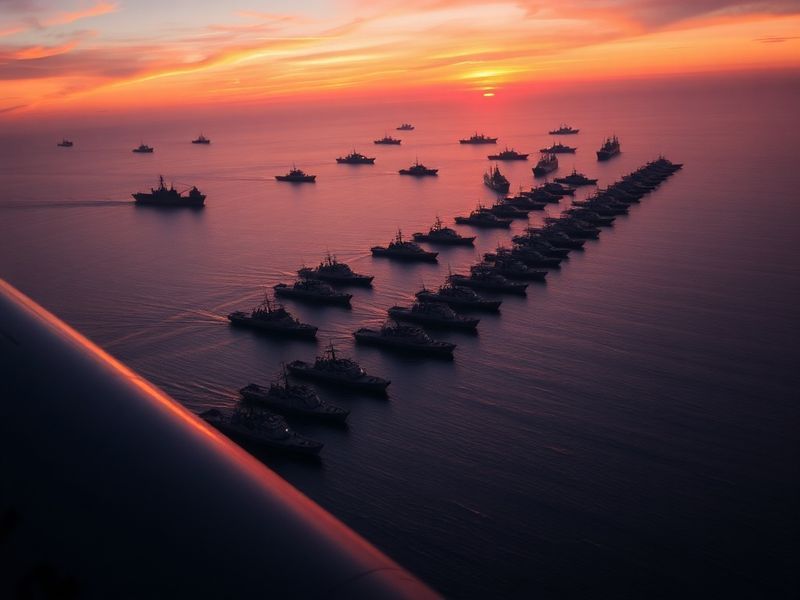
Strait of Hormuz Blockade: The Global Energy Chokepoint You Can’t Ignore
“`html
Strait of Hormuz Blockade: The Tinderbox Beneath the World’s Oil Lifeline
The Strait of Hormuz isn’t just a narrow waterway—it’s the choke point of the planet’s energy system. Every day, roughly one-fifth of the world’s oil supply passes through this 21-mile-wide passage between Iran and Oman. When tensions flare, as they have repeatedly over the past decade, the Strait transforms from a routine shipping lane into a potential flashpoint capable of sending shockwaves through global markets, geopolitical alliances, and military strategies.
Though not a constant blockade, the Strait of Hormuz has seen intermittent disruptions—real and threatened—that underscore its central role in the world’s energy architecture. Understanding these dynamics requires more than a glance at headlines; it demands a look at geography, power, and the fragile balance of regional and global interests.
The Strait’s Strategic Importance: Why It Matters More Than You Think
The Strait of Hormuz is more than a maritime corridor. It’s a geopolitical pressure point, a pressure valve, and a powder keg—depending on who controls it and who threatens to close it. Its significance stems from three core realities:
- Energy Transit Hub: Approximately 21 million barrels of oil transit the strait daily—more than 20% of global oil supply. Any disruption could cause price spikes and shortages.
- Chokepoint Vulnerability: At its narrowest, the strait is just 21 nautical miles wide, with a two-mile shipping channel in each direction. This makes it relatively easy to block or disrupt.
- Chokepoint for Chokepoints: Unlike the Strait of Malacca or Bab el-Mandeb, the Hormuz Strait has no easy detour. Ships must pass through, making it uniquely susceptible to coercion.
Historical conflicts, from the Iran-Iraq War to the Tanker Wars of the 1980s, have already demonstrated the Strait’s volatility. But modern tensions—driven by Iran’s nuclear program, regional proxy wars, and U.S.-Iran standoffs—have elevated the Hormuz blockade from a theoretical risk to a recurring geopolitical flashpoint.
In 2019, attacks on Saudi oil tankers near the strait and the seizure of a British-flagged vessel by Iran highlighted how quickly local incidents can escalate into global crises. These events weren’t isolated. They were symptoms of a deeper struggle for influence in the Persian Gulf.
How a Blockade Could Unfold: Scenarios and Realities
A full blockade of the Strait of Hormuz is unlikely—but not impossible. Iran has repeatedly threatened to close it in response to sanctions or perceived aggression. While a complete closure would require disabling or seizing multiple vessels and coastal defenses, even a partial disruption could send tremors through energy markets.
Analysts have outlined several plausible scenarios:
- Limited Disruption: Iran uses mines, drones, or small boats to block parts of the strait, slowing or rerouting traffic. This increases insurance costs and delays shipments, driving up prices.
- Mine Warfare: Iran could deploy naval mines, which are difficult to detect and clear. Even a small minefield could force vessels to divert or halt, creating bottlenecks.
- Missile Strikes: Targeting tanker traffic or port facilities with precision missiles could force insurers to declare the area a war zone, halting shipments.
- Direct Seizure: Iran could attempt to board and seize foreign-flagged tankers, as it did in 2019, escalating tensions without full-scale conflict.
- Cyber Disruption: While less visible, cyberattacks on navigation systems or port operations could create chaos without physical confrontation.
Each scenario carries different risks and consequences. A limited disruption might cause a short-term price spike, but a prolonged closure would trigger a global energy crisis—especially in Asia, which depends heavily on Middle Eastern oil.
China, India, and Japan are particularly vulnerable. Unlike the U.S., these nations lack strategic oil reserves sufficient to weather a prolonged supply shock. A Hormuz blockade could force them to renegotiate contracts, seek alternative suppliers, or even reconsider their foreign policies toward Iran and the Gulf states.
Geopolitics at Play: Who Holds the Keys?
The Strait of Hormuz isn’t just a maritime issue—it’s a geopolitical chessboard. Several key players shape the dynamics:
- Iran: The primary threat actor. Iran views the strait as leverage against U.S. sanctions and regional rivals like Saudi Arabia and Israel. Its military doctrine emphasizes asymmetric warfare—fast boats, drones, and missiles—to disrupt traffic without triggering a full-scale war.
- United States: The U.S. Fifth Fleet, based in Bahrain, is tasked with ensuring freedom of navigation. While the U.S. has conducted naval patrols and escorted tankers, direct conflict with Iran risks escalation.
- Gulf States: Saudi Arabia and the UAE have invested in pipelines and ports to bypass Hormuz, but they remain vulnerable to maritime threats.
- China and Russia: Both nations have deepened ties with Iran, viewing it as a counterbalance to U.S. influence. China, in particular, has framed the strait as a shared security concern, despite its dependence on Middle Eastern oil.
This multipolar landscape makes de-escalation difficult. Iran’s strategy relies on ambiguity and deterrence—making it hard for adversaries to predict responses. Meanwhile, the U.S. faces a dilemma: too weak a stance emboldens Iran, but too strong a response risks war.
International diplomacy has struggled to address the Hormuz issue. The 2015 Iran nuclear deal (JCPOA) temporarily eased tensions, but the U.S. withdrawal in 2018 and subsequent sanctions reignited hostilities. Efforts to revive the deal have stalled, leaving the strait in a state of perpetual vulnerability.
Beyond the Headlines: Long-Term Implications for Energy and Security
The Strait of Hormuz isn’t just a regional concern—it’s a global one. Its stability affects energy prices, inflation, and economic growth worldwide. But the implications go deeper:
- Energy Transition Risks: As the world shifts toward renewables, oil remains critical for transportation and petrochemicals. A sustained disruption could delay transitions by making alternatives less viable.
- Military Posturing: The U.S. and Iran continue to engage in a shadow war—cyberattacks, sabotage, and proxy conflicts—raising the risk of miscalculation.
- Economic Fallout: A prolonged blockade could trigger a recession in energy-importing nations, particularly in Europe and Asia, exacerbating inflation and supply chain issues.
- New Alliances: Countries may seek new partnerships to secure supply routes, potentially reshaping global trade networks.
One underdiscussed angle is the role of insurance. Marine insurers classify the Strait of Hormuz as a “war risk” zone, increasing premiums and discouraging ship owners from entering. This financial deterrent could reduce traffic even without physical disruption.
Another factor is climate change. Rising temperatures and extreme weather could strain regional stability, making conflicts over resources—including oil—more likely. The Hormuz Strait, already a pressure point, may become even more contested as climate pressures mount.
For now, the most probable outcome is a continuation of the status quo: intermittent threats, occasional disruptions, and constant vigilance. But history shows that status quos in the Persian Gulf are fragile. A single misstep—whether a drone strike, a mine explosion, or a miscalculated naval maneuver—could turn the Strait of Hormuz from a chokepoint into a crisis.
Conclusion: The Strait Remains the Sword of Damocles
The Strait of Hormuz is not just a shipping lane. It is a geopolitical fault line, a pressure valve, and a potential powder keg. Its closure, even temporarily, would send shockwaves through energy markets, reshape alliances, and redefine global security.
The world cannot afford to ignore it. Diplomacy must take precedence over brinkmanship. Alternatives—pipelines, strategic reserves, and renewable energy diversification—must be pursued aggressively. And the international community must accept that the Strait of Hormuz is not just Iran’s leverage—it is everyone’s responsibility.
In an era of rising tensions and energy uncertainty, the Hormuz Strait remains the sword of Damocles hanging over the global economy. The question is not whether it will fall, but when—and whether the world will be prepared.
For more on global energy security and geopolitical flashpoints, explore our News and Politics sections.