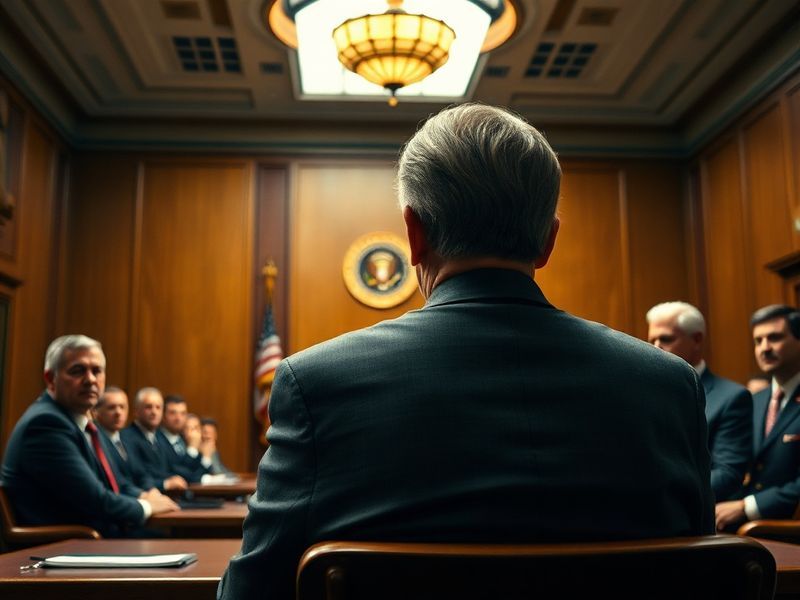
The Trump administration became the first in modern U.S. history to face multiple contempt of Congress proceedings. These actions marked a significant escalation in the tension between the executive and legislative branches, reflecting broader struggles over oversight, accountability, and the limits of presidential power. From subpoenas for key documents to refusals to allow administration officials to testify, the disputes underscored deep institutional conflicts that continue to shape political discourse.
The use of contempt proceedings was not merely symbolic. It represented a constitutional tool wielded by Congress to enforce compliance with its investigative authority. Yet, the Trump administration’s consistent resistance raised critical questions about the separation of powers, the rule of law, and the effectiveness of legislative oversight in an era of intense polarization. This article examines the key contempt actions taken against the Trump administration, the legal arguments involved, and the broader implications for U.S. governance.
The Origins of Contempt: Key Investigations Leading to Proceedings
Contempt proceedings against the Trump administration primarily stemmed from congressional investigations into alleged misconduct, obstruction, and abuse of power. The most prominent among these was the House Judiciary Committee’s inquiry into whether President Donald Trump obstructed justice during the Russia investigation led by Special Counsel Robert Mueller. The committee issued multiple subpoenas for unredacted versions of the Mueller report and for testimony from former White House counsel Don McGahn.
In May 2019, the House Judiciary Committee voted to hold Attorney General William Barr in contempt for refusing to comply with a subpoena seeking the full Mueller report. This marked the first time a sitting Cabinet member faced contempt charges under Trump. The dispute centered on executive privilege claims and assertions that certain materials were protected from disclosure. The House subsequently held Barr in criminal contempt, referring the matter to the Department of Justice for potential prosecution—a step that ultimately yielded no charges.
Other notable contempt actions included the House Oversight Committee’s efforts to obtain Trump’s tax returns from the Treasury Department. After Treasury Secretary Steven Mnuchin refused to release the documents, citing executive privilege, the committee advanced a resolution to hold him in contempt. The case eventually reached the Supreme Court, where the justices ruled in 2020 that the committee’s request was not sufficiently narrow to override the privilege claim. The decision set a precedent limiting Congress’s ability to access sensitive presidential records.
The Legal Framework: Contempt of Congress and Executive Privilege
Contempt of Congress occurs when an individual or entity willfully disobeys a congressional subpoena or obstructs a legislative inquiry. The Constitution grants Congress the power to punish contempt through fines, imprisonment, or referral to the Justice Department for criminal prosecution. Historically, contempt has been used sparingly, often as a last resort in disputes over access to information.
The Trump administration’s defense relied heavily on the doctrine of executive privilege, a legal principle that allows the president to withhold certain communications from disclosure to protect confidentiality and decision-making autonomy. While the Supreme Court has acknowledged the existence of executive privilege, it has also emphasized that the privilege is not absolute. The Court’s 1974 decision in United States v. Nixon established that executive privilege cannot be used to conceal evidence of criminal wrongdoing.
In the Trump-era cases, courts generally sided with the administration’s broad interpretation of privilege. The Supreme Court’s ruling on the tax returns case, for example, underscored the judiciary’s reluctance to second-guess the executive’s assertions of privilege without clear evidence of congressional overreach. This legal landscape created a challenging environment for Congress to enforce its subpoenas, particularly when they involved sensitive presidential materials.
Political Consequences: Contempt as a Tool of Oversight and Division
The use of contempt proceedings was as much a political strategy as a legal maneuver. For House Democrats, who regained control of the chamber in the 2018 midterm elections, the contempt votes were a way to signal their commitment to oversight in the face of an administration they viewed as operating above the law. The proceedings also served as a rallying cry for the president’s opponents, reinforcing narratives of corruption and abuse of power.
For the Trump administration, the contempt charges were framed as politically motivated attacks on a duly elected president. White House officials and allies argued that the investigations were driven by partisan animus rather than legitimate legislative needs. This narrative resonated with the president’s base, further deepening the partisan divide over issues of accountability and transparency.
The political fallout extended beyond Capitol Hill. Public opinion polls during the period showed a stark partisan divide, with Democrats largely supporting the investigations and Republicans viewing them as illegitimate. This polarization made it difficult to build consensus on even the most straightforward oversight matters, such as requests for basic financial disclosures.
Case Studies in Contempt: From Barr to Mnuchin
The contempt proceedings against Trump administration officials followed a pattern of escalation. In June 2019, the House Oversight Committee voted to hold Commerce Secretary Wilbur Ross in contempt for defying a subpoena related to the addition of a citizenship question on the 2020 census. The committee accused Ross of providing false testimony to Congress, a claim that Ross denied. The case highlighted the administration’s broader strategy of stonewalling congressional inquiries.
Similarly, the House Intelligence Committee sought testimony from former White House counsel Don McGahn regarding his role in the Mueller investigation. After McGahn refused to appear, citing instructions from the White House, the committee advanced a contempt resolution. The legal battle over McGahn’s testimony ultimately reached the Supreme Court, which ruled in 2020 that former officials could not be compelled to testify about conversations that occurred during their service—a decision that further weakened Congress’s oversight capabilities.
These cases illustrate the challenges Congress faced in holding the executive branch accountable. The administration’s refusal to comply with subpoenas, coupled with the judiciary’s mixed rulings, created a legal limbo that left many oversight efforts unresolved by the time Trump left office.
Broader Implications: What the Contempt Proceedings Reveal About U.S. Governance
The contempt proceedings against the Trump administration revealed structural weaknesses in the system of checks and balances. While Congress has the constitutional authority to investigate the executive branch, the Trump era demonstrated how easily that authority could be undermined by legal delays, executive intransigence, and judicial caution. The cumulative effect of these challenges was a significant erosion of Congress’s ability to serve as a coequal branch of government.
Moreover, the proceedings highlighted the increasing weaponization of legal and procedural tools in political conflicts. Contempt votes became performative acts—symbols of institutional warfare rather than genuine efforts to uncover wrongdoing. This trend has continued beyond the Trump administration, with both parties using oversight tools as cudgels in broader political struggles.
The legacy of these contempt proceedings also extends to future administrations. The legal precedents set during the Trump era—particularly regarding executive privilege and congressional subpoenas—will shape how future presidents and legislatures navigate their constitutional disputes. For example, the Supreme Court’s narrow interpretation of Congress’s subpoena power may embolden future executives to resist oversight requests with greater confidence.
Lessons for Oversight and Accountability
One of the most significant takeaways from the Trump-era contempt proceedings is the need for reform in how Congress conducts oversight. The current system relies heavily on voluntary compliance and judicial intervention, both of which are unpredictable and time-consuming. Many legal experts have called for reforms to streamline the contempt process, such as giving Congress the authority to directly enforce subpoenas through civil litigation rather than relying on criminal referrals to the Justice Department.
Another lesson is the importance of bipartisan consensus on the necessity of oversight. When investigations are perceived as purely partisan, they lose credibility and public trust. The Trump-era proceedings demonstrated how easily oversight can become mired in political warfare, leaving little room for genuine accountability.
Finally, the role of the judiciary in mediating these disputes cannot be overstated. While courts are essential for resolving constitutional conflicts, their rulings often reflect caution rather than bold assertions of congressional authority. This judicial restraint may inadvertently weaken the system of checks and balances over time.
The contempt proceedings against the Trump administration were more than a series of legal skirmishes—they were a stress test for American democracy. They exposed vulnerabilities in the system of checks and balances and raised fundamental questions about the balance between executive power and legislative oversight. As the United States moves forward, the lessons from this era will be critical in shaping how future conflicts between the branches are resolved.
For further reading on the legal and political dynamics of the Trump administration, explore our Politics and Analysis sections.