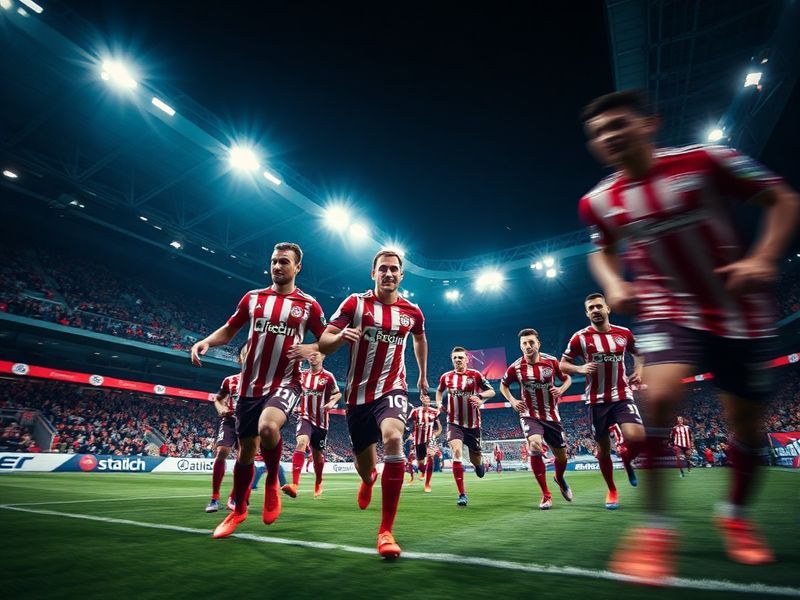
Founded in 1900, Bayern Munich has grown from a local club to one of football’s most recognizable institutions. With a history spanning over a century, the club’s influence extends beyond the pitch, shaping German football’s identity and global perception.
The Origins and Early Years of Bayern FC
Bayern FC traces its roots to February 27, 1900, when a group of football enthusiasts broke away from the Munich Gymnastics Club (MTV 1879) to form their own football team. The split occurred after MTV 1879’s board voted against allowing football as a standalone sport within the club. This decision, though controversial at the time, inadvertently sparked the creation of one of football’s most storied institutions.
The early years were marked by struggles, both on and off the pitch. Bayern played its first official match in 1900, losing 5-2 to a local team. Financial instability plagued the club for decades, with players often paying their own fees to participate. Despite these challenges, Bayern persisted, winning its first major trophy, the Southern German Championship, in 1926. This victory provided a glimpse of the club’s potential, though the road to sustained success remained long and arduous.
World War II disrupted German football, and Bayern was no exception. The club’s facilities were destroyed, and its future hung in the balance. Yet, the post-war era marked a turning point. In 1945, Bayern was re-established, and by 1947, it won the Southern German Cup, signaling a resurgence. These early struggles and triumphs laid the foundation for Bayern’s resilience, a trait that would define the club in the decades to come.
The Uli Hoeneß and Franz Beckenbauer Era: A Blueprint for Success
The 1970s and 1980s represented a golden age for Bayern, largely shaped by two iconic figures: Uli Hoeneß and Franz Beckenbauer. Hoeneß, a former player turned manager, revolutionized the club’s administrative approach, blending astute financial management with a relentless pursuit of excellence. His vision transformed Bayern from a regional powerhouse into a national and European giant.
Beckenbauer, known as “Der Kaiser,” was the on-field architect of this success. As a player, captain, and later coach, he embodied the club’s ethos: leadership, elegance, and an unyielding will to win. The 1970s saw Bayern dominate the Bundesliga, winning five consecutive titles from 1972 to 1974. This period also included three consecutive European Cup victories (1974-1976), a feat that cemented Bayern’s status as a continental force.
The Hoeneß-Beckbauer partnership extended beyond trophies. They introduced modern training methods, professionalized the club’s infrastructure, and cultivated a winning culture that attracted top talent. Their legacy is not just measured in silverware but in the systems they built, which continue to underpin Bayern’s success today. For fans and analysts alike, this era remains the gold standard for club football.
Modern Bayern: Dominance and the Pressure of Expectations
In the 21st century, Bayern Munich has solidified its reputation as a global football powerhouse. The club has won the Bundesliga an unprecedented 11 consecutive times (as of 2023) and claimed multiple UEFA Champions League titles, including a historic treble in 2020 under Hansi Flick. This era of dominance is characterized by a blend of financial muscle, tactical innovation, and a conveyor belt of world-class talent.
However, this success has come with its own set of challenges. The pressure to maintain a winning streak has led to criticism over Bayern’s perceived dominance in the Bundesliga, where the gap between the club and its rivals often feels insurmountable. Critics argue that the league’s competitive balance has suffered, with Bayern’s financial advantages making it difficult for other clubs to compete. This debate extends beyond Germany, raising broader questions about financial fair play and the sustainability of football’s economic model.
On the pitch, Bayern’s tactical evolution under managers like Pep Guardiola and Julian Nagelsmann has kept the club at the forefront of football innovation. Guardiola’s possession-based system redefined German football, while Nagelsmann’s high-pressing, fluid style has introduced new dimensions to the team’s play. Yet, the club’s ability to adapt has also led to periods of transition, where the departure of key players and managers has tested its resilience.
Key Factors Behind Bayern’s Modern Success
- Financial Strength: Bayern’s revenue streams, including commercial partnerships and matchday income, provide a financial edge that few clubs can match.
- Youth Development: The club’s academy, which produced stars like Thomas Müller and Bastian Schweinsteiger, ensures a steady supply of homegrown talent.
- Global Branding: Bayern’s international fanbase and commercial appeal have turned it into a global brand, far beyond the confines of Munich.
- Strategic Recruitment: The club’s ability to blend established stars with emerging talent has kept its squad competitive year after year.
- Stadium and Facilities: The Allianz Arena and the club’s state-of-the-art training facilities provide an infrastructure that supports both performance and commercial growth.
Bayern FC’s Broader Impact: Beyond the Pitch
Bayern Munich’s influence extends far beyond trophies and league standings. The club has become a symbol of Bavarian identity, representing the region’s culture, values, and global appeal. For many fans, supporting Bayern is not just about football; it’s about belonging to a community that transcends borders. This emotional connection has fueled the club’s global fanbase, which now stretches from Munich to Melbourne, from Tokyo to Toronto.
The club’s commitment to social responsibility further enhances its legacy. Bayern’s foundation, established in 2007, focuses on education, health, and social integration, particularly for disadvantaged children and refugees. The club’s environmental initiatives, such as the Allianz Arena’s energy-efficient operations, also reflect its dedication to sustainability. These efforts demonstrate that Bayern is more than a football club; it’s a force for positive change.
Bayern’s role in German football is equally significant. As the Bundesliga’s most successful club, it sets the standard for professionalism and excellence. Yet, its dominance has sparked debates about the league’s competitiveness. The club’s financial model, which relies heavily on commercial revenue and matchday income, has prompted discussions about financial fair play and the need for greater redistribution of wealth within the sport. Bayern’s approach to these challenges will shape the future of German and European football.
What’s Next for Bayern FC?
The future of Bayern Munich is a topic of intense speculation. With the club’s leadership constantly evolving, questions arise about its ability to maintain its competitive edge. The departure of key figures like Karl-Heinz Rummenigge and Uli Hoeneß has left a void, though the appointment of Jan Christian Dreesen as CEO signals continuity. On the pitch, the club faces the challenge of rebuilding after the departures of legends like Thomas Müller, who retired in 2024, and Joshua Kimmich, who is nearing the end of his career.
Tactically, Bayern must adapt to the changing demands of modern football. The rise of pressing systems and the increasing importance of data analytics require constant innovation. The club’s ability to integrate young talent while maintaining its winning culture will be crucial. Players like Jamal Musiala and Konrad Laimer represent the future, but their development must be carefully managed to ensure a smooth transition.
Off the pitch, Bayern’s global ambitions are expanding. The club’s foray into the U.S. market, including preseason tours and partnerships with American brands, reflects its desire to grow its international footprint. However, this expansion must be balanced with a commitment to its local roots. Bayern’s identity is deeply tied to Munich, and any strategy must prioritize the club’s connection to its community.
As Bayern FC looks ahead, one thing is certain: the club’s legacy is secure. Its history, achievements, and impact on football are undeniable. Yet, the journey is far from over. The Bavarian giant must continue to evolve, embracing change while staying true to its core values. For fans, the future promises both excitement and uncertainty, but one thing is clear—Bayern FC will remain a defining force in football for generations to come.
For more insights into football’s evolving landscape, explore our Sports and Analysis sections on Dave’s Locker.