How Assassin’s Creed Redefined Gaming and History
“`html
Assassin’s Creed: A Legacy Forged in History and Innovation
The Assassin’s Creed series has become one of the most recognizable franchises in gaming, blending historical fiction with fluid parkour and immersive storytelling. Since its debut in 2007, the franchise has expanded across multiple platforms, spin-offs, and even a film adaptation. Its influence extends beyond gaming, shaping how players perceive history, architecture, and cultural heritage.
What began as a stealth-action title set during the Third Crusade has evolved into a sprawling multimedia empire. The series now spans over a dozen main entries, each exploring different eras—from Renaissance Italy to Victorian London, from feudal Japan to ancient Egypt. This global scope has allowed the franchise to engage with diverse historical narratives, making it as much a history lesson as it is entertainment.
The Birth of a Franchise: Origins and Early Impact
The first Assassin’s Creed game introduced players to Altaïr Ibn-La’Ahad, a master assassin navigating the streets of Acre, Jerusalem, and Damascus during the 12th century. Developed by Ubisoft Montreal, the game stood out for its open-world design and the innovative Anvil engine, which created a living, breathing medieval Middle East. The game’s emphasis on historical accuracy—down to architectural landmarks and cultural details—set a new standard for historical games.
Critical reception was strong, with praise for its world-building and narrative depth. The sequel, Assassin’s Creed II
The Evolution of Open-World Design
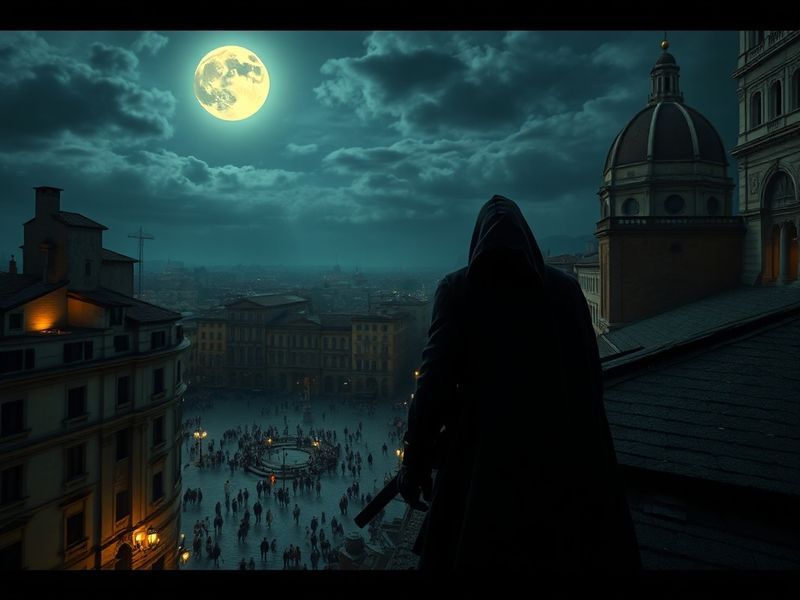
With each installment, Ubisoft has pushed the boundaries of open-world gaming. The introduction of Ezio Auditore da Firenze in Assassin’s Creed II (2009) marked a turning point, shifting the focus to Renaissance Italy and delivering one of the series’ most beloved protagonists. The game expanded the formula with deeper character development, more intricate missions, and a richer historical setting.
The franchise continued to innovate with Assassin’s Creed: Brotherhood (2010) and Revelations (2011), introducing multiplayer modes and refining parkour mechanics. Later entries like Assassin’s Creed IV: Black Flag (2013) and Origins (2017) redefined the series by incorporating RPG elements, allowing for deeper customization and storytelling.
This evolution reflects broader trends in gaming, where open-world games increasingly prioritize player agency and immersion. The shift toward RPG mechanics in later titles also highlights the franchise’s adaptability, ensuring it remains relevant amid changing player expectations.
A Global Perspective: Cultural Representation in Assassin’s Creed
The Assassin’s Creed series has taken players to nearly every major historical period and region, from the American Revolution in Assassin’s Creed III to ancient Greece in Odyssey (2018). This global approach has allowed the franchise to engage with diverse cultures, though not without controversy at times.
For example, Assassin’s Creed: Syndicate (2015) explored Victorian London, emphasizing class struggles and industrialization. Meanwhile, Assassin’s Creed: Liberation (2012) introduced Aveline de Grandpré, the series’ first female protagonist, set in 18th-century New Orleans—a rare focus on African-American history in gaming.
However, the franchise has also faced criticism for its portrayal of certain cultures. Some players and historians have pointed out oversimplifications or inaccuracies in how certain eras or societies are depicted. Ubisoft has responded by consulting historians and cultural experts to improve authenticity in recent entries, such as Assassin’s Creed: Valhalla (2020), which delves into Viking Age England and Norway.
The series’ global reach extends beyond gaming. The entertainment industry has embraced Assassin’s Creed through novels, comics, and a 2016 film starring Michael Fassbender. These adaptations have further cemented the franchise’s cultural footprint, though they have also sparked debates about fidelity to the games’ narratives.
The Future of Assassin’s Creed: What’s Next?
As the franchise approaches its 20th anniversary, fans and critics alike speculate about its future. Ubisoft has confirmed that Assassin’s Creed Mirage (2023) marks a return to the series’ stealth-focused roots, set in Baghdad’s Golden Age. This shift suggests a potential reboot of the franchise’s core mechanics, balancing modern expectations with classic gameplay.
Rumors also persist about a new historical setting, possibly exploring ancient Rome or the Silk Road. The franchise’s ability to reinvent itself while maintaining its core identity will be key to its longevity. With the gaming industry increasingly embracing live-service models, Assassin’s Creed may also explore ongoing online experiences, similar to titles like Destiny or Ghost Recon.
The series’ enduring appeal lies in its ability to blend history with interactive storytelling. Whether through its iconic assassins or its meticulously crafted worlds, Assassin’s Creed continues to shape how players engage with the past—and what gaming can achieve as an art form.
Why Assassin’s Creed Matters in Gaming and Beyond
The impact of Assassin’s Creed extends beyond sales figures and critical acclaim. It has influenced how games approach historical education, encouraging players to explore real-world locations and events. The franchise’s emphasis on cultural diversity has also sparked conversations about representation in media, though it remains a work in progress.
For many, Assassin’s Creed is more than just a game—it’s a gateway to history. Players who may never have visited Florence or Cairo in real life can experience these places through the series’ lens. This blend of entertainment and education has made the franchise a cultural touchstone, bridging gaps between gaming and broader historical discourse.
As the series evolves, its ability to adapt while staying true to its roots will determine its place in gaming’s future. For now, Assassin’s Creed remains a testament to the power of interactive storytelling—and the endless possibilities of history itself.