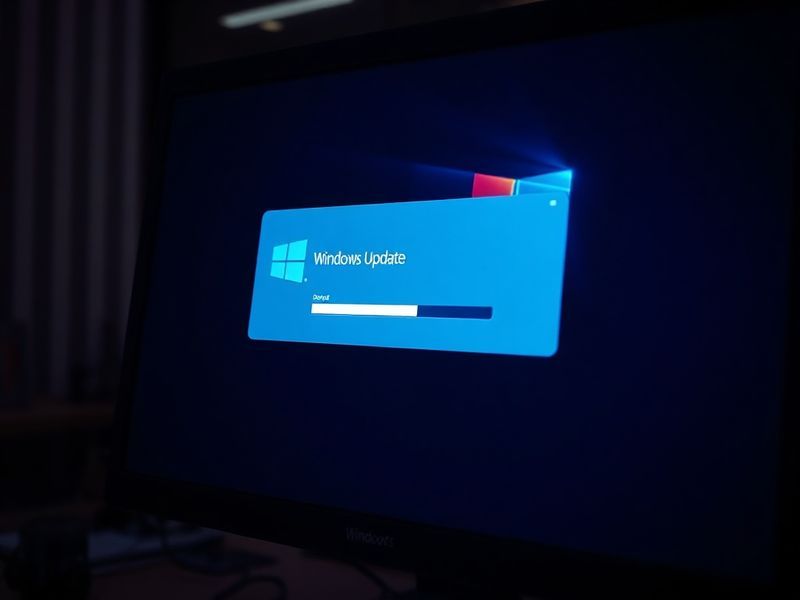
Windows Update: A Quiet Revolution in Global Computing
Every second Tuesday of the month, millions of computers worldwide perform a synchronized digital ritual. Without fanfare, Windows Update rolls out security patches, performance improvements, and new features to over a billion devices across 190 countries. This unassuming process represents one of the largest coordinated software deployments in human history—yet most users remain only vaguely aware of its existence.
What began in 2003 as a simple mechanism to fix vulnerabilities has evolved into a complex ecosystem that shapes how societies interact with technology. From government offices in Tokyo to small businesses in Nairobi, Windows Update has quietly become a backbone of modern digital infrastructure. Its influence extends beyond individual users, affecting global cybersecurity, software development practices, and even international trade policies.
The Evolution of a Digital Necessity
Windows Update was introduced with Windows 98, but it wasn’t until Windows XP that it became a critical component of Microsoft’s strategy. The service addressed a fundamental problem: how to protect millions of computers from rapidly evolving threats without requiring manual intervention. Early versions were criticized for slow downloads and unexpected restarts, but over time, Microsoft refined the process.
By the launch of Windows 10 in 2015, the system had transformed into a continuous delivery model. Updates no longer followed a monthly schedule but arrived automatically, often multiple times per month. This shift reflected a broader industry trend toward agile software development. However, it also introduced new challenges around user control and system stability.
Today, Windows Update serves as a case study in how software maintenance can become both invisible and indispensable. While users may grumble when their work is interrupted by a restart prompt, the alternative—manually managing security for a billion devices—would be logistically impossible.
The Global Impact of Automated Patching
In countries where piracy rates remain high, Windows Update plays an outsized role in cybersecurity. Unlicensed Windows installations often lack access to official updates, leaving them vulnerable to malware that spreads through corporate networks. This creates a paradox: while Windows Update helps secure licensed systems, it inadvertently highlights the security risks of unlicensed software.
In Europe, data protection regulations like GDPR have forced Microsoft to adapt how updates handle user data. The company now provides granular control over diagnostic data collection, balancing transparency with the need for system improvements. Meanwhile, in China, Windows Update operates under government scrutiny, with updates sometimes delayed to align with local cybersecurity standards.
Education systems worldwide rely on Windows Update to maintain thousands of classroom computers. In India, where government schools often operate on tight budgets, the automated patching system ensures that educational technology remains functional without requiring dedicated IT staff. This reliability has made Windows the dominant operating system in many emerging markets.
The Cultural Divide in User Expectations
Perceptions of Windows Update vary dramatically across regions. In North America and Western Europe, users expect frequent updates and view them as a necessary inconvenience. The rise of “update fatigue” has led to jokes about “Patch Tuesday” coinciding with work deadlines. Some power users have developed elaborate workarounds to delay updates, while enterprise customers rely on tools like Windows Server Update Services to manage deployments centrally.
In contrast, users in parts of Africa and Southeast Asia often view updates as a positive sign of ongoing support. For many, the appearance of a Windows Update notification represents Microsoft’s commitment to their region—a stark contrast to the era when updates were only available in English. The localization of update messages into hundreds of languages has made the process more accessible, though translation errors still occasionally cause confusion.
Gamers represent a particularly vocal subgroup whose relationship with Windows Update is uniquely fraught. A sudden update can interrupt a high-stakes online match, leading to frustration and accusations of poor prioritization. Microsoft has responded by allowing users to schedule updates during specific time windows, though this solution doesn’t satisfy everyone.
The Technical Backbone Behind the Scenes
Windows Update operates through a distributed network of servers located in 13 regions globally. When a user’s computer checks for updates, it connects to the nearest server, reducing latency and bandwidth usage. Microsoft employs a multi-tiered update system:
- Critical updates: Security patches for vulnerabilities that could be exploited by malware
- Definition updates: Signature files for Windows Defender and other security tools
- Feature updates: Major system upgrades that arrive twice yearly
- Quality updates: Monthly fixes for bugs and performance issues
The system uses a peer-to-peer distribution model, where updated devices help distribute files to others in their network. This approach reduces Microsoft’s bandwidth costs while improving update speeds in regions with limited internet infrastructure.
Behind the scenes, Microsoft employs sophisticated machine learning algorithms to determine which updates are most critical for specific hardware configurations. A driver update that fixes an issue for one user might be withheld from another if the company detects compatibility problems. This targeted approach helps prevent the kind of widespread failures that have historically plagued software updates.
The Future of Automated Software Maintenance
As computing becomes increasingly cloud-dependent, the role of Windows Update may evolve. Microsoft’s push toward Windows-as-a-Service suggests that updates will become even more frequent and comprehensive. The company is also experimenting with “update blocks” that prevent users from installing problematic updates, a feature that could reduce support calls but might also limit user control.
Meanwhile, alternative update models are emerging. Some Linux distributions allow users to choose between rolling releases and stable versions, offering a flexibility that Windows currently lacks. The rise of containerized applications and web-based software may eventually reduce the need for traditional operating system updates altogether.
Yet for all these changes, Windows Update’s core function remains unchanged: to maintain the security and functionality of the world’s most widely used operating system. In an era where digital threats evolve daily, the quiet persistence of Windows Update represents an extraordinary achievement in global coordination.
A System We Take for Granted
Windows Update operates so seamlessly that it’s easy to overlook its significance. It’s not just a technical process; it’s a social contract between a corporation and its users. Microsoft commits to protecting billions of devices, while users accept the occasional inconvenience of restarts and feature changes.
This relationship has shaped how people perceive technology ownership. The idea that a company would automatically improve your software without additional payment has become normalized, to the point where users now expect this level of service from all technology providers. It’s a standard that has raised expectations across the entire software industry.
As we move toward an increasingly connected future, the principles behind Windows Update—automated security, global distribution, and user-centric design—will only become more important. Whether on a smartphone, a smart fridge, or a self-driving car, the world will need systems that can update themselves securely and efficiently.
For now, Windows Update continues its monthly cycle, a testament to Microsoft’s ability to maintain a complex system that most users never think about—until it fails to work as expected. In that moment of frustration, we’re reminded that this quiet digital ritual is, in fact, one of the most important pieces of infrastructure in the modern world.