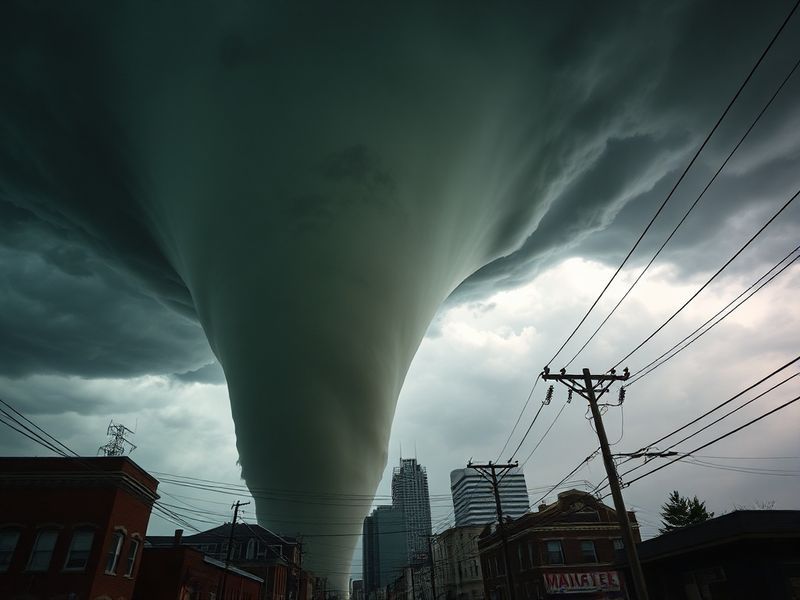
When severe weather alerts echo through Milwaukee, the city braces for more than just rain and wind. Tornado warnings signify a critical moment where natural forces demand immediate attention and action. These warnings are not merely technical advisories; they are urgent calls to protect lives and property in a region where severe storms are an annual reality.
The National Weather Service issues tornado warnings when radar or trained spotters confirm a tornado is imminent or occurring. Milwaukee, positioned in Wisconsin’s tornado alley, has endured its share of these destructive events. The city’s history with tornadoes dates back decades, with notable storms in 1951, 1976, and 2010 leaving indelible marks on the community. Understanding these warnings means recognizing the difference between a watch and a warning—a distinction that can save lives.
How Tornado Warnings Work in Milwaukee
Tornado warnings in Milwaukee follow a structured process designed to inform and protect residents. The National Weather Service (NWS) Milwaukee/Sullivan office monitors atmospheric conditions around the clock. When conditions favor tornado development, the NWS issues a tornado watch, signaling that tornadoes are possible in the area. If a tornado is detected—either by radar or trained spotters—a warning is issued for specific counties and communities.
The warning process includes:
- Detection: Meteorologists analyze radar data for rotation in thunderstorms, a key indicator of potential tornadoes.
- Confirmation: Trained spotters or law enforcement may visually confirm a tornado, adding credibility to radar indications.
- Notification: The NWS issues a warning via Emergency Alert System (EAS) broadcasts, NOAA Weather Radio, and wireless emergency alerts to mobile devices.
- Community Response: Local authorities activate sirens, and residents are urged to seek shelter immediately in a basement or interior room on the lowest floor.
Milwaukee’s infrastructure plays a critical role in disseminating these warnings. The city’s emergency management office collaborates with the NWS to ensure alerts reach every neighborhood. Sirens, often tested monthly, serve as a primary alert system in outdoor spaces, while smartphone notifications provide real-time updates for those indoors. This layered approach ensures warnings are not missed, even in areas with poor cell service.
Understanding the timeline of a tornado warning is essential. Warnings typically last between 30 minutes to an hour, depending on the storm’s movement. Residents should use this time to prepare, not panic. Keeping emergency supplies—water, non-perishable food, flashlights, and a first-aid kit—within reach can make a significant difference during the critical minutes before a storm hits.
Milwaukee’s Tornado History and Global Context
Milwaukee’s relationship with tornadoes is part of a broader pattern seen in the United States, where the Midwest and Great Plains regions are particularly vulnerable. Known as Tornado Alley, this stretch of the country experiences the highest frequency of tornadoes globally, with an average of 1,200 tornadoes reported annually. Milwaukee, while not in the heart of Tornado Alley, sits in a secondary zone where tornadoes occur with notable frequency.
Globally, tornadoes are most common in the United States, but they are not exclusive to North America. Countries like Bangladesh, Argentina, and South Africa also experience tornadoes, often with devastating consequences due to weaker infrastructure and less advanced warning systems. In 2013, a devastating tornado in Bangladesh killed over 30 people and injured hundreds, highlighting the global disparity in tornado preparedness.
Comparing Milwaukee to other tornado-prone regions reveals both similarities and differences in response strategies. In the U.S., advanced radar technology and widespread emergency alert systems provide residents with critical minutes to seek shelter. In contrast, countries like Bangladesh rely on community-based warning systems, such as sirens in public spaces or word-of-mouth alerts, which may not reach everyone in time.
Culturally, tornadoes evoke a mix of fear and resilience. In the American Midwest, tornado drills are a routine part of school and workplace preparedness, ingrained in the collective consciousness from an early age. This cultural emphasis on readiness contrasts sharply with regions where tornadoes are rare, where residents may not recognize the signs of an impending storm. Milwaukee’s experience serves as a reminder of the importance of education and preparation in mitigating the impact of natural disasters.
What to Do When a Tornado Warning is Issued in Milwaukee
When a tornado warning is issued for Milwaukee, the city’s emergency protocols come into sharp focus. The first step is to seek shelter immediately. The safest locations are basements or interior rooms on the lowest floor of a building, away from windows. Mobile homes and vehicles are particularly dangerous during tornadoes, and residents should evacuate to a sturdy structure if time permits.
The Milwaukee County Emergency Management Office provides clear guidelines for residents:
- Stay Informed: Monitor local news outlets, NOAA Weather Radio, or smartphone alerts for real-time updates.
- Take Shelter: Move to a basement or interior room, covering yourself with a mattress or heavy blankets to protect against flying debris.
- Protect Pets: Ensure pets are secured in a carrier or leashed, and bring them to your shelter area if possible.
- Avoid Windows: Glass windows can shatter during high winds, posing a significant risk of injury.
- Wait for the All-Clear: Do not venture outside until the warning has expired or authorities confirm the storm has passed.
For those with disabilities or mobility challenges, advance planning is crucial. Creating a personal emergency plan that includes accessible shelter locations and a support network can save lives. Milwaukee’s emergency services work closely with organizations like the Disability Rights Wisconsin to ensure inclusive disaster preparedness.
After the storm, residents should exercise caution when inspecting damage. Downed power lines may be live, and unstable structures can collapse without warning. Reporting emergencies to local authorities ensures a swift response from police, fire, and medical teams.
Milwaukee’s Future: Preparing for More Extreme Weather
Climate change is altering the frequency and intensity of severe weather events, including tornadoes. Studies suggest that while the total number of tornadoes may not increase, the likelihood of stronger, more destructive storms is rising. Milwaukee, like many cities, must adapt its infrastructure and preparedness strategies to meet these evolving challenges.
Urban planning plays a critical role in tornado resilience. Newer buildings in Milwaukee incorporate reinforced materials and safer designs, while older structures undergo retrofitting to improve structural integrity. Green spaces and parks are also being considered as potential shelter areas, offering open spaces where residents can gather safely during warnings.
Community engagement is another key component of future preparedness. Programs like the Milwaukee Community Emergency Response Team (CERT) train residents to assist during disasters, bridging the gap between professional emergency services and local neighborhoods. These initiatives foster a culture of mutual aid, where residents look out for one another during crises.
Technology is also advancing tornado detection and warning systems. Doppler radar, now a staple in weather forecasting, continues to evolve, offering meteorologists greater precision in tracking storms. Additionally, machine learning algorithms are being developed to predict tornado formation with higher accuracy, potentially providing even more lead time for residents.
Milwaukee’s journey toward greater resilience is a microcosm of global efforts to combat climate change. By investing in education, infrastructure, and community engagement, the city is positioning itself to face the challenges of the future with confidence. The lessons learned in Milwaukee can serve as a model for other urban centers grappling with the increasing threat of severe weather.
As the climate continues to change, the importance of preparedness cannot be overstated. Tornado warnings in Milwaukee are more than just alerts—they are a call to action for residents, authorities, and communities to stand united in the face of nature’s unpredictability. By staying informed, taking proactive steps, and supporting one another, Milwaukee can navigate the complexities of severe weather with resilience and strength.
Disclaimer: This article is for informational purposes only. Always follow official guidance from the National Weather Service and local authorities during severe weather events.