Sonny Gray’s career in Major League Baseball has been a masterclass in adaptability and precision. Since his debut in 2013, the right-handed pitcher has carved out a reputation as one of the most reliable arms in the game, even as he has navigated trades, injuries, and evolving pitching philosophies. What makes Gray’s journey particularly compelling is his ability to reinvent himself—whether as a starter, reliever, or even a closer—while maintaining a level of performance that few pitchers can sustain over a decade.
Born Gerald Clayton Gray Jr. on November 7, 1989, in Nashville, Tennessee, Gray grew up in a sports-centric family. His father played college football, and his mother was a track athlete, but it was baseball where Gray found his calling. At Smyrna High School in Tennessee, he emerged as a standout pitcher, posting a 1.59 ERA over his high school career. His performances earned him a spot at Vanderbilt University, where he further developed his craft under the guidance of coach Tim Corbin. By the time he was drafted 18th overall by the Oakland Athletics in 2011, Gray was already on the radar of scouts for his polished mechanics and competitive fire.
From Vanderbilt to the Big Leagues: A Rapid Rise
Gray’s transition from college to the pros was seamless. He spent just two seasons in the minor leagues before making his MLB debut on July 10, 2013. In his first start for the Athletics, he pitched six innings, allowing just one run while striking out seven against the Toronto Blue Jays. The performance was a sign of things to come. By the end of the 2014 season, Gray had established himself as a cornerstone of Oakland’s rotation, posting a 3.08 ERA over 219 innings. His ability to mix a mid-90s fastball with a sharp slider and a developing changeup made him a nightmare for hitters.
One of Gray’s most memorable outings during this period came on June 5, 2015, when he no-hit the Pittsburgh Pirates over seven innings before leaving the game due to a lat strain. Though the no-hitter was lost when the bullpen allowed hits in the eighth, the start was a testament to Gray’s dominance. That season, he finished with a 2.73 ERA and earned his first All-Star selection, solidifying his status as one of baseball’s brightest young pitchers.
The Trades and Transitions: A Pitcher in Motion
Gray’s career took a series of unexpected turns after the 2017 season. Frustrated with Oakland’s lack of progress, the Athletics traded him to the New York Yankees in a blockbuster deal that sent three prospects, including outfielder Dustin Fowler, to Oakland. The move to the Bronx was a pivotal moment for Gray. Playing in front of sold-out crowds at Yankee Stadium, he thrived under the bright lights, posting a 3.72 ERA in 2018 and helping the Yankees reach the ALDS. His ability to pitch in high-pressure situations made him a fan favorite, even as injuries began to limit his workload.
In 2019, Gray was traded again—this time to the Cincinnati Reds as part of a three-team deal involving the Yankees and San Diego Padres. The transition to the National League suited Gray’s skill set, particularly his ability to induce ground balls. In Cincinnati, he rediscovered his form, posting a 2.87 ERA in 2020 and a 3.48 ERA in 2021. His sinker-heavy approach became a cornerstone of the Reds’ pitching philosophy, and he emerged as one of the team’s most consistent performers.
By 2022, Gray’s role began to shift. After years as a starter, he transitioned to the bullpen, where his fastball-slider combination proved even more devastating. In 29 relief appearances, he posted a 1.35 ERA and 37 strikeouts in 26.2 innings. The move revitalized his career and demonstrated his ability to adapt to new challenges. His success in relief earned him a three-year, $30 million contract with the Minnesota Twins in 2023, where he has continued to excel as both a starter and a reliever.
Pitching Mechanics and the Science Behind Gray’s Success
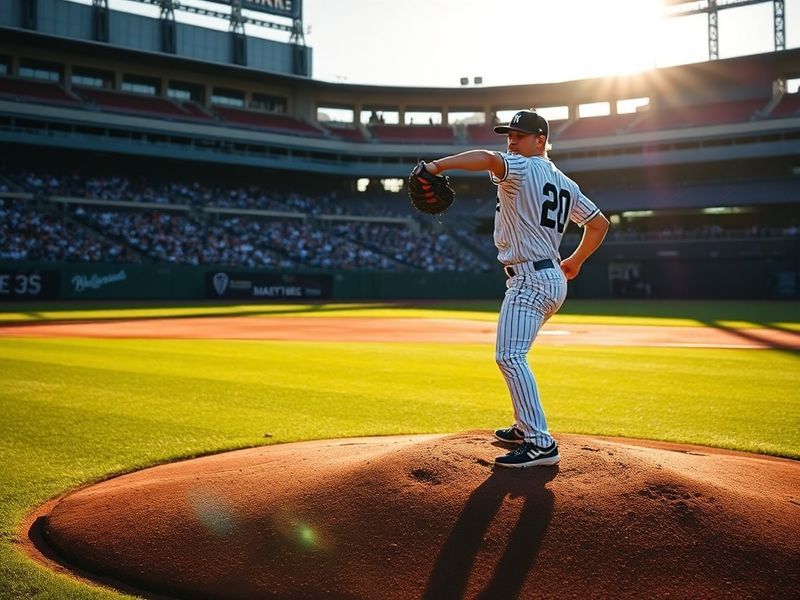
What sets Sonny Gray apart from many of his peers is his meticulous approach to pitching. His delivery is a study in efficiency, with a compact three-quarter arm slot that minimizes stress on his arm while maximizing velocity. Gray’s fastball, which averages 92-94 mph, is complemented by a slider that ranks among the best in the game. According to Statcast data, Gray’s slider generates a whiff rate of over 35%, a figure that places him in the elite tier of pitchers.
Gray’s ability to command his fastball to both sides of the plate is another key to his success. He mixes in a changeup and a curveball to keep hitters off balance, but it’s his fastball-slider combination that defines his pitching style. His ground-ball rate consistently ranks in the top 10% of MLB pitchers, a testament to his ability to induce weak contact. Additionally, Gray has worked extensively with analytics teams to refine his pitch sequencing, ensuring that he attacks hitters in the most effective way possible.
In interviews, Gray has often spoken about the importance of mental preparation. He spends hours studying hitters’ tendencies, reviewing video, and visualizing his outings. His approach reflects a broader trend in modern pitching, where data and technology play an increasingly central role. Yet, despite the reliance on analytics, Gray’s success ultimately comes down to execution. His ability to throw strikes and induce weak contact has made him one of the most reliable pitchers in the game, regardless of the era.
The Legacy and Future of Sonny Gray
As Sonny Gray enters the latter stages of his career, his legacy is already secure. He has pitched over 1,700 innings in the major leagues, posted a career ERA of 3.44, and earned multiple All-Star selections. His adaptability—whether as a starter, reliever, or closer—sets him apart from many of his contemporaries. More importantly, Gray’s career serves as a blueprint for pitchers looking to extend their careers through innovation and hard work.
Looking ahead, Gray’s role with the Minnesota Twins will be closely watched. After years of transitioning between roles, he has found a home in a pitching-rich organization. The Twins have shown a willingness to deploy Gray in high-leverage situations, and his experience could be invaluable in the postseason. If he can maintain his current level of performance, Gray could add to his already impressive résumé and cement his place as one of the most respected pitchers of his generation.
Beyond his on-field contributions, Gray has also become a mentor to younger pitchers. He frequently shares insights with teammates and has been praised for his willingness to help others improve. His professionalism and work ethic serve as a model for aspiring players, and his career is a reminder that success in baseball is as much about preparation as it is about talent.
As fans and analysts reflect on Sonny Gray’s career, one thing is clear: he has redefined what it means to be a consistent pitcher in MLB. Whether it’s his ability to reinvent himself, his mastery of his craft, or his leadership both on and off the field, Gray’s impact on the game will be felt for years to come.
For those looking to explore more about the evolution of pitching in MLB, visit our Sports category for deeper analysis and insights. If you’re interested in the stories of other pitchers who have made significant transitions in their careers, check out our Analysis section for thoughtful breakdowns.