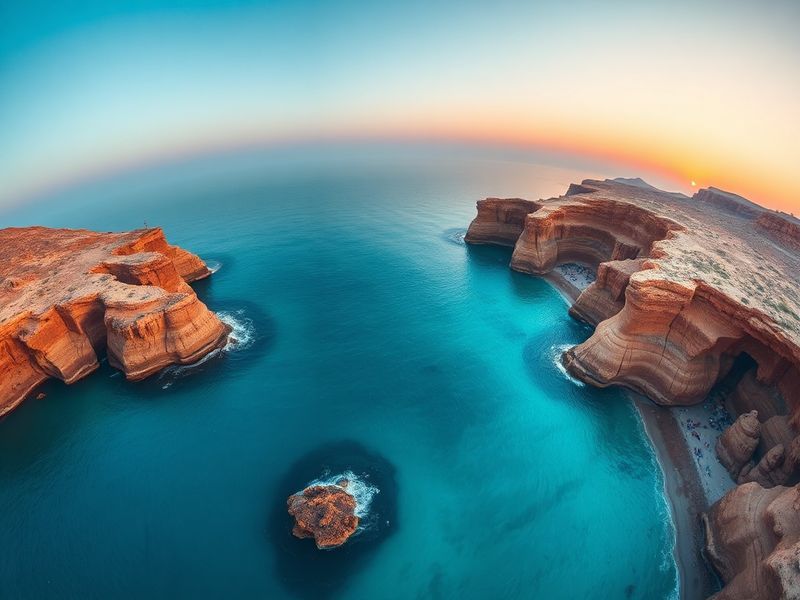
The Red Sea stretches like a sapphire ribbon between two continents, separating Africa from the Arabian Peninsula. This narrow waterway, just 225 kilometers at its widest point, has been a crossroads of human civilization for millennia. From ancient trade routes to modern maritime disputes, the Red Sea remains one of the world’s most strategically vital—and vulnerable—bodies of water.
A Historical Crossroads
Long before the Suez Canal shortened the journey between Europe and Asia, the Red Sea was a highway for commerce and conquest. The Egyptians used it for expeditions to the land of Punt as early as 2500 BCE. Later, the Romans established ports along its coasts to facilitate trade in frankincense, myrrh, and spices. The sea’s strategic importance only grew with the rise of Islam, as it became a route for Muslim pilgrims traveling to Mecca and Medina.
By the 19th century, European powers scrambled to control the Red Sea’s ports. The British established dominance in Aden, while the French expanded their influence in Djibouti. The construction of the Suez Canal in 1869 transformed the Red Sea into a global chokepoint, linking the Mediterranean to the Indian Ocean. Today, nearly 10% of the world’s seaborne trade passes through this narrow corridor, making its stability a matter of international concern.
Ecological Riches and Environmental Threats
The Red Sea is home to some of the most biodiverse marine ecosystems on Earth. Its coral reefs, stretching over 1,900 kilometers, support over 1,200 species of fish and 250 species of coral. The sea’s unique geography—deep trenches and shallow shelves—creates a variety of habitats, from mangrove forests to seagrass beds. This biodiversity is not just a natural wonder; it’s an economic lifeline for the region’s coastal communities, which rely on fishing and tourism.
Yet, this ecological treasure is under siege. Climate change is bleaching coral reefs at an alarming rate, while industrial pollution and overfishing threaten marine life. The Red Sea’s coral reefs have shown some resilience, with certain species adapting to warmer temperatures, but scientists warn that without urgent action, irreversible damage could occur within decades. The sea’s delicate balance is further strained by coastal development, including the construction of massive desalination plants that dump brine back into the water, altering salinity levels.
Efforts to protect the Red Sea’s ecosystems are gaining traction. In 2020, Saudi Arabia announced plans to designate 30% of its Red Sea coastline as protected areas by 2030. Meanwhile, regional cooperation initiatives, such as the Red Sea Marine Peace Initiative, aim to foster sustainable tourism and conservation. However, the scale of the challenge demands more than localized solutions—it requires a coordinated global response.
The Geopolitical Chessboard
The Red Sea is not just a body of water; it’s a geopolitical chessboard where regional and global powers compete for influence. The ongoing conflict in Yemen, which borders the Red Sea, has turned the waterway into a flashpoint. Houthi rebels, backed by Iran, have repeatedly targeted commercial ships, disrupting global trade and prompting military interventions from the U.S., U.K., and other nations. The Bab el-Mandeb Strait, a narrow passage at the southern end of the Red Sea, has become a critical flashpoint, with its control determining the flow of oil and goods between the Mediterranean and the Indian Ocean.
Egypt, which controls the Suez Canal, has invested heavily in securing the waterway. In 2015, the country expanded the canal to accommodate larger ships, but its ability to maintain stability is increasingly strained by regional conflicts and economic pressures. Meanwhile, Saudi Arabia and the United Arab Emirates (UAE) are vying for influence along the Red Sea’s eastern coast. Both countries have invested in port infrastructure, with Saudi Arabia developing the $500 billion NEOM megacity project and the UAE expanding its presence in Eritrea and Somalia.
China, too, has entered the fray. Through its Belt and Road Initiative, Beijing has secured ports in Djibouti, Sudan, and Saudi Arabia, raising concerns among Western powers about its growing footprint in the region. The U.S., which maintains a military base in Djibouti, views the Red Sea as a critical theater in its broader competition with China and Russia.
Key Players in the Red Sea’s Future
- Egypt: The Suez Canal’s primary stakeholder, Egypt is balancing economic needs with regional security concerns.
- Saudi Arabia: Investing in infrastructure and tourism, Saudi Arabia seeks to position itself as a leader in Red Sea development.
- United Arab Emirates: The UAE’s port investments and military presence underscore its ambition to dominate the region’s trade routes.
- Iran: Supporting Houthi rebels, Iran uses the Red Sea as a proxy battleground in its broader rivalry with Saudi Arabia and the U.S.
- China: Through port acquisitions and economic deals, China is quietly expanding its influence in the Red Sea.
The Path Forward: Cooperation or Conflict?
The Red Sea’s future hinges on whether its stakeholders can prioritize cooperation over competition. The sea’s ecological and economic importance demands collective action, yet the region’s geopolitical fractures make this difficult. One potential avenue for collaboration is the Red Sea Alliance, a proposed initiative that would unite coastal states in managing maritime security, environmental protection, and economic development.
Another critical factor is the role of international actors. The U.S. and its allies must balance their strategic interests with the need to avoid further destabilizing the region. Meanwhile, China’s growing presence presents both opportunities and challenges, as its investments could drive economic growth but also deepen existing rivalries.
For the Red Sea’s coastal communities, the stakes could not be higher. Fishermen, tour operators, and small businesses rely on the sea’s health for their livelihoods. Without sustainable management, the region risks ecological collapse and economic decline. Yet, if the countries bordering the Red Sea can set aside their differences, there is potential for a new era of prosperity and stability.
The Red Sea has always been a crossroads—of cultures, economies, and now, geopolitical ambitions. Its fate will be determined not just by the tides, but by the choices of those who depend on it most.
For those interested in exploring the broader implications of maritime security and geopolitics, visit our News and Analysis sections for deeper insights.