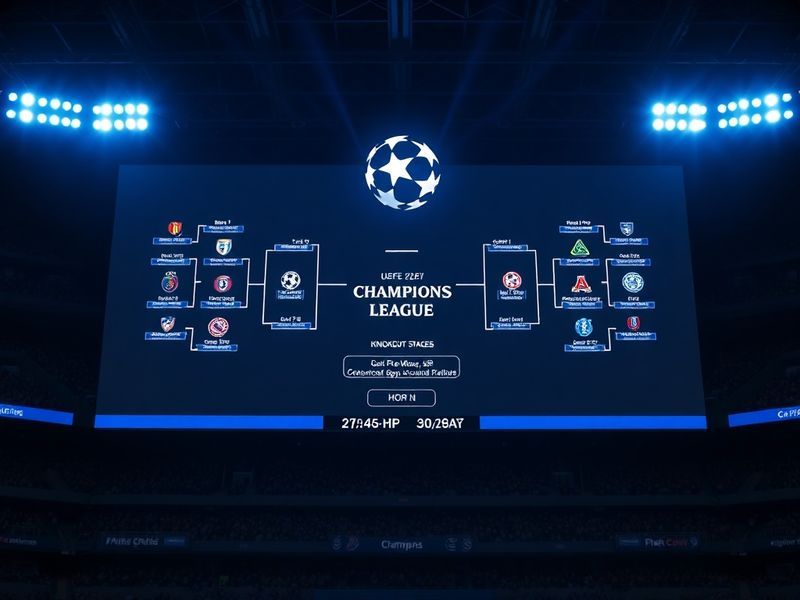
How the UEFA Champions League Bracket Works
The UEFA Champions League bracket represents one of the most prestigious and high-stakes formats in global football. Unlike domestic leagues where teams play dozens of matches, the Champions League follows a knockout-style progression that compresses drama into just a handful of fixtures. This structure ensures that only the most consistent performers survive, while underdogs occasionally upset the odds.
Teams enter the competition through a qualifying phase or directly via their domestic league standings. The group stage, which features 32 teams divided into eight groups of four, serves as the first major hurdle. Each team plays six matches—home and away against every other team in their group. The top two from each group advance to the round of 16, where the knockout phase truly begins.
From there, the bracket follows a single-elimination model: one loss means elimination. This creates a pressure cooker environment where every pass, tackle, and shot resonates with global audiences. The final two legs of the tournament—the semifinals and final—are played over one leg each, adding to the tension. The winner lifts the iconic trophy, a symbol of European football supremacy.
The Cultural Significance of the Champions League
The Champions League bracket is more than just a sporting format; it is a cultural institution that transcends borders. For clubs, it represents the pinnacle of achievement in European football, a chance to etch their names into history. For fans, it is a spectacle that unites people across continents, languages, and time zones.
In cities like Istanbul, Madrid, and Manchester, Champions League nights are celebrated with rituals that go beyond the 90 minutes. Fans gather in public squares, bars, and homes, draped in team colors, chanting anthems that have echoed for decades. The bracket’s structure—with its unpredictable upsets and dramatic comebacks—mirrors the emotional rollercoasters of global fandom.
This tournament also reflects broader societal shifts. The rise of clubs like Paris Saint-Germain and Manchester City, backed by wealthy owners, has reshaped the competition’s financial landscape. Meanwhile, smaller clubs like Ajax and Benfica continue to punch above their weight, embodying the spirit of the underdog. The bracket’s design ensures these stories unfold on a grand stage, making the Champions League a microcosm of modern football’s global appeal.
Key Moments in Champions League Bracket History
Some of the most iconic moments in football history have occurred within the Champions League bracket. These matches are etched into the memories of fans worldwide, not just for their results but for their sheer drama and artistry.
- 2005: Liverpool’s Miracle in Istanbul – Trailing 3-0 at halftime to AC Milan in the final, Liverpool staged one of the greatest comebacks in sports history, winning on penalties.
- 2018: Real Madrid’s Third Straight Title – Zinedine Zidane’s side defeated Liverpool 3-1 in Kyiv, securing a historic three-peat under different managers.
- 2019: Tottenham Hotspur’s Wembley Run – The unfancied English side reached the final, playing in a nearly empty stadium due to administrative errors, yet captivating neutrals with their resilience.
- 2021: Chelsea’s Defensive Masterclass – A disciplined Chelsea side defeated Manchester City 1-0 in Porto, proving that tactical organization can triumph over star power.
These moments highlight how the bracket’s structure amplifies narratives. A single match can redefine a club’s legacy, influence player careers, and inspire generations of fans. The bracket’s unpredictability ensures that no team is ever fully safe, making every round a cliffhanger.
Comparing the Champions League Bracket to Other Tournaments
The Champions League bracket stands apart from other major football competitions due to its unique blend of prestige, competition format, and global reach. Unlike the FIFA World Cup, which is a quadrennial event with a group stage followed by knockout rounds, the Champions League is an annual club competition that runs from September to May. This extended timeline allows for deeper tactical battles and player development.
In contrast to domestic cup competitions like England’s FA Cup, which involve hundreds of teams in a single-elimination format, the Champions League’s group stage ensures a higher baseline of quality. This means that even the earliest knockout rounds feature elite teams, raising the stakes from the outset. The Europa League, while prestigious in its own right, lacks the same financial incentives and star power, often serving as a secondary competition for Champions League dropouts.
Another key difference is the away goals rule, which was abolished in 2021. Previously, teams could advance by scoring more goals away from home, even if the aggregate score was tied. This rule added a tactical dimension to the bracket, forcing teams to balance aggression with caution. Its removal has simplified the format but also reduced some of the strategic intrigue.
Compared to North American sports leagues like the NFL or NBA, which use a playoff system with seeded teams, the Champions League bracket is more fluid. There are no guaranteed spots—clubs must earn their place through consistent domestic performance. This creates a meritocratic environment where only the best survive, reinforcing the tournament’s elite status.
What’s Next for the Champions League Bracket?
The future of the Champions League bracket is evolving. In 2024, UEFA introduced a new format that expands the group stage from 32 to 36 teams. Instead of traditional groups, the teams are ranked in a single league table, with the top eight teams automatically qualifying for the round of 16. Teams ranked 9-24 will enter a two-legged playoff to secure their spot in the next round.
This change aims to increase competition and reduce the number of dead rubber matches in the group stage. However, it has also sparked debate among fans and pundits. Critics argue that the new format dilutes the traditional group stage’s intensity, while others believe it will create more unpredictable outcomes. The bracket’s core knockout essence remains intact, but the pathway to it has been reimagined.
Another trend to watch is the growing influence of financial powerhouses. Clubs like Manchester City, PSG, and Bayern Munich continue to dominate, investing heavily in squads and infrastructure. This raises questions about competitive balance within the bracket. Will UEFA introduce measures like salary caps or financial fair play reforms to level the playing field? The answer could shape the tournament’s identity in the coming years.
Technological advancements are also transforming the bracket’s experience. VAR (Video Assistant Referee) has become a staple, influencing match outcomes and sparking debates about refereeing consistency. Meanwhile, streaming services and social media have made the tournament more accessible than ever, allowing global audiences to engage with every match.
As the Champions League bracket continues to evolve, one thing remains certain: its ability to captivate millions will endure. Whether through historic comebacks, tactical masterclasses, or underdog triumphs, the bracket will keep producing moments that define football’s golden era.
Final Thoughts
The UEFA Champions League bracket is more than a sporting format—it is a global phenomenon that captures the essence of competition, drama, and excellence. Its structure ensures that every match matters, every goal resonates, and every team has a chance to write its name in history. From the group stages to the final, the bracket weaves together stories of triumph, heartbreak, and sheer brilliance.
For fans of sports, the Champions League offers unparalleled excitement, blending the unpredictability of knockout football with the prestige of European competition. As the tournament adapts to new challenges, its core appeal—drama, quality, and global unity—will continue to shine.