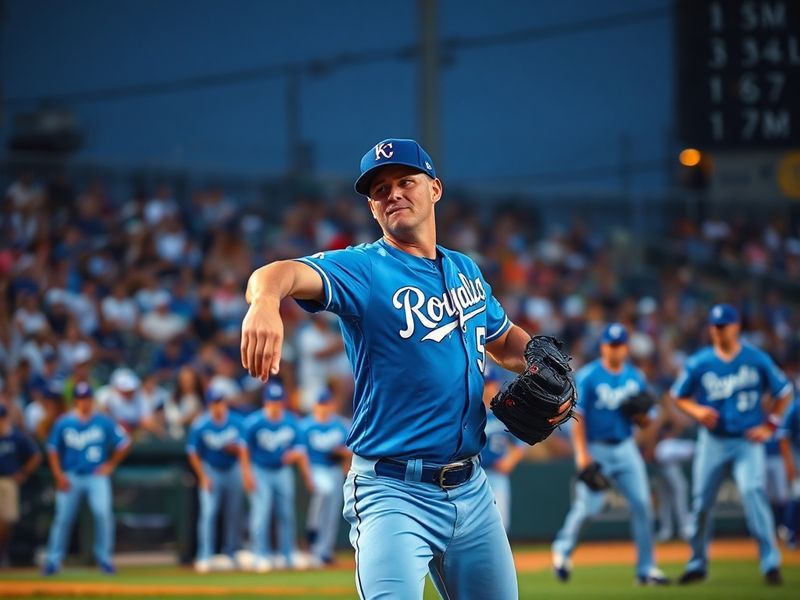
The Kansas City Royals may not dominate the headlines like the New York Yankees or the Los Angeles Dodgers, but their influence extends far beyond the borders of the United States. Founded in 1969 as an expansion team, the Royals have carved out a unique identity in Major League Baseball (MLB), blending small-market grit with a style of play that resonates with fans worldwide. Their story is one of resilience, innovation, and cultural exchange—a testament to how a single team can shape the global perception of a sport.
From their early struggles to their World Series triumphs in 2015, the Royals have become a symbol of what it means to compete against the odds. This global perspective explores how the team’s journey reflects broader trends in baseball, from the rise of advanced analytics to the growing internationalization of the sport. It’s a narrative that connects Kansas City to cities like Tokyo, Seoul, and Toronto, where baseball fans have embraced the Royals’ underdog spirit.
The Royals’ Rise: From Humble Beginnings to World Series Glory
The Royals’ first two decades were marked by mediocrity, as they finished in the bottom half of their division nearly every season. Yet, this period laid the foundation for their future success. The team’s farm system, once derided as unremarkable, began producing talent like George Brett, a future Hall of Famer who became the face of the franchise. Brett’s leadership and consistency were instrumental in transforming the Royals from a laughingstock into a contender by the late 1970s and early 1980s.
Their first World Series appearance in 1980 marked a turning point, though they fell short against the Philadelphia Phillies. A decade later, in 1985, the Royals returned to the Fall Classic and claimed their first championship, defeating the St. Louis Cardinals in a thrilling seven-game series. This victory was more than a sports achievement; it was a cultural moment for Kansas City, a city often overshadowed by larger metropolitan areas. The Royals’ success gave the region a sense of pride and put them on the map as a legitimate force in baseball.
Yet, the highs were followed by lows. The Royals struggled through the 1990s and 2000s, enduring three straight losing seasons from 2005 to 2007. Their fortunes changed in the 2010s, thanks to a new generation of talent and a shift in baseball strategy. The team’s emphasis on speed, defense, and bullpen strength—dubbed the “Royals Way”—helped them reach the playoffs three consecutive years (2014-2016) and win the World Series in 2015. This era redefined what it meant to be competitive in MLB, proving that small-market teams could thrive without massive payrolls.
Globalization and the Royals: How a Small-Market Team Reached the World
Baseball’s globalization has been a defining trend of the 21st century, and the Royals have played a role in that expansion. While teams like the Yankees and Dodgers have long relied on international signings, the Royals have taken a different approach. Their international scouting has focused on developing raw talent from Latin America and Asia, with players like Salvador Perez (Venezuela) and Yordano Ventura (Dominican Republic) becoming key contributors. This strategy not only strengthened the team but also deepened its connection to global fanbases.
The Royals’ 2015 World Series victory was broadcast in over 200 countries, reaching millions of viewers who might not have otherwise followed MLB. In Japan, where baseball is a national obsession, the Royals’ aggressive style of play—characterized by aggressive base-running and clutch hitting—resonated with fans. Japanese broadcasters and analysts praised the team’s “never-say-die” attitude, drawing parallels to iconic Japanese teams like the Yomiuri Giants. Similarly, in South Korea, where baseball has grown in popularity, the Royals’ World Series run sparked new interest in the sport.
Beyond their on-field success, the Royals have also engaged with international markets through exhibition games and cultural exchanges. In 2014, they played the San Francisco Giants in an historic series in London, marking MLB’s first regular-season games in Europe. While the Royals didn’t participate in that particular series, their global reach continued to expand through digital platforms. Social media has become a vital tool for the team, with players like Perez and Whit Merrifield connecting directly with fans in Spanish, Korean, and Japanese. This digital presence has helped the Royals build a diverse and dedicated following around the world.
The Royals’ Impact on Baseball’s Evolution
The Royals’ 2015 championship coincided with a broader shift in baseball strategy. Teams across MLB began prioritizing defense, speed, and bullpen strength over traditional power hitting. This approach, which the Royals had perfected, was a direct challenge to the “Moneyball” philosophy of the early 2000s, which emphasized on-base percentage and slugging. While analytics remain a cornerstone of modern baseball, the Royals proved that intangibles like chemistry and clutch performance could be just as valuable.
The team’s success also highlighted the importance of player development. The Royals’ farm system, once considered a weakness, became a model for other small-market teams. Their ability to cultivate talent through the minor leagues and make shrewd trades (such as acquiring Lorenzo Cain and Eric Hosmer before they blossomed) demonstrated that success wasn’t solely dependent on financial resources. This lesson has influenced teams in other sports, from the NBA’s Milwaukee Bucks to the NFL’s Kansas City Chiefs, who have adopted similar approaches to building competitive rosters.
Moreover, the Royals’ story has contributed to the ongoing conversation about MLB’s global expansion. While the league has struggled to gain traction in markets like China and Europe, the Royals’ international appeal suggests that there’s untapped potential. Their success in Latin America and Asia proves that baseball can thrive outside the traditional U.S. market, provided teams invest in grassroots development and cultural engagement.
Cultural Significance: What the Royals Represent Beyond Baseball
The Royals are more than just a baseball team; they are a cultural institution in Kansas City. Their fanbase, known for its loyalty and passion, extends far beyond the confines of Kauffman Stadium. The team’s mascot, the Royal, and its iconic “Legends” statues outside the stadium celebrate the city’s rich history, from jazz legends like Charlie Parker to civil rights icons like Charlie “Bird” Parker. This connection to local culture has made the Royals a symbol of Kansas City’s identity.
Globally, the Royals represent the underdog narrative that resonates across cultures. In a sport dominated by billion-dollar franchises, their story is a reminder that success isn’t solely determined by financial might. This theme is particularly powerful in regions where baseball is still growing, such as Europe and Africa. The Royals’ journey from obscurity to glory serves as an inspiration for aspiring athletes and fans who see themselves in the team’s struggle and triumph.
The team’s commitment to community engagement has also strengthened its global appeal. Through initiatives like the Royals Urban Youth Academy, which provides baseball and softball training to underserved youth, the team has invested in the future of the sport. This dedication to social responsibility aligns with global trends in sports, where teams are increasingly expected to contribute to societal well-being. In cities like Toronto and Sydney, where baseball is a niche sport, the Royals’ community-driven approach has set a standard for how teams can build lasting connections with their fanbases.
Looking Ahead: The Royals’ Future in a Globalized MLB
The Royals’ recent performances have been inconsistent, with the team finishing below .500 in several seasons. Yet, their farm system remains one of the strongest in baseball, and their commitment to player development suggests a bright future. As MLB continues to expand its global reach, the Royals are well-positioned to capitalize on emerging markets, particularly in Latin America and Asia. Their ability to scout and develop international talent will be a key factor in their long-term success.
For fans around the world, the Royals represent more than just a team—they embody the spirit of baseball itself. Whether it’s the crack of a bat at Kauffman Stadium or the roar of the crowd during a crucial playoff moment, the Royals remind us why the sport has captivated hearts for generations. As baseball evolves, the Royals’ story will continue to inspire, proving that greatness isn’t measured by market size but by passion, perseverance, and the unyielding pursuit of a dream.
To learn more about the Royals’ history and their impact on the sport, explore our Sports category, where we dive deeper into the stories shaping baseball and beyond. For a broader look at how small-market teams are redefining success in professional sports, check out our analysis on Analysis.