jet fuel shortages
“`html
Jet Fuel Shortages: What Travelers Need to Know
Air travel remains a cornerstone of global connectivity, yet recent disruptions in jet fuel supply chains have introduced new uncertainties for passengers and airlines alike. These shortages—stemming from geopolitical tensions, refining capacity constraints, and shifting energy policies—are reshaping travel planning and operational strategies across the industry.
The Current State of Jet Fuel Supply
Jet fuel, known technically as Jet A-1, powers commercial aircraft worldwide. Unlike gasoline or diesel, its production relies on a specialized refining process that prioritizes specific properties like flash point, freeze point, and energy content. The past year has seen a tightening of this supply due to several converging factors.
Global refining margins have tightened as post-pandemic demand recovery outpaced capacity expansions. Many refineries, particularly in Europe and North America, have shifted focus toward producing more profitable products like gasoline and diesel, reducing output for aviation fuels. Meanwhile, geopolitical conflicts have disrupted traditional supply routes. The war in Ukraine, for instance, eliminated a significant source of jet fuel for European markets, forcing airlines to reroute shipments from the Middle East and Asia at higher costs.
These challenges are compounded by environmental regulations. Stricter sulfur limits under the IMO 2020 standards have increased the cost of compliant fuels, while some suppliers prioritize producing lower-carbon alternatives that command premium pricing. The result is a market where availability is inconsistent, and prices fluctuate unpredictably.
How Airlines Are Adapting
Airlines are employing several strategies to mitigate the impact of jet fuel shortages. One immediate response has been route optimization. Carriers are reducing or eliminating stops on less profitable routes, consolidating flights into larger aircraft to maximize fuel efficiency. Budget airlines, in particular, have been vocal about passing fuel surcharges directly to consumers, though legacy carriers are also adjusting pricing structures.
Fuel hedging has also become a critical tool. Airlines with pre-existing contracts locking in fuel prices at lower rates are better insulated from market volatility. However, smaller carriers and those without hedging programs face significant exposure. Some have turned to alternative fuels, such as sustainable aviation fuel (SAF), which can be blended with traditional jet fuel to reduce reliance on petroleum-based products. While SAF offers environmental benefits, its adoption remains limited due to high production costs and insufficient infrastructure.
- Route consolidation: Fewer stops and larger aircraft to improve fuel efficiency.
- Dynamic pricing: Fuel surcharges and flexible ticket pricing to offset costs.
- Fuel hedging: Locking in prices through financial contracts to manage volatility.
- Alternative fuels: Increased use of SAF blends where available.
Broader Implications for Travelers
The consequences of jet fuel shortages extend beyond ticket prices. Travelers may encounter longer layovers, reduced flight frequencies, or even route cancellations as airlines adjust schedules to manage fuel availability. Those planning trips should anticipate potential disruptions, particularly during peak travel seasons when demand outstrips supply.
Airports in remote or less-frequented regions are particularly vulnerable. Carriers may prioritize fueling hubs with higher passenger volumes, leaving smaller airports with fewer or less frequent flights. This trend could reshape travel patterns, benefiting major hubs like London Heathrow or Dubai International while marginalizing secondary airports.
Environmental concerns add another layer of complexity. While airlines tout SAF as a solution, its limited production capacity means it won’t resolve shortages in the near term. Instead, the industry faces a paradox: reducing carbon emissions requires investment in alternative fuels, but these fuels are less available and more expensive than traditional jet fuel. This tension underscores the need for coordinated policy and infrastructure investments to bridge the gap.
What the Future Holds
The jet fuel crisis is unlikely to resolve quickly. Analysts predict that refining capacity will remain constrained through at least 2025, particularly as global energy markets continue to adapt to shifting demand and regulatory pressures. Airlines, therefore, must prepare for a prolonged period of uncertainty, balancing cost management with operational resilience.
For travelers, the message is clear: flexibility will be key. Booking directly with airlines, monitoring route adjustments, and considering alternative travel dates can mitigate the impact of disruptions. Those with non-refundable tickets should review their policies carefully, as some carriers may offer waivers for fuel-related delays.
Looking ahead, the industry’s ability to innovate will determine its long-term stability. Advances in fuel-efficient aircraft, such as the Airbus A350 or Boeing 787, offer some relief by reducing consumption per passenger. Meanwhile, governments and private investors must collaborate to expand SAF production and refine supply chains. Without these efforts, the jet fuel shortage could become a chronic challenge, reshaping air travel for years to come.
The current landscape demands vigilance and adaptability from all stakeholders. For airlines, it’s a test of operational agility. For travelers, it’s a reminder to plan ahead. And for the industry at large, it’s a wake-up call to invest in sustainable solutions before the next crisis hits.
—
METADATA—
{
“title”: “Jet Fuel Shortages Disrupt Travel: What You Must Know”,
“metaDescription”: “Learn how jet fuel shortages are reshaping air travel, raising costs, and forcing airlines to adapt. Key insights for travelers.”,
“categories”: [“News”, “Travel”],
“tags”: [“jet fuel shortage”, “air travel disruptions”, “aviation fuel crisis”, “sustainable aviation fuel”, “airline route changes”],
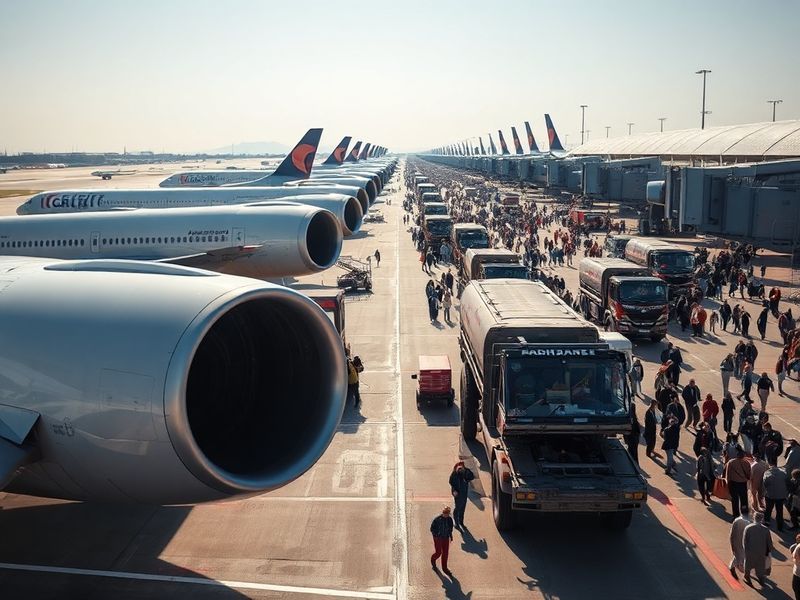
“imageDescription”: “A crowded airport terminal with grounded planes and fuel trucks, highlighting delays and operational challenges. The scene is tense, with passengers checking monitors and airline staff consulting clipboards, all under a cloudy sky suggesting uncertainty.”
}
—END METADATA—
“`